28/May/2026
Omission of sentinel lymph node biopsy in breast cancer: a survey of Brazilian breast surgeons
einstein (São Paulo). 28/May/2026;24:eAO1673.
View Article28/May/2026
Omission of sentinel lymph node biopsy in breast cancer: a survey of Brazilian breast surgeons
DOI: 10.31744/einstein_journal/2026AO1673
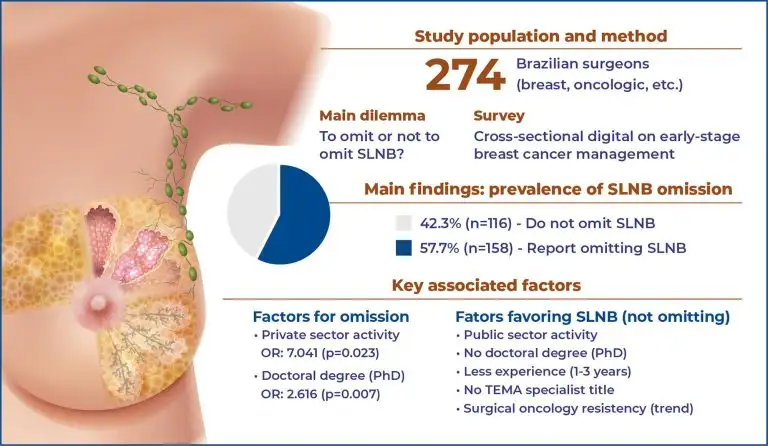
Highlights ■ De-escalation of axillary surgery has become a priority in breast cancer treatment. ■ Factors associated with the decision to omit sentinel lymph node biopsy were collected via questionnaire. ■ Sentinel lymph node biopsy was omitted more often by private doctors and those holding a doctoral degree. ■ Continuing medical education initiatives are needed to update other groups. ABSTRACT Objective: Considering the increasing number of new breast cancer cases and the morbidity associated with axillary lymph node dissection in […]
Keywords: Breast neoplasms; Mastectomy, segmental; Overtreatment; Sentinel lymph node biopsy; Surveys and questionnaires; Survival analysis
28/May/2026
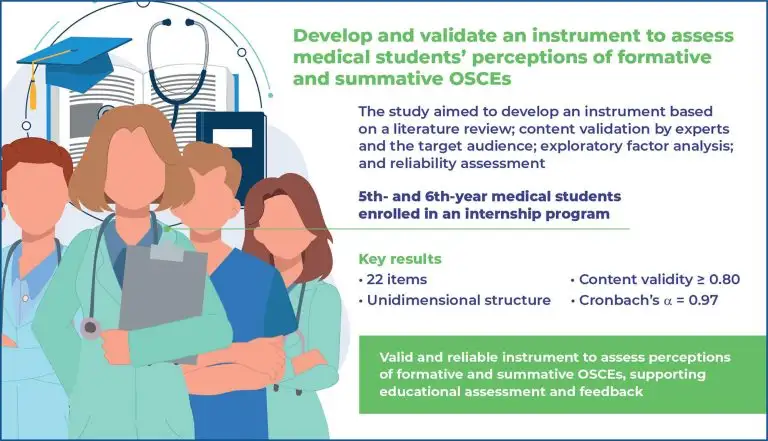
Medical students’ perception of the OSCE: development and validation of an instrument to assess formative and summative modalities
einstein (São Paulo). 28/May/2026;24:eAO1866.
View Article28/May/2026
Medical students’ perception of the OSCE: development and validation of an instrument to assess formative and summative modalities
DOI: 10.31744/einstein_journal/2026AO1866
Highlights ■ Instrument developed to assess medical students’ perceptions of OSCEs. ■ Evidence of strong validity and excellent internal consistency. ■ Formative and summative OSCE modalities were also assessed. ■ Tool supports educational assessment and feedback in medical education. ABSTRACT Objective: To develop, validate, and apply an instrument aimed at assessing medical students’ perceptions of the impact of an Objective Structured Clinical Examination (OSCE), both in its peer-based formative and traditional summative modalities, on clinical learning. Methods: This study used […]
Keywords: Educational measurement; Exercise; Health education; Problem-based learning; Simulation training; Surveys and questionnaires
28/May/2026
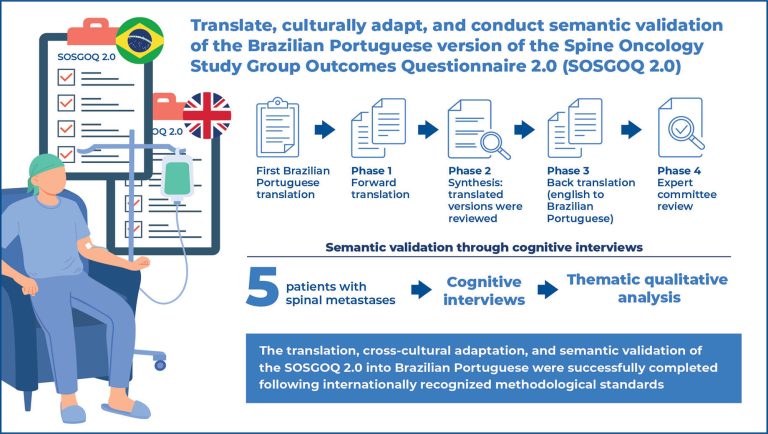
Translation, cross-cultural adaptation, and semantic validation of the Spine Oncology Study Group Outcomes Questionnaire 2.0 (SOSGOQ 2.0) into Brazilian Portuguese: a qualitative validation study
einstein (São Paulo). 28/May/2026;24:eAO2116.
View Article28/May/2026
Translation, cross-cultural adaptation, and semantic validation of the Spine Oncology Study Group Outcomes Questionnaire 2.0 (SOSGOQ 2.0) into Brazilian Portuguese: a qualitative validation study
DOI: 10.31744/einstein_journal/2026AO2116
Highlights ■ Brazilian Portuguese translation of SOSGOQ 2.0 scale. ■ First semantic clinical validation of Brazilian SOSGOQ 2.0. ■ Cognitive interviews confirmed clarity and cultural appropriateness. ■ 100% completion with no need for clarification. ■ Ready for large-scale psychometric validation. ABSTRACT Objective: To translate, culturally adapt, and semantically validate the Brazilian Portuguese version of the Spine Oncology Study Group Outcomes Questionnaire 2.0 (SOSGOQ 2.0) through cognitive interviews with patients with spinal metastases. Methods: Following the guidelines of Beaton et al., […]
Keywords: Metastases neoplasms; Quality of life; Semantics; Spinal neoplasms; Surveys and questionnaires; Validation Studies
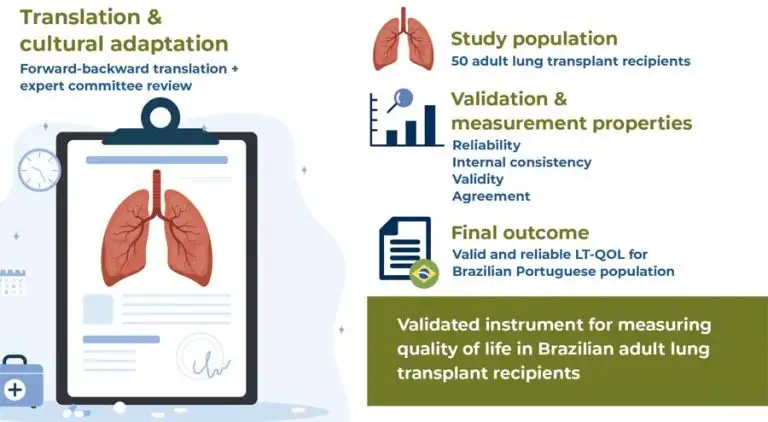
Translation, cross-cultural adaptation, and validation of the Lung Transplant Quality of Life (LT-QOL) questionnaire for use in adult patients after lung transplantation into Portuguese Brazilian
23/Apr/2026
Translation, cross-cultural adaptation, and validation of the Lung Transplant Quality of Life (LT-QOL) questionnaire for use in adult patients after lung transplantation into Portuguese Brazilian
einstein (São Paulo). 23/Apr/2026;24:eAO1882.
View Article23/Apr/2026
Translation, cross-cultural adaptation, and validation of the Lung Transplant Quality of Life (LT-QOL) questionnaire for use in adult patients after lung transplantation into Portuguese Brazilian
DOI: 10.31744/einstein_journal/2026AO1882
Highlights ■ First Brazilian Portuguese version of the LT-QOL questionnaire. ■ Translation and cross-cultural adaptation followed COSMIN recommendations. ■ Strong internal consistency (Cronbach’s alpha=0.86). ■ Excellent intra-rater reliability (ICC=0.93). ■ High convergent validity with SF-36 and good correlation with SGRQ. ■ Provides a disease-specific tool for assessing quality of life after lung transplantation in Brazil. ■ Supports future clinical monitoring and research on transplant outcomes. ABSTRACT Objective: To translate, cross-culturally adapt, and validate the Lung Transplant Quality of Life questionnaire […]
Keywords: Lung transplantation; Quality Indicators, Health Care; Quality of life; Surveys and questionnaires; Translations
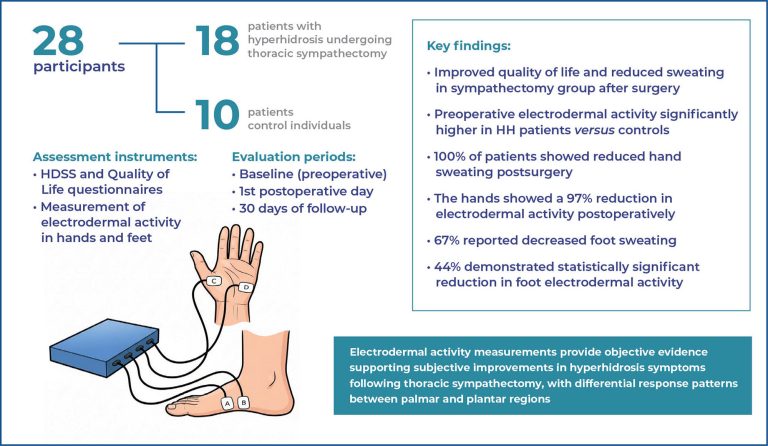
The use of an objective method (continuous exosomatic electrodermal activity without external stimuli) to evaluate patients with hyperhidrosis undergoing video-assisted sympathectomy
08/Apr/2026
The use of an objective method (continuous exosomatic electrodermal activity without external stimuli) to evaluate patients with hyperhidrosis undergoing video-assisted sympathectomy
einstein (São Paulo). 08/Apr/2026;24:eAO1266.
View Article08/Apr/2026
The use of an objective method (continuous exosomatic electrodermal activity without external stimuli) to evaluate patients with hyperhidrosis undergoing video-assisted sympathectomy
DOI: 10.31744/einstein_journal/2026AO1266
Highlights ■ EDAcw objectively quantifies sweating in patients with hyperhidrosis. ■ Sympathectomy significantly reduced EDAcw and improved the quality of life. ■ The hands showed a 97% reduction in electrodermal activity postoperatively. ■ EDAcw is a reliable non-invasive tool for clinical evaluation and follow-up. ABSTRACT Objective: To analyze continuous exosomatic electrodermal activity (EDA) without external stimuli (EDAcw) in patients with primary hyperhidrosis before and after sympathectomy. Methods: This prospective study included 28 participants, categorized into two groups. The first group […]
Keywords: Electrodermal response; Excessive sweating; Hyperhidrosis; Surveys and questionnaires; Sympathectomy
31/Oct/2025
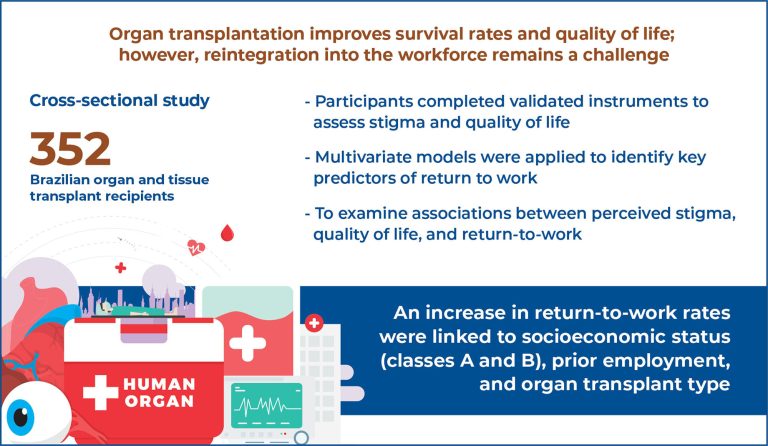
Stigma, quality of life, and return-to-work outcomes among organ and tissue transplant recipients in Brazil: a cross-sectional study
DOI: 10.31744/einstein_journal/2025AO1737
Highlights ■ The return to work rate was 53.7%, with slower and lower reintegration among low-income recipients. ■ Individuals with higher socioeconomic status (Classes A and B) were over twice as likely to return to work compared with lower socioeconomic status. ■ Higher stigma scores were significantly associated with reduced quality of life in Functional Capacity, Mental Health, and Social Functioning domains (p<0.001). ■ Older age (≥51 years), racial disparities, and unemployment before transplantation were strong barriers to occupational reintegration. […]
Keywords: Organ transplantation; Quality of life; Return to work; Social Stigma; Surveys and questionnaires
22/Sep/2025
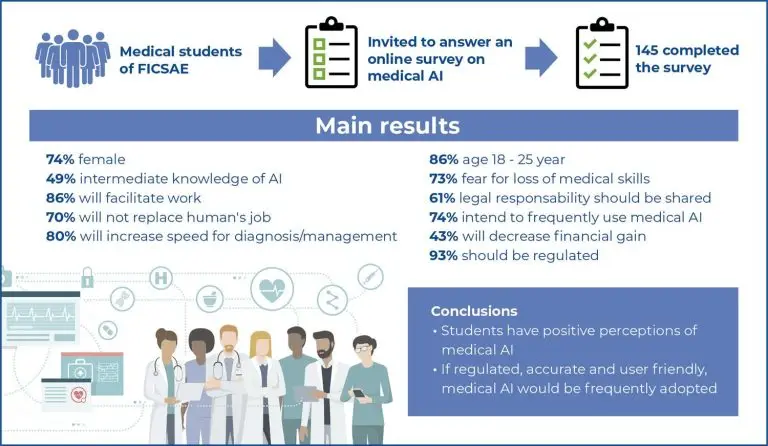
Attitudes, knowledge, opinions, and expectations of medical students towards medical artificial intelligence solutions: a cross-sectional survey study
DOI: 10.31744/einstein_journal/2025AO1401
Highlights ■Most students have a positive attitude towards medical artificial intelligence. ■ Artificial intelligence solutions would be frequently adopted if accurate, fast, and user-friendly. ■ Expectations include work facilitation and increased diagnosis and management speed. ■Most fear losing medical skills to artificial intelligence and desire governmental regulations. ABSTRACT Objective: To assess medical students’ attitudes, knowledge, opinions, and expectations regarding medical artificial intelligence solutions, according to their sex and year of study. Methods: This cross-sectional survey was a single-center study conducted […]
Keywords: Adoption; Artificial intelligence; Knowledge, attitudes, practice; Perception; Students, medical; Surveys and questionnaires
22/Sep/2025
Satisfaction with a telehealth service among older adults
DOI: 10.31744/einstein_journal/2025AO1578
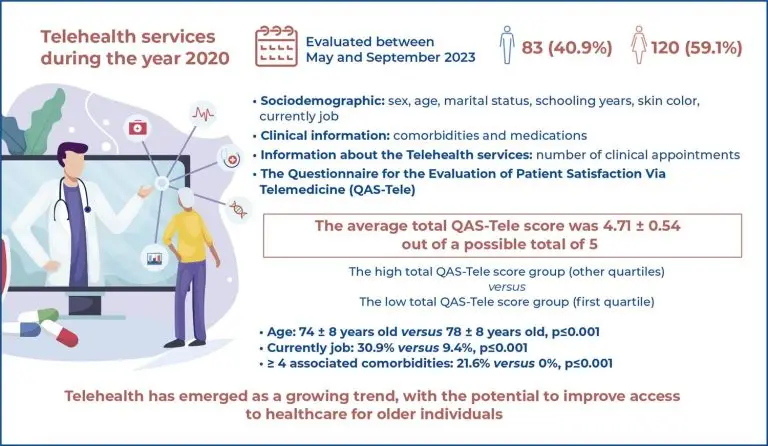
Highlights ■ The average total QAS-Tele score was 4.71±0.54 out of 5. ■ Higher satisfaction was reported by older adults in the younger age range. ■ Higher satisfaction was reported by individuals currently working. ■ Higher satisfaction was reported by individuals with a higher number of comorbidities. ABSTRACT Objective: This retrospective observational study analyzed satisfaction with a telehealth service in older individuals living in a metropolitan city in Brazil. Methods: Sociodemographic, clinical, and telehealth service details (number of clinical appointments […]
Keywords: Aged; Patient satisfaction; Surveys and questionnaires; Telehealth patient monitoring; Telemedicine
22/Sep/2025
Patient and on-site physician satisfaction with a comprehensive specialist teleconsultation program
einstein (São Paulo). 22/Sep/2025;23:eAO1762.
View Article22/Sep/2025
Patient and on-site physician satisfaction with a comprehensive specialist teleconsultation program
DOI: 10.31744/einstein_journal/2025AO1762
Highlights ■ Net Promoter Scores of 85 and 91 among patients and physicians, respectively, over three years. ■ A total of 99.3% of patients were satisfied with the teleconsultation. ■ A total of 98.5% of physicians reported overall satisfaction with the program. ■ Surveys reflect excellence in telemedicine expert consultation. ABSTRACT Objective: Telemedicine via teleconsultations enhances access to specialized care. However, the degree of satisfaction among patients and providers with this method remains unclear. This study assessed patient and on-site […]
Keywords: Patient satisfaction; Remote consultation; Surveys and questionnaires; Telemedicine
30/Jul/2025
Translation, cross-cultural adaptation, and validation of the Palliative Care Knowledge Questionnaire for PEACE (PEACE-Q) in Brazilian Portuguese
einstein (São Paulo). 30/Jul/2025;23:eAO1243.
View Article30/Jul/2025
Translation, cross-cultural adaptation, and validation of the Palliative Care Knowledge Questionnaire for PEACE (PEACE-Q) in Brazilian Portuguese
DOI: 10.31744/einstein_journal/2025AO1243
Highlights ■ Performance was <70% in 10 of the 33 items. ■ Lowest performance domains were Oncologic Pain and Opioid Side Effects. ■ Residents in clinical specialties outperformed those in surgical or mixed specialties. ■ Residents with ≥3 years of training outperformed those on their first 2 years. ABSTRACT Objective: To translate, cross-culturally adapt, and validate the Palliative Care Knowledge Questionnaire for PEACE (PEACE-Q) in Brazilian Portuguese. Methods: This study followed five steps: translation, back-translation, cultural adaptation, pre-test, and test-retest. […]
Keywords: Clinical competence; Education, medical; Internship and residency; Palliative care; Psychometrics; Surveys and questionnaires; Validation study as topic