einstein (São Paulo). 03/Aug/2026;24(spe3):eAO2397.
Screening for undiagnosed hyperglycemia in patients with periodontitis: a cross-sectional study

DOI: 10.31744/einstein_journal/2026AO2397
Highlights
■ Finnish Diabetes Risk Score identified high diabetes risk in most patients with periodontitis.
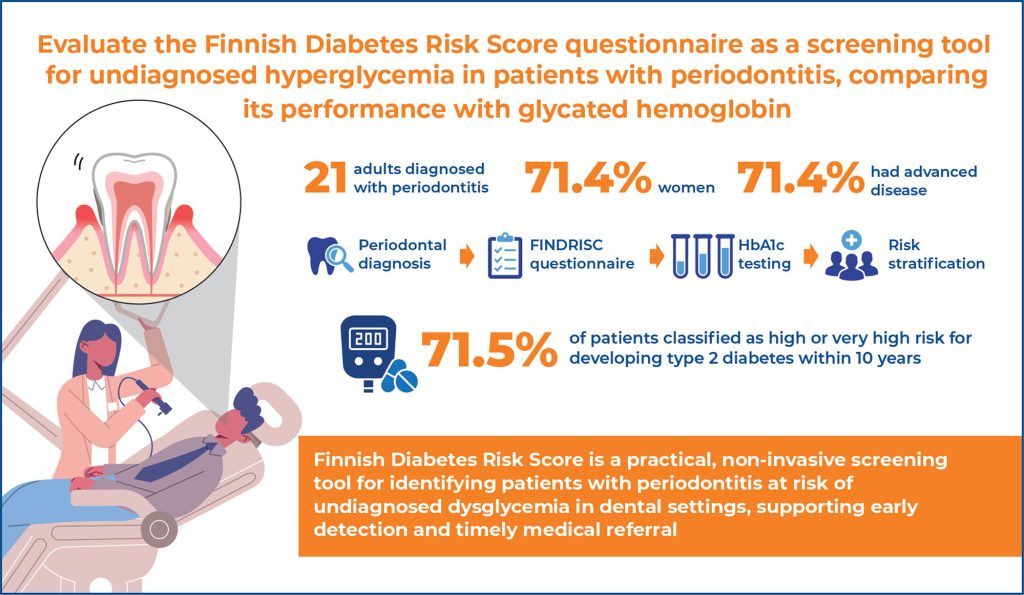
■ High or very high T2DM risk was observed in 71.5% of participants.
■ Finnish Diabetes Risk Score ≥12 was associated with dysglycemia and severe periodontitis.
■ Dental clinics may help detect undiagnosed hyperglycemia early.
ABSTRACT
Objective:
We evaluated the potential of the Finnish Diabetes Risk Score questionnaire to screen for undiagnosed hyperglycemia in patients with periodontitis, comparing its performance with that of glycated hemoglobin (HbA1c).
Methods:
In this cross-sectional pilot study, we included 21 adults (22-64 years) diagnosed with periodontitis. Demographic data, periodontal status, HbA1c levels, and Finnish Diabetes Risk Scores were collected. Based on HbA1c levels, participants were classified as normoglycemic (<5.7%), prediabetic (5.7-6.4%), or diabetic (≥6.5%) according to established diagnostic criteria. Finnish Diabetes Risk Scores ≥12 indicated moderate-to-very-high diabetes risk. Associations between the Finnish Diabetes Risk Score, HbA1c, and periodontal parameters were assessed using Friedman’s test and multinomial logistic regression. Diagnostic validity indices and receiver operating characteristic (ROC) curves were calculated.
Results:
Most participants were women (71.4%) and had advanced disease (71.4% stage IV; 71.4% generalized periodontitis). According to the Finnish Diabetes Risk Score, 71.5% of patients had a high or very high risk of developing type 2 diabetes within 10 years. Mean HbA1c was 5.8±0.4%, ranging from normoglycemic to diabetic levels (≥6.5%). Finnish Diabetes Risk Scores ≥12 were significantly associated with HbA1c-defined prediabetes/diabetes and generalized periodontitis (p<0.001). In the multinomial logistic regression analysis, age, sex, periodontal extent, and HbA1c were identified as independent predictors of higher Finnish Diabetes Risk Scores. Finnish Diabetes Risk Scores ≥12 showed high sensitivity (92-100%) and negative predictive value (80-100%), but low specificity (26-44%); ROC analysis demonstrated acceptable diagnostic performance, particularly for identifying combined prediabetes and diabetes.
Conclusion:
The Finnish Diabetes Risk Score is a practical, non-invasive screening tool for predicting the risk of undiagnosed dysglycemia in patients with periodontitis in dental settings. Its high sensitivity supports its use for risk stratification; however, positive findings require biochemical confirmation. These findings underscore the role of dental professionals in early disease detection.
[…]