22/May/2026
DOI: 10.31744/einstein_journal/2026AO2286
Highlights ■ Law 12.732/12 had limited impact on breast cancertreatment access. ■ Persistent delays in breast cancer diagnosis & treatment in São Paulo, 2013-2024. ■ External oversight prioritizes compliance, not direct results evaluation. ■ Reorient oversight to induce greater managerial accountability. ABSTRACT Objective: This article analyzed the impact of Law No. 12,732/2012 on breast cancer care in São Paulo State (Brazil) between 2013 and 2024, as well as the role of external oversight. Methods: This qualitative-quantitative study used 58,892 records […]
Keywords: Breast neoplasms; Health care quality, access, and evaluation; Health equity; Health policy; Public accountability
22/May/2026
22/May/2026
DOI: 10.31744/einstein_journal/2026CE2373
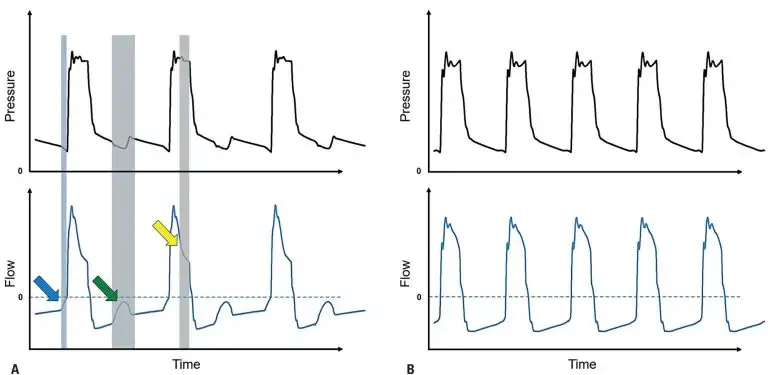
Dear Editor, Diaphragm weakness is a common complication in critically ill patients and can develop within days after the initiation of invasive mechanical ventilation.(,) It is characterized by a rapid loss of diaphragm contractile capacity, which compromises the patient’s ability to breathe independently.(,) Diaphragm weakness is strongly associated with worse clinical outcomes, including prolonged weaning from mechanical ventilation (MV), longer intensive care unit (ICU) and hospital length of stay, and higher mortality.(-) Because of its high prevalence and major clinical […]
22/May/2026
DOI: 10.31744/einstein_journal/2026CE2428
This is where danger lies for the unwary Naturally gluten-free foods are rarely the problem. Processed foods labeled as gluten-free often are. Regulatory definitions allow foods labeled gluten-free to contain up to 20 parts per million of gluten.() Some countries adopt stricter limits, below 10 parts per million.() For patients with celiac disease, these differences matter. Since my son’s diagnosis, I have learned to read every label, scrutinize every ingredient list, and carefully check for gluten-free claims. In the United […]
22/May/2026
22/May/2026
DOI: 10.31744/einstein_journal/2026AO1503
Highlights ■ ACE2 rs2285666 GG genotype increased the risk ofintensive care unit risk in women. ■ TNF rs1800629 A allele was associated with severe COVID-19 and invasive mechanical ventilation. ■ IL1A rs1800587 influenced disease severity and respiratory symptoms. ■ TNF polymorphism was associated with post-COVID, cough and fatigue. ABSTRACT Objective: We evaluated the influence of single-nucleotide polymorphisms in cytokine, renin-angiotensin-aldosterone system, and uromodulin genes on COVID-19 severity and the persistence of symptoms in the post-COVID phase. Methods: Two cross-sectional cohort […]
Keywords: Angiotensin-converting enzyme 2; COVID-19; Cytokines; olymorphism, genetic; Post-acute COVID-19 syndrome; SARS-CoV-2; Uromodulin
22/May/2026
22/May/2026
DOI: 10.31744/einstein_journal/2026AO1541
Highlights ■ Pre-sarcopenic women showed increased cortical excitation during motor tasks. ■ Sarcopenia was associated with slower motor reaction time. ■ EEG revealed central nervous system changes across sarcopenia stages. ■ Pre-sarcopenia may represent a window for early neuromotor intervention. ABSTRACT Objective: This study aimed to analyze cortical activity during simple motor reaction time tasks in older women with different degrees of sarcopenia. Methods: This cross-sectional, observational, analytical study included 59 women classified into control, pre-sarcopenia, and sarcopenia groups according […]
Keywords: Age; Brain mapping; Electroencephalography; Geriatric; Motor skills; Reaction time; Sarcopenia
04/May/2026
04/May/2026
DOI: 10.31744/einstein_journal/2026AO1615
Highlights ■ This study aimed to evaluate the association between damage-associated molecular patterns and peripheral hypoperfusion in sepsis. ■ Surviving patients showed better peripheral perfusion than non-survivors. ■ No significant association was observed between mortality and serum levels of the evaluated damage-associated molecular patterns. ■ Damage-associated molecular patterns levels did not differ between patients with reduced or normal peripheral perfusion. ABSTRACT Objective: The causal mechanisms of peripheral hypoperfusion in sepsis have not yet been fully elucidated. Therefore, this study aimed […]
Keywords: Alarmins; Histones; HMGB1 protein; Microcirculation; Perfusion index; Sepsis
04/May/2026
04/May/2026
DOI: 10.31744/einstein_journal/2026RC2042
ABSTRACT Lymphatic malformations are benign disorders of the lymphatic system and represent a rare diagnosis in adulthood, particularly when involving the breast. This report describes the case of a 64-year-old patient referred to our service with two suspicious masses located in different areas of right breast. Imaging studies reinforced the suspicion of malignancy, and further investigation was conducted with an ultrasound-guided core needle biopsy, which confirmed the diagnosis of lymphatic malformation. As illustrated in this report, although lymphatic malformation may […]
Keywords: Breast diseases; Lymphatic abnormalities; Lymphatic system; Magnetic resonance spectroscopy; Ultrasonography
04/May/2026
04/May/2026
DOI: 10.31744/einstein_journal/2026RC2213
ABSTRACT We report a case of a highly myopic patient with a single functional eye, previously vitrectomized, and implanted with an anterior chamber phakic intraocular lens (Artisan®), who underwent phacoemulsification with phakic lens explantation and posterior chamber intraocular lens implantation. The case illustrates the surgical challenges and highlights the importance of individualized planning in patients with multiple prior interventions and at high risk of complications.
Keywords: Lens implantation, intraocular; Lenses, intraocular; Myopia; Phacoemulsification; Phakic intraocular lenses; Retinal detachment
27/Apr/2026
27/Apr/2026
DOI: 10.31744/einstein_journal/2026CE2477
Dear Editor, We would like to thank D’Elia et al. for their thoughtful and constructive comments regarding our article, “Socioeconomic inequities in prostate cancer care: private versus public treatment settings pose a significant impact on overall survival” published in einstein (São Paulo).() We fully agree with the authors regarding the relevance and urgency of this discussion. […]
27/Apr/2026
27/Apr/2026
DOI: 10.31744/einstein_journal/2026RW1855
ABSTRACT Background: Hospital malnutrition has been studied for decades; however, its prevalence remains high, and research in this area is still relevant. Nutritional screening and assessment tools are routinely used in hospital settings. Objective: We aimed to describe and discuss the general characteristics of studies that used nutritional screening and assessment instruments in hospitalized adult populations, with a focus on clinical outcomes. Methods: We conducted a systematic review without meta-analysis. Eligible studies were original prospective or retrospective studies published in […]
Keywords: Malnutrition; Nutrition assessment; Risk Factors; Screening