40 results
28/May/2026
28/May/2026
DOI: 10.31744/einstein_journal/2026AO1837
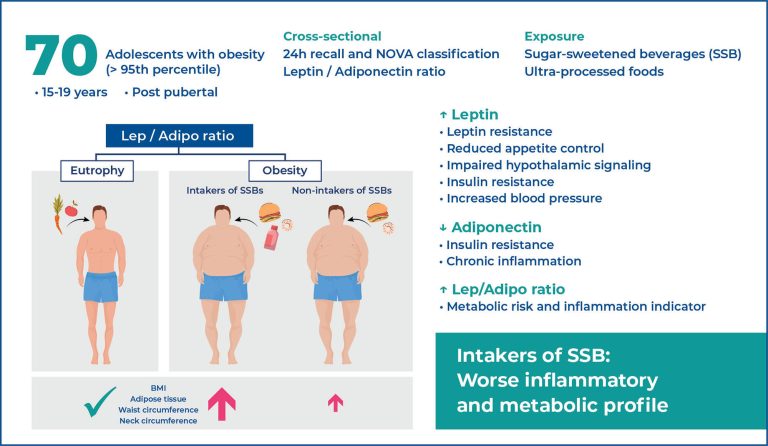
Highlights ■ Sugar-sweetened beverages are linked to a poorer inflammatory profile in adolescents. ■ Ultra-processed food intake is associated with a higher leptin/adiponectin ratio. ■ The leptin/adiponectin ratio reflects metabolic risk in adolescent obesity. ■ Dietary quality influences inflammatory hormonal markers. ABSTRACT Objective: To evaluate the relationship between dietary patterns and inflammatory markers in Brazilian adolescents with obesity. Methods: A cross-sectional analysis was conducted among 70 post-pubertal adolescents aged 15–19 years of both sexes who were classified as obese according […]
Keywords: Adolescents; Leptin/adiponectin ratio; Obesity; Sweet sugar beverage; Ultraprocessed food
02/Feb/2026
02/Feb/2026
DOI: 10.31744/einstein_journal/2026AO1470
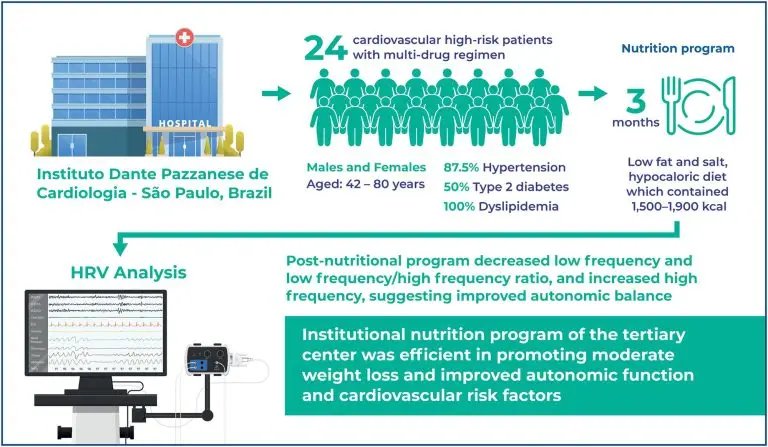
Highlights ■ The institutional nutritional program in tertiary care was effective in promoting moderate weight loss. ■ Obese patients with high cardiovascular risk undergoing multi-drug therapy showed significant improvement in anthropometric, biochemical, and heart rate variability components. ■ Heart rate variability analysis revealed enhanced autonomic balance, increased parasympathetic activity, and reduced sympathetic activity after weight loss. ■ Moderate weight loss presents a promising adjunctive strategy for managing cardiovascular risk in obese patients undergoing multi-drug therapy. Abstract Objective: Cardiovascular diseases remain […]
Keywords: Autonomic nervous system; Diet therapy; Diet, healthy; Heart disease risk factors; Obesity; Weight loss
25/Nov/2024
DOI: 10.31744/einstein_journal/2024AO1063
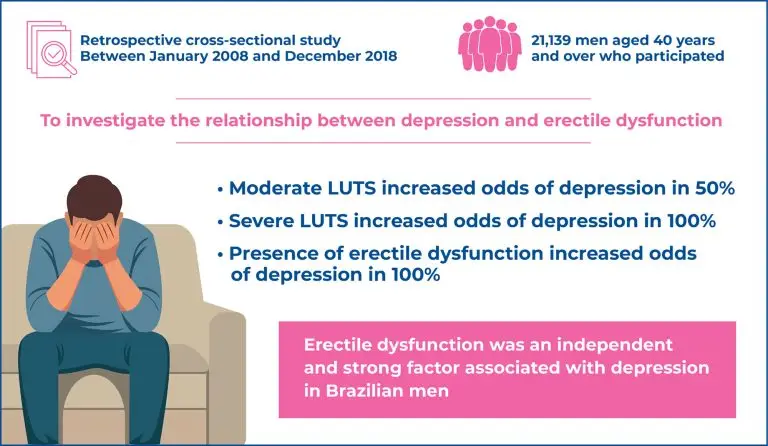
Highlights Levels of lower urinary tract symptoms increased the risk of depression. Erectile dysfunction, alcohol consumption, and body mass index were associated with an increased likelihood of depression. ABSTRACT Objective: This study aimed to investigate the relationship between depression and erectile dysfunction while controlling for sociodemographic, physical health, psychological, and lifestyle factors. Additionally, it aimed to compare erectile dysfunction with other clinical, laboratory, and behavioral variables among individuals with depression in the same population. Methods: We included 21,139 men (≥40 […]
Keywords: Depression; Erectile dysfunction; Exercise; Life style; Obesity
28/Aug/2024
28/Aug/2024
DOI: 10.31744/einstein_journal/2024AO0619
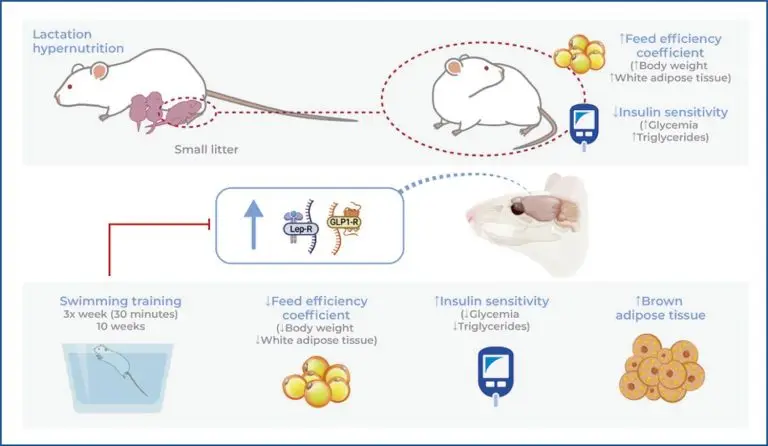
Highlights Small-litter promotes greater body weight gain, adiposity, and metabolic abnormalities in adulthood. Small-litter -adult obese rats showed augmented hypothalamic expression of GLP1-R and Lep-R. Swimming training throughout life avoids obesity and metabolic disorders in small-litter-adult rats. Regular exercise can normalize GLP1-R and Lep-R hypothalamic expressions in small-litter-adult rats. ABSTRACT Objective: Glucagon-like peptide-1 (GLP1) and leptin (Lep) are afferent signals that regulate energy metabolism. Lactational hypernutrition results in hyperphagia and adiposity in adult life, and these events can be prevented […]
Keywords: Exercise; Hypothalamus; Metabolic reprogramming; Obesity; Swimming
20/May/2022
20/May/2022
DOI: 10.31744/einstein_journal/2022AO6953
ABSTRACT Objective: To evaluate anthropometric and clinical data, muscle mass, subcutaneous fat, spine bone mineral density, extent of acute pulmonary disease related to COVID-19, quantification of pulmonary emphysema, coronary calcium, and hepatic steatosis using chest computed tomography of hospitalized patients with confirmed diagnosis of COVID-19 pneumonia and verify its association with disease severity. Methods: A total of 123 adults hospitalized due to COVID-19 pneumonia were enrolled in the present study, which evaluated the anthropometric, clinical and chest computed tomography data […]
Keywords: Coronavirus infections; COVID-19; Multidetector computed tomography; Obesity; Pneumonia; Prognosis; Tomography; X-ray computed
20/May/2022
DOI: 10.31744/einstein_journal/2022AO5587
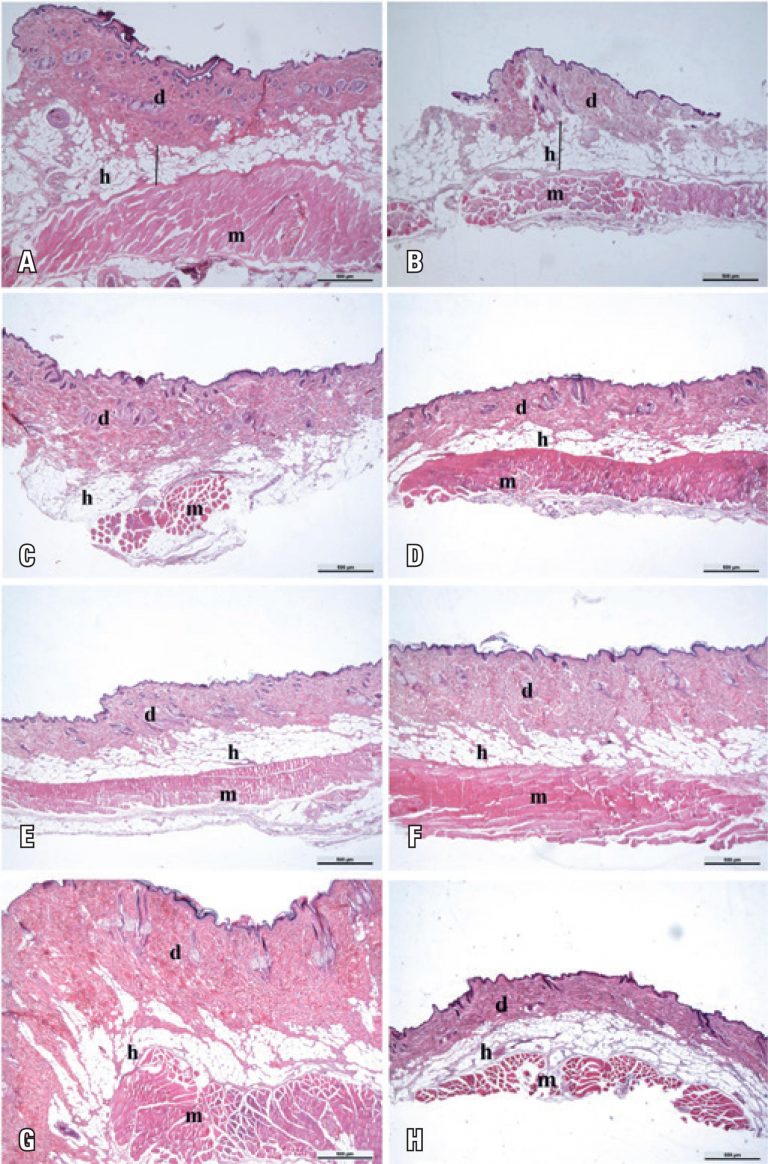
ABSTRACT Objective: To evaluate the effects of combining topiramate, bupropion and naltrexone in obesity-induced rats on their weight and subcutaneous adipose tissue. Methods: A total of 40 male Wistar rats were induced to obesity for 8 weeks and the animals were divided into 8 groups: Ctr – control, G0 – Sham, G1 – oral saline solution (1.0mL/day), G2 – topiramate (20.0mg/kg) and bupropion (5.0mg/kg), G3 – naltrexone (20.0mg/kg), G4 – topiramate (20.0mg/kg), G5 – bupropion (5.0mg/kg) and G6 – topiramate […]
Keywords: Body weight; Bupropion; Naltrexone; Obesity; Rats; Subcutaneous fat; Topiramate
08/Feb/2022
DOI: 10.31744/einstein_journal/2022AO5609
ABSTRACT Objective To determine the maternal and early childhood factors associated with asthma and obesity in children aged 6 to 7 years. Methods A case-control study conducted with children aged 6 to 7 years. Applications with questions about asthma symptoms in the last 12 months, maternal and childhood data in the first 2 years of life, and anthropometric data were collected. Children who presented asthma symptoms were considered as cases and those without asthma symptoms were considered as controls, later […]
Keywords: Asthma; Child; Obesity; Overweight
02/Feb/2022
DOI: 10.31744/einstein_journal/2022AO6153
ABSTRACT Objective To estimate the prevalence of clustering of behavioral risk factors for chronic non-communicable diseases, as well as the associated factors in climacteric women. Methods This is a cross-sectional, analytical study, with random selection of climacteric women, aged between 40 and 65 years, and registered in Family Health Strategy units. The dependent variable was clustering of three or more behavioral risk factors for chronic non-communicable diseases. The definition of associated variables was made after Poisson multiple regression analysis with […]
Keywords: Climacteric; Disease prevention; Health Behavior; Noncommunicable diseases; Obesity; Risk Factors; Women; Women’s health
17/Sep/2021
17/Sep/2021
DOI: 10.31744/einstein_journal/2021AO6256
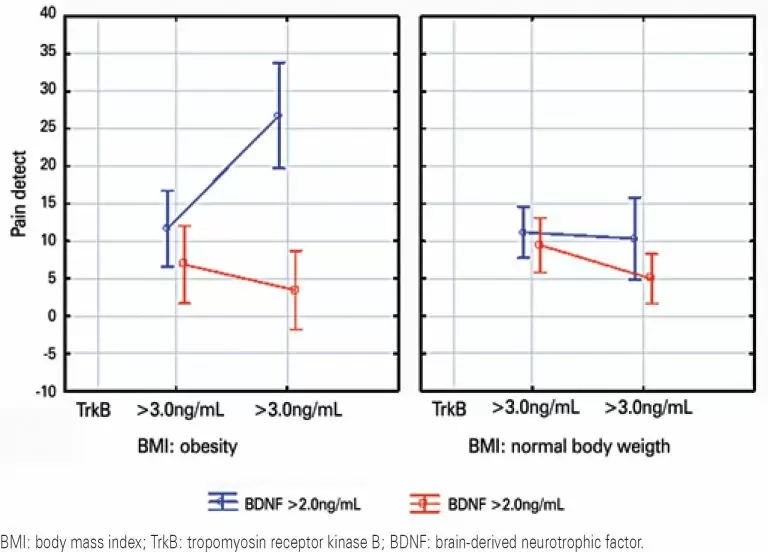
ABSTRACT Objective: To assess the quantitative serum levels of tropomyosin receptor kinase receptor B, and to estimate its association with serum concentration of brain-derived neurotrophic factor and obesity in patients with painful and painless forms of diabetic polyneuropathy. Methods: We examined 70 patients with diabetic polyneuropathy with confirming peripheral nerve dysfunction by electroneuromyography and measuring of serum levels tropomyosin receptor kinase receptor B and brain-derived neurotrophic factor by enzyme immunoassay. Diabetic polyneuropathy was diagnosed using the modified Toronto Consensus (2011) […]
Keywords: Brain-derived neurotrophic factor; Diabetic neuropathies; Obesity
26/Nov/2020
DOI: 10.31744/einstein_journal/2020AO5100
ABSTRACT Objective: To analyze the effect of air pollution on heart rate variability in overweight individuals. Methods: A total of 46 adult individuals, both sexes, aged between 18 and 49 years and with body mass index >25kg/m2 were analyzed. All volunteers were students from public schools of two cities in the state of São Paulo. The clinical, demographic and anthropometric data of each individual, as well as heart rate variability through time domain, geometric and frequency indices were collected. For […]
Keywords: Air pollution; Autonomic nervous system; Cardiovascular system; Environmental pollution; Heart rate; Obesity; Overweight