einstein (São Paulo). 28/May/2026;24:eAO1837.
Relationship between sugar-sweetened beverage and ultra-processed food intake: impact on leptin/adiponectin ratio in adolescents with obesity

DOI: 10.31744/einstein_journal/2026AO1837
Highlights
■ Sugar-sweetened beverages are linked to a poorer inflammatory profile in adolescents.
■ Ultra-processed food intake is associated with a higher leptin/adiponectin ratio.
■ The leptin/adiponectin ratio reflects metabolic risk in adolescent obesity.
■ Dietary quality influences inflammatory hormonal markers.
ABSTRACT
Objective:
To evaluate the relationship between dietary patterns and inflammatory markers in Brazilian adolescents with obesity.
Methods:
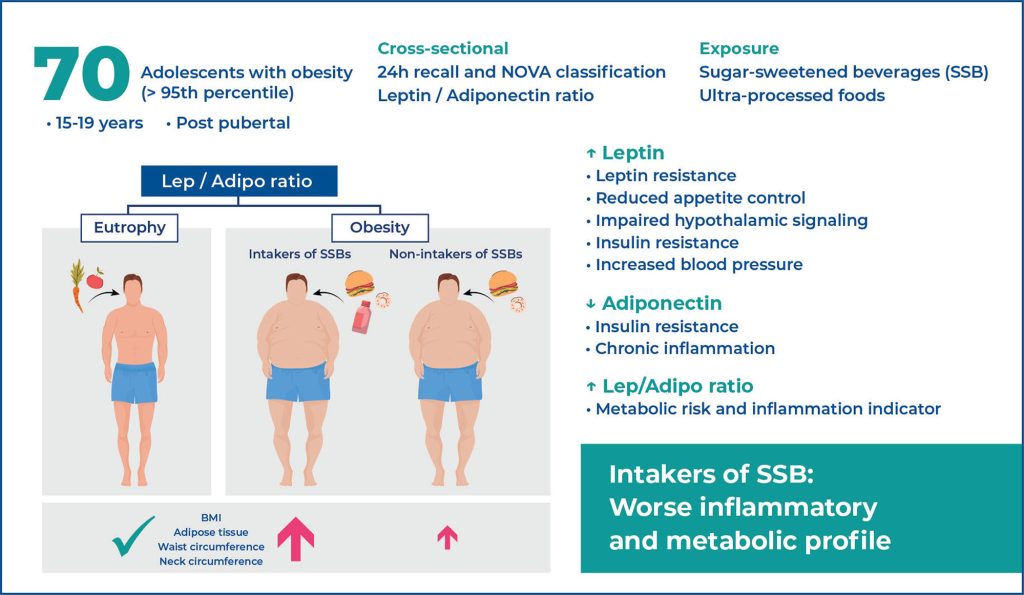
A cross-sectional analysis was conducted among 70 post-pubertal adolescents aged 15–19 years of both sexes who were classified as obese according to the World Health Organization criteria. Blood samples were collected to determine leptin and adiponectin levels using enzyme-linked immunosorbent assay kits, and the leptin/adiponectin ratio was calculated. Anthropometric measurements and body composition were assessed. Food intake was evaluated using a 24-hour dietary recall and categorized according to the NOVA classification into: fresh or minimally processed foods, processed culinary ingredients, processed foods, and ultra-processed foods. Participants were grouped according to sugar-sweetened beverage intake into intakers (n=41) and non-intakers (n=29).
Results:
Adolescents who consumed sugar-sweetened beverages had higher fat-free mass, body weight, resting metabolic rate, and pro-inflammatory leptin/adiponectin ratio. They also showed greater intake of total grams, energy, proteins, lipids, cholesterol, carbohydrates, fiber, and saturated and polyunsaturated fats from ultra-processed foods. Additional analyses revealed that ultra-processed food intake was associated with increased body weight and higher waist and neck circumferences, which are relevant predictors of pro-inflammatory status.
Conclusion:
The findings suggest that sugar-sweetened beverage consumption and high ultra-processed food intake are associated with unfavorable anthropometric indicators and increased pro-inflammatory biomarkers, reflected by higher leptin/adiponectin ratios in adolescents with obesity.
[…]