3 results
03/Aug/2026
03/Aug/2026
DOI: 10.31744/einstein_journal/2026AO2422
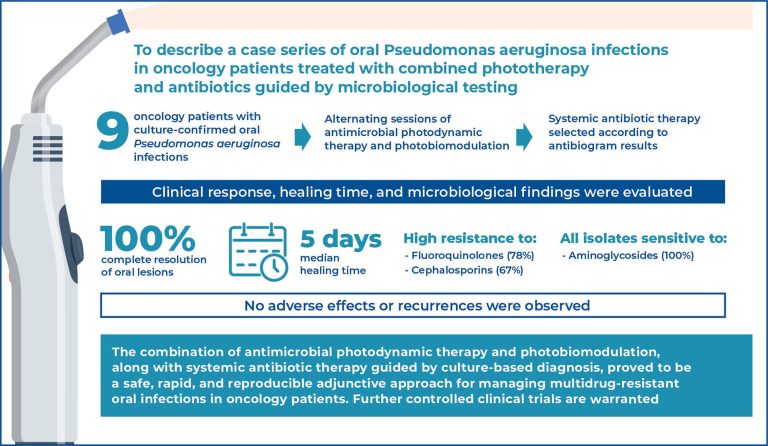
Highlights ■ First case series of aPDT+PBM for oral P. aeruginosa in oncology patients. ■ Complete lesion resolution in all cases (median healing time: 5 days). ■ High resistance to fluoroquinolones; aminoglycosides remained effective. ■ Combined light-based therapy is safe even in severe immunosuppression. ABSTRACT Objective: To describe a case series of oral Pseudomonas aeruginosa infections in oncology patients managed using combined antimicrobial photodynamic therapy and photobiomodulation in association with systemic antibiotic therapy guided by microbiological culture and antibiogram. Methods: […]
Keywords: Anti-infective agents; Immunocompromised host; Low-level light therapy; Neoplasms; Oral infections; Photochemotherapy; Pseudomonas aeruginosa
23/Jan/2020
DOI: 10.31744/einstein_journal/2020AO5023
ABSTRACT Objective To adapt an antibiotic dose adjustment software initially developed in English, to Portuguese and to the Brazilian context. Methods This was an observational, descriptive study in which the Delphi method was used to establish consensus among specialists from different health areas, with questions addressing the visual and operational aspects of the software. In a second stage, a pilot experimental study was performed with the random comparison of patients for evaluation and adaptation of the software in the real […]
Keywords: Anti-infective agents; Brazil; Dosage forms; Intensive care units; Piperacillin; Software; Surveys and questionnaires
08/May/2019
DOI: 10.31744/einstein_journal/2019GS4444
ABSTRACT Objective: To estimate the direct medical costs of drug therapy of Klebsiella pneumoniae carbapenemase (KPC) infection patients in hospital-based context. Methods: A cost-of-illness study conducted with a prospective cohort design with hospitalized adults infected by KPC. Data collection was performed using an instrument composed of sociodemographic data, clinical and prescription medication. Estimates of the direct costs associated to each treatment were derived from the payer’s perspective, in the case of federal public hospitals from Brazil, and included only drug […]
Keywords: Anti-infective agents; Costs and cost analysis; Drug therapy; Gram-negative bacteria; Health care economics and organizations; Health expenditures