10 results
28/May/2026
28/May/2026
DOI: 10.31744/einstein_journal/2026AO2116
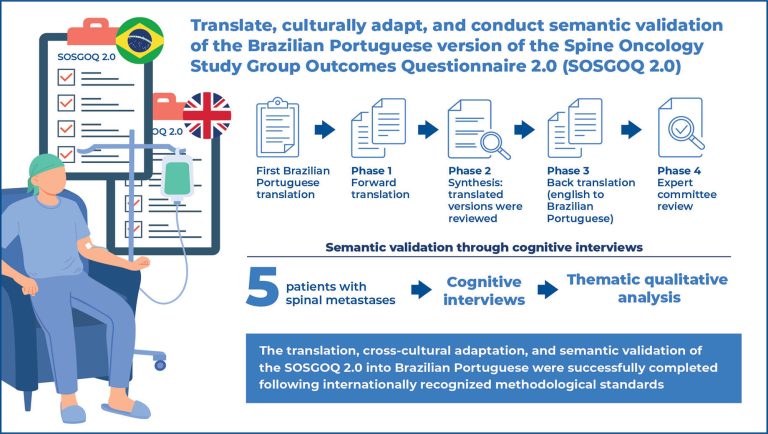
Highlights ■ Brazilian Portuguese translation of SOSGOQ 2.0 scale. ■ First semantic clinical validation of Brazilian SOSGOQ 2.0. ■ Cognitive interviews confirmed clarity and cultural appropriateness. ■ 100% completion with no need for clarification. ■ Ready for large-scale psychometric validation. ABSTRACT Objective: To translate, culturally adapt, and semantically validate the Brazilian Portuguese version of the Spine Oncology Study Group Outcomes Questionnaire 2.0 (SOSGOQ 2.0) through cognitive interviews with patients with spinal metastases. Methods: Following the guidelines of Beaton et al., […]
Keywords: Metastases neoplasms; Quality of life; Semantics; Spinal neoplasms; Surveys and questionnaires; Validation Studies
28/Mar/2019
28/Mar/2019
DOI: 10.31744/einstein_journal/2019AO4405
ABSTRACT Objective To prepare an instrument to evaluate health literacy with regard to adherence to drug treatment among diabetics, identify the validity of its content, and estimate its reliability. Methods Pilot study, with the following stages of instrument construction: literature review, content validation, reliability estimation (internal consistency/Cronbach’s alpha and reproducibility/Kappa). Results The validity of content was completed and presented alpha=0.77 and Kappa values ranged from 0.31 to 1.00. Conclusion The instrument was approved regarding content validity, presented acceptable internal consistency […]
Keywords: Diabetes mellitus; Health literacy; Medication Adherence; Reproducibility of Results; Validation Studies
05/Jun/2018
DOI: 10.1590/S1679-45082018AO4154
ABSTRACT Objective To develop and validate the content of the online Questionnaire for Fall Risk Assessment in the Elderly. Methods The instrument was developed based on the International Classification of Functioning, Disability and Health (ICF) of the World Health Organization. Initially, the set of items was submitted to evaluation of judges (healthcare professionals with experience in elderly health), who could suggest inclusion or exclusion of questions from the instrument; they were also asked to rate each question according to the […]
Keywords: Accidental falls; Aging; Public health; Surveys and questionnaires; Validation Studies
19/Apr/2018
19/Apr/2018
DOI: 10.1590/S1679-45082018AO4132
ABSTRACT Objective To evaluate the psychometric properties of the seven theoretical models proposed in the literature for European Organization for Research and Treatment of Cancer Quality of Life Questionnaire Core 30 (EORTC QLQ-C30), when applied to a sample of Brazilian cancer patients. Methods Content and construct validity (factorial, convergent, discriminant) were estimated. Confirmatory factor analysis was performed. Convergent validity was analyzed using the average variance extracted. Discriminant validity was analyzed using correlational analysis. Internal consistency and composite reliability were used […]
Keywords: Neoplasms; Psychometrics; Quality of life; Validation Studies
08/Dec/2017
DOI: 10.1590/S1679-45082017AO3995
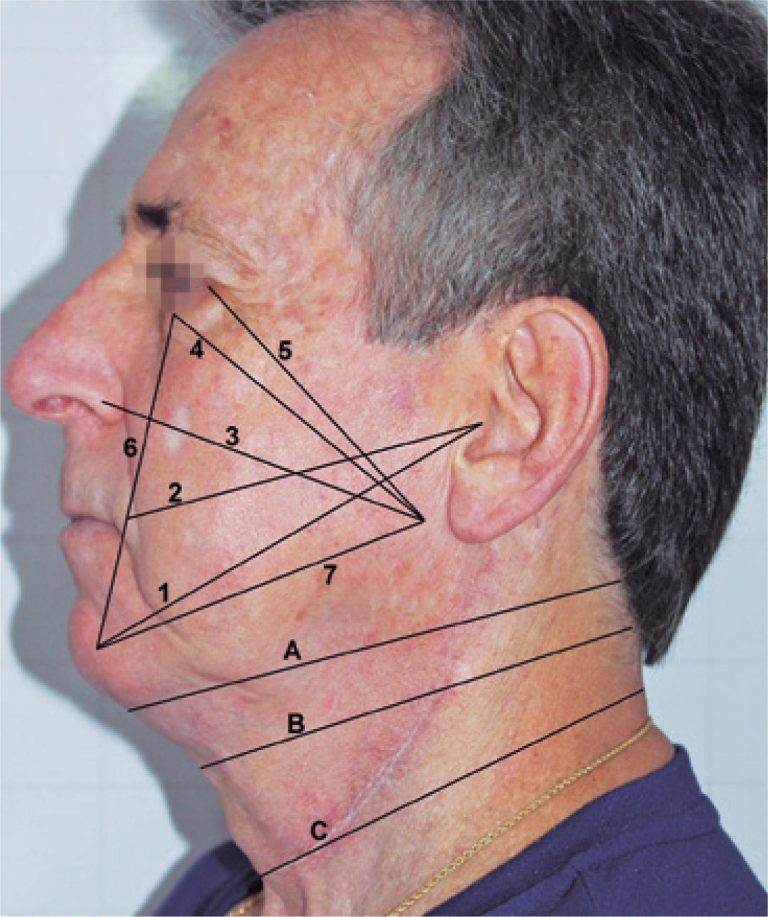
ABSTRACT Objective: Translate to brazilian portuguese, culturally adapt and test the rating and classification scales of cervicofacial lymphedema of the MD Anderson Cancer Center Head and Neck Lymphedema Protocol (MDACC HNL) in patients undergoing treatment for head and neck cancer. Methods: The process followed international guidelines and translation stages by two head and neck surgeons, and back translation independently by two native Americans. The test of final version was based on the evaluation of 18 patients by one speech pathologist […]
Keywords: Head and neck neoplasms; Lymph nodes; Lymphedema; Neck dissection; Radiotherapy; Validation Studies
01/Jul/2017
DOI: 10.1590/S1679-45082017AO4004
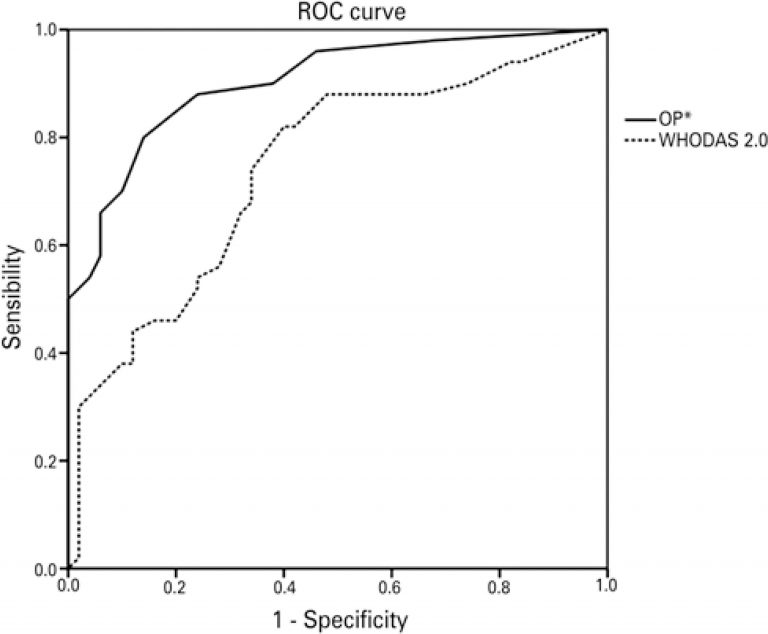
ABSTRACT Objective To validate a reliable version of the Obesity-related Problems Scale in Portuguese to use it in Brazil. Methods The Obesity-related Problems Scale was translated and transculturally adapted. Later it was simultaneously self-applied with a 12-item version of the World Health Organization Disability Assessment Schedule 2.0 (WHODAS 2.0), to 50 obese patients and 50 non-obese individuals, and applied again to half of them after 14 days. Results The Obesity-related Problems scale was able to differentiate obese from non-obese individuals […]
Keywords: Obesity; Psychometrics; Quality of life; Translating; Validation Studies
01/Jul/2017
01/Jul/2017
DOI: 10.1590/S1679-45082017AO3890
ABSTRACT Objective To describe the translation and cultural adaptation of the Japanese Orthopaedic Association Back Pain Evaluation Questionnaire into Brazilian Portuguese, and verifies the reliability and validity of this new version. Methods A cross-cultural adaptation of the Japanese Orthopaedic Association Back Pain Evaluation Questionnaire was performed using the following steps: translation, back-translation, committee review, and pre-testing phase (50 subjects). The psychometric properties were evaluated by application of the questionnaire to 102 patients. Reliability was assessed by homogeneity and stability of […]
Keywords: Low back pain; Surveys and questionnaires; Translating; Validation Studies
01/Apr/2017
DOI: 10.1590/S1679-45082017AO3645
ABSTRACT Objective To assess the test-retest reliability of the Memorial Symptom Assessment Scale translated and culturally adapted into Brazilian Portuguese. Methods The scale was applied in an interview format for 190 patients with various cancers type hospitalized in clinical and surgical sectors of the Instituto Nacional de Câncer José de Alencar Gomes da Silva and reapplied in 58 patients. Data from the test-retest were double typed into a Microsoft Excel spreadsheet and analyzed by the weighted Kappa. Results The reliability […]
Keywords: Neoplasms; Reproducibility of Results; Scales; Symptom assessment; Validation Studies
01/Oct/2016
DOI: 10.1590/S1679-45082016AO3732
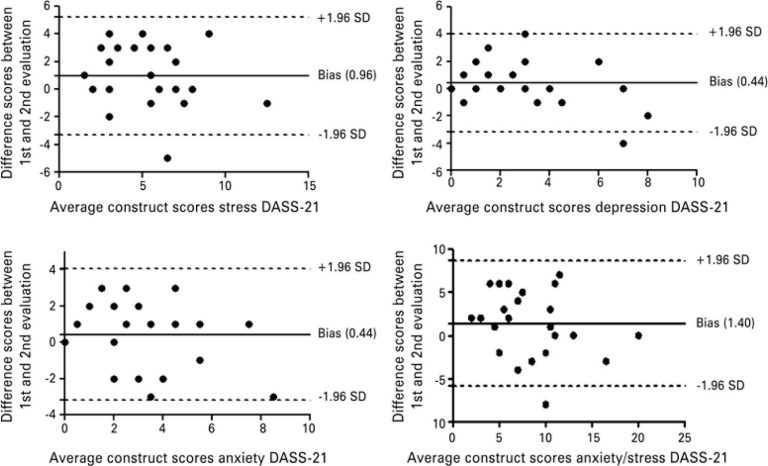
ABSTRACT Objective To evaluate the interday reproducibility, agreement and validity of the construct of short version of the Depression Anxiety Stress Scale-21 applied to adolescents. Methods The sample consisted of adolescents of both sexes, aged between 10 and 19 years, who were recruited from schools and sports centers. The validity of the construct was performed by exploratory factor analysis, and reliability was calculated for each construct using the intraclass correlation coefficient, standard error of measurement and the minimum detectable change. […]
Keywords: Adolescent; Affective symptoms; Psychiatric status rating scales; Reproducibility of Results; Surveys and questionnaires; Validation Studies
01/Apr/2016
DOI: 10.1590/S1679-45082016AO3455
ABSTRACT Objective Assess the content validity of the Elderly Health Assessment Tool with low education. Methods The data collection instrument/questionnaire was prepared and submitted to an expert panel comprising four healthcare professionals experienced in research on epidemiology of aging. The experts were allowed to suggest item inclusion/exclusion and were asked to rate the ability of individual items in questionnaire blocks to encompass target dimensions as “not valid”, “somewhat valid” or “valid”, using an interval scale. Percent agreement and the Content […]
Keywords: Aged; Aging; Geriatric assessment; Public health; Validation Studies