einstein (São Paulo). 28/May/2026;24:eAO2116.
Translation, cross-cultural adaptation, and semantic validation of the Spine Oncology Study Group Outcomes Questionnaire 2.0 (SOSGOQ 2.0) into Brazilian Portuguese: a qualitative validation study

DOI: 10.31744/einstein_journal/2026AO2116
Highlights
■ Brazilian Portuguese translation of SOSGOQ 2.0 scale.
■ First semantic clinical validation of Brazilian SOSGOQ 2.0.
■ Cognitive interviews confirmed clarity and cultural appropriateness.
■ 100% completion with no need for clarification.
■ Ready for large-scale psychometric validation.
ABSTRACT
Objective:
To translate, culturally adapt, and semantically validate the Brazilian Portuguese version of the Spine Oncology Study Group Outcomes Questionnaire 2.0 (SOSGOQ 2.0) through cognitive interviews with patients with spinal metastases.
Methods:
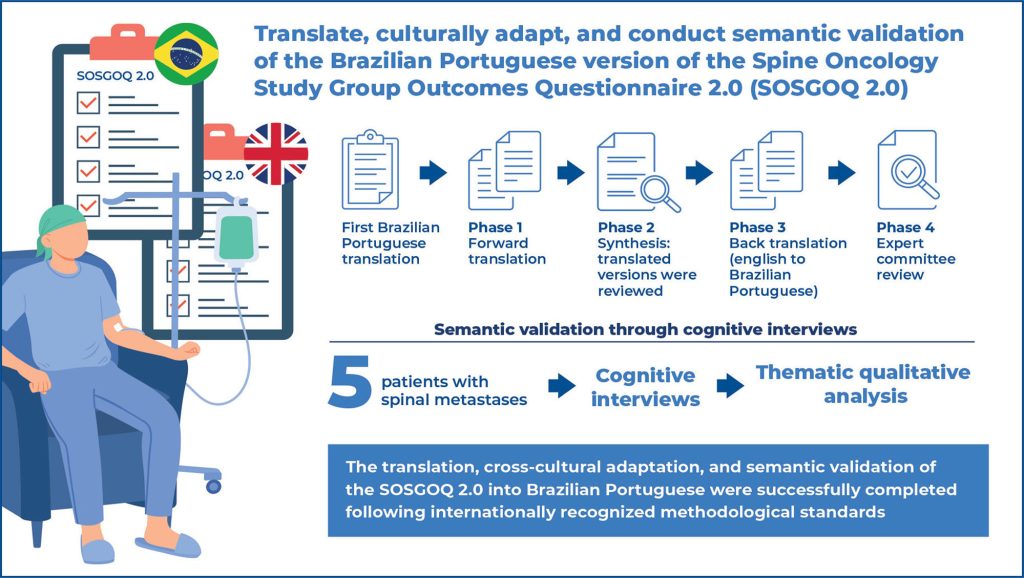
Following the guidelines of Beaton et al., the translation process included forward translation by two independent Brazilian translators, back translation by two native English speakers, expert committee review, and reconciliation. The final version underwent semantic validation through cognitive interviews with five patients with spinal metastases at a Brazilian public cancer center. Following Consolidated Criteria for Reporting Qualitative Research guidelines, semi-structured interviews assessed comprehensibility, relevance, and cultural appropriateness. All interviews were recorded, transcribed, and analyzed using thematic content analysis.
Results:
All participants (mean age 58±12 years, 60% male) completed the questionnaire successfully. Thematic analysis identified three main themes. High comprehensibility was observed, as all items were clearly understood without ambiguity. Cultural relevance emerged because the questions reflected the Brazilian healthcare context appropriately. Clinical applicability was also evident, as participants recognized the relevance of the symptoms addressed in the questionnaire to their condition. The mean completion time was 12±3 min, and no linguistic modifications were required. Participant feedback demonstrated semantic equivalence and acceptability of the translated instrument.
Conclusion:
The Brazilian Portuguese SOSGOQ 2.0 demonstrated strong semantic validity and cultural appropriateness in this qualitative validation study. The instrument is ready for large-scale psychometric validation studies in Brazilian oncology settings.
[…]