einstein (São Paulo). 24/Jun/2026;24:eAO2124.
Evaluation of cerebral concussion using the SCAT-5 tool: translation into Brazilian Portuguese and cultural adaptation

DOI: 10.31744/einstein_journal/2026AO2124
Highlights
■ The SCAT-5 is a questionnaire for the follow-up of patients diagnosed with cerebral concussion.
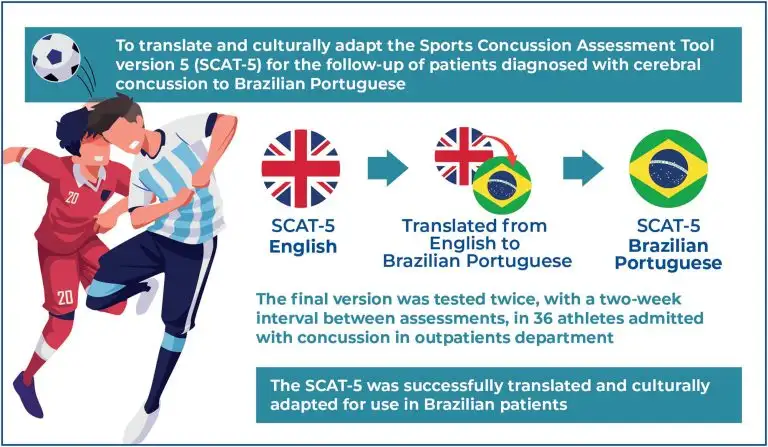
■ The SCAT-5 was translated from English to Brazilian Portuguese, back-translated, and evaluated by an expert committee. The final version was tested twice on athletes admitted to the cerebral concussion in Sports outpatient clinic with concussion.
■ The SCAT-5 was successfully translated and culturally adapted for use in Brazilian patients. The agreement between the first and second tests was moderate for “irritability” and good or very good for all other variables.
■ The Brazilian Portuguese SCAT-5 can contribute to improving and standardizing the healthcare of patients with cerebral concussion in Brazil.
ABSTRACT
Objective:
This study aimed to translate and culturally adapt the Sports Concussion Assessment Tool version 5 (SCAT-5) in Brazilian Portuguese for the follow-up of patients diagnosed with cerebral concussion.
Methods:
The components of the SCAT-5, which includes an assessment of level of consciousness using the Glasgow Coma Scale, were translated from English to Brazilian Portuguese, back-translated, and evaluated by an expert committee. The final version was tested twice, with a 2-week interval between assessments, in 36 athletes admitted to the cerebral concussion outpatient clinic with concussion. Statistical analyses were subsequently performed using prevalence-adjusted and bias-adjusted kappa to assess the degree of agreement between the first and second tests.
Results:
The athletes were predominantly rugby players (23/36) and female (23/36), and none were in the acute phase of concussion. Their ages ranged from 18 to 45 years, and the median time from the last concussion to assessment was 104 days. A significant difference was observed between the first and second tests for three variables evaluated: “total number of symptoms,” “balance test [standing on one foot]” and “total balance score,” with an increase in the number of symptoms and a decrease in balance scores between tests, possibly indicating worsening symptoms or increased awareness about symptoms. The agreement between the first and second assessments was deemed moderate only for “irritability” and good or very good for all other variables.
Conclusion:
The SCAT-5 was successfully translated and culturally adapted for use in Brazilian patients. This tool will contribute to improving and standardizing the healthcare of patients with cerebral concussion in Brazil, improving medical care, and guiding medical staff toward orienting patients to a gradual and adequate return to sports-related activities following concussion.
[…]