01/Jul/2026
Rapid response team activations for ambulatory oncology patients within a tertiary Hospital: a retrospective study
einstein (São Paulo). 01/Jul/2026;24:eAO2054.
View Article01/Jul/2026
Rapid response team activations for ambulatory oncology patients within a tertiary Hospital: a retrospective study
DOI: 10.31744/einstein_journal/2026AO2054
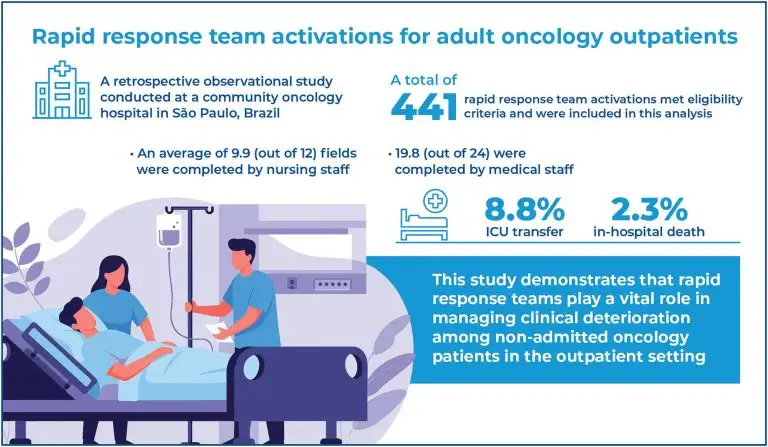
Highlights ■ A total of 441 rapid response team activations among adult oncology outpatients in 2023. ■ Most activations occurred during clinic visits or imaging exams; few in chemotherapy. ■ Key triggers included staff concern and arterial hypertension. ■ Outcomes: 8.8% of patients required intensive care unit transfer and 2.3% died in the hospital. ABSTRACT Objective: To describe the characteristics, timing, documentation completeness, and outcomes of Rapid Response Team activations among adult oncology outpatients. Methods: This retrospective study analyzed all […]
Keywords: Ambulatory care; Emergency medical services; Medical oncology; Outpatient; Patient safety; Rapid response team
23/Jul/2025
Time-Driven Activity-Based Costing (TDABC) applied in a chemotherapy department of a public reference oncology hospital
DOI: 10.31744/einstein_journal/2025GS0679
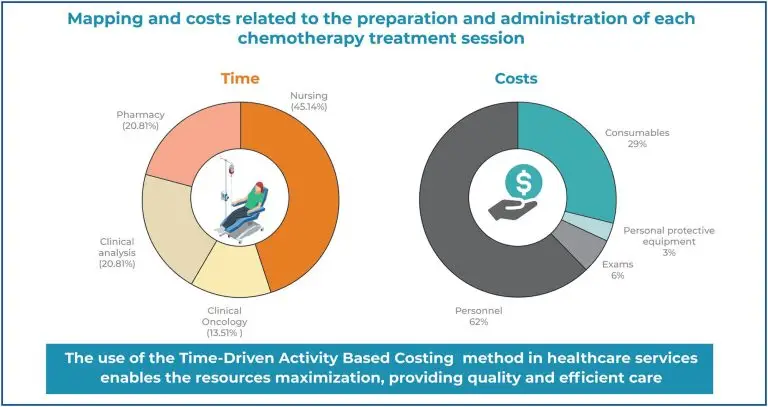
Highlights ■ Using the Time-Driven Activity-Based Costing method in healthcare services enables resource maximization with better control of processes and financing. ■ The estimated cost of treating a patient per antineoplastic session is R$ 470,35. ■ Such analyses can help establish pricing strategies and identify necessary adjustments to the financing model in oncology. ABSTRACT Objective: To identify the costs pertaining to the preparation and administration process of each chemotherapy treatment session in a public oncology hospital belonging to the Brazilian […]
Keywords: Antineoplastic agents; Costs and cost analysis; Drug therapy; Health care costs; Health Services; Medical oncology; Micro-costing; Technology assessment, biomedical; Unified Health System
22/Apr/2025
Dose-response relationships in Y90 resin microsphere radioembolization for patients with hepatocellular carcinoma: insights from a Brazilian cohort
einstein (São Paulo). 22/Apr/2025;23:eAO1287.
View Article22/Apr/2025
Dose-response relationships in Y90 resin microsphere radioembolization for patients with hepatocellular carcinoma: insights from a Brazilian cohort
DOI: 10.31744/einstein_journal/2025AO1287
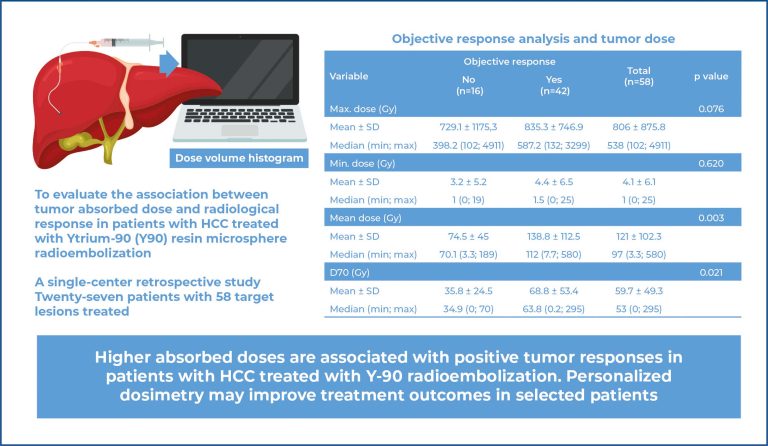
Highlights ■ Higher absorbed doses are associated with positive tumor responses in patients with hepatocellular carcinoma treated with Y-90 radioembolization. ■ Personalized dosimetry may improve treatment outcomes in selected patients. ■ Dosimetric parameters such as D30, D50, and D70 also correlate positively with objective responses, emphasizing the importance of precise dose calculation in treatment planning. ABSTRACT Objective: To evaluate the relationship between the absorbed dose and radiological response in patients with hepatocellular carcinoma undergoing resin microsphere radioembolization to enhance treatment […]
Keywords: Carcinoma, hepatocellular; In vivo dosimetry; Medical oncology; Microspheres; Radiology, Interventional
11/Dec/2015
Clinical features and overall survival among elderly cancer patients in a tertiary cancer center
DOI: 10.1590/S1679-45082015AO3067
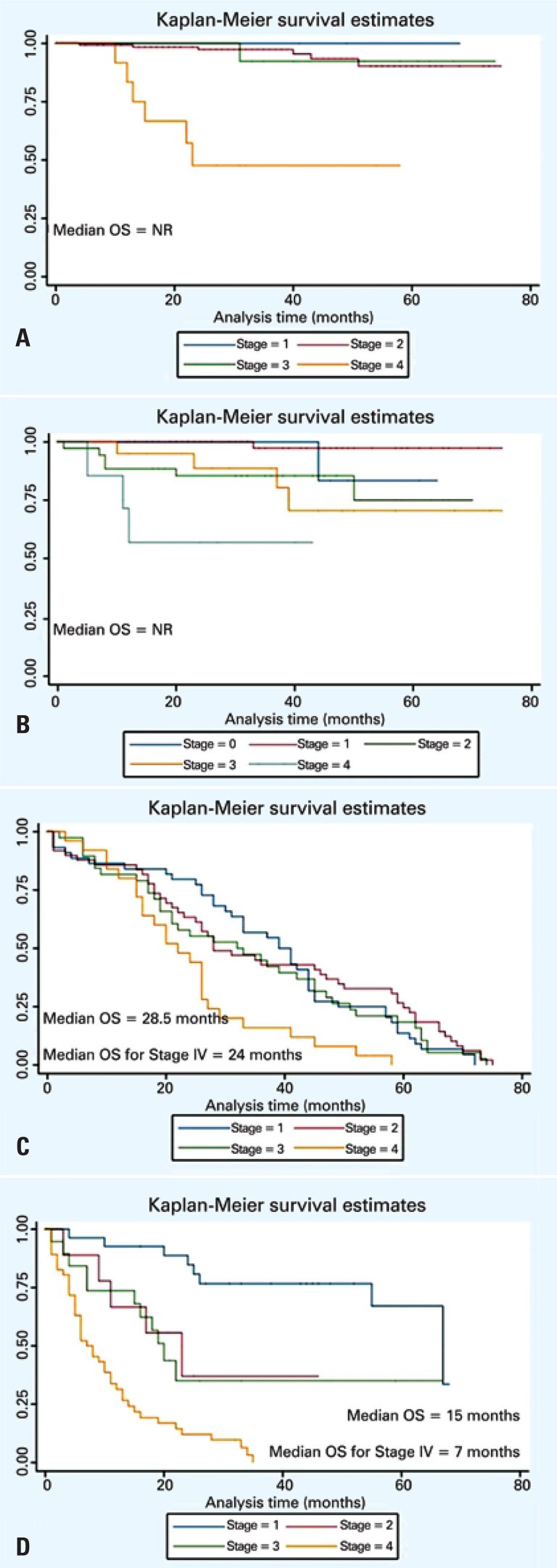
ABSTRACT Objective To evaluate the epidemiological profile and overall survival of a large population of elderly individuals diagnosed with solid tumors in a tertiary hospital. Methods This retrospective study included patients aged >65 years, diagnosed with solid tumors between January 2007 and December 2011, at Hospital Israelita Albert Einstein, São Paulo, Brazil. The medical records were reviewed to obtain information about clinical variables and overall survival. Results A total of 806 patients were identified, and 58.4% were male. Mean age […]
Keywords: Aged; Medical oncology; Neoplasms/epidemiology; Neoplasms/mortality
01/Apr/2010
Humanization according to cancer patients with extended hospitalization periods
DOI: 10.1590/S1679-45082010AO1369
ABSTRACT Objective: To identify the concept of humanization and raise aspects that contribute towards and that hinder humanization of hospital care, according to the opinion of oncology patients. Methods: This is a descriptive-exploratory survey, with a qualitative-quantitative approach. The sample was made up of 10 patients hospitalized for more than 30 days at the Oncology Unit of Hospital Israelita Albert Einstein, who, after satisfying ethical and legal procedures, were interviewed and answered three questions in reference to humanization in oncology. […]
Keywords: Hospital care; Humanization of assistance; Medical oncology; Oncologic nursing; Patient-centered care