22/Apr/2025
Dose-response relationships in Y90 resin microsphere radioembolization for patients with hepatocellular carcinoma: insights from a Brazilian cohort
einstein (São Paulo). 22/Apr/2025;23:eAO1287.
View Article22/Apr/2025
Dose-response relationships in Y90 resin microsphere radioembolization for patients with hepatocellular carcinoma: insights from a Brazilian cohort
DOI: 10.31744/einstein_journal/2025AO1287
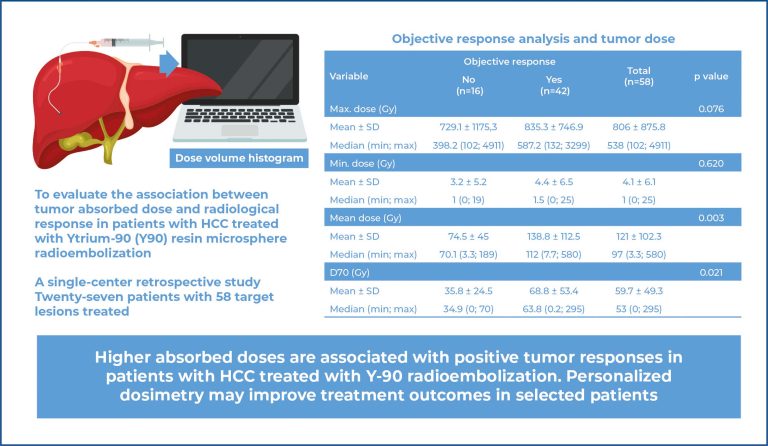
Highlights ■ Higher absorbed doses are associated with positive tumor responses in patients with hepatocellular carcinoma treated with Y-90 radioembolization. ■ Personalized dosimetry may improve treatment outcomes in selected patients. ■ Dosimetric parameters such as D30, D50, and D70 also correlate positively with objective responses, emphasizing the importance of precise dose calculation in treatment planning. ABSTRACT Objective: To evaluate the relationship between the absorbed dose and radiological response in patients with hepatocellular carcinoma undergoing resin microsphere radioembolization to enhance treatment […]
Keywords: Carcinoma, hepatocellular; In vivo dosimetry; Medical oncology; Microspheres; Radiology, Interventional
25/Sep/2024
Cost-effectiveness of radiofrequency ablation versus percutaneous ethanol injection for early hepatocellular carcinoma in a resource-poor setting: a randomized trial
einstein (São Paulo). 25/Sep/2024;22:eGS0683.
View Article25/Sep/2024
Cost-effectiveness of radiofrequency ablation versus percutaneous ethanol injection for early hepatocellular carcinoma in a resource-poor setting: a randomized trial
DOI: 10.31744/einstein_journal/2024GS0683
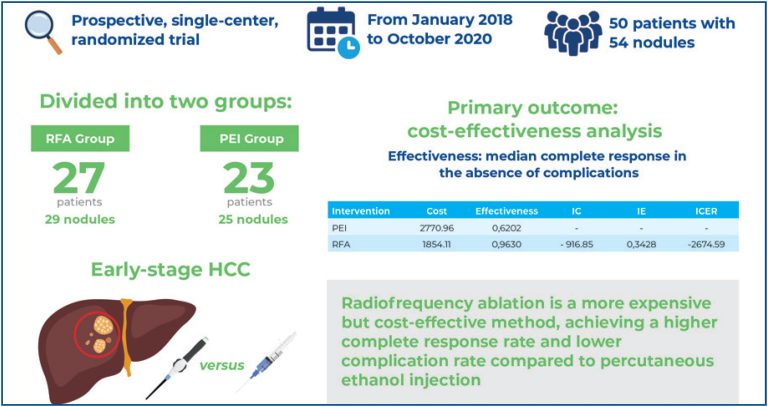
Highlights Radiofrequency ablation and percutaneous ethanol injection are neoadjuvant hepatocellular carcinoma treatment methods. Radiofrequency ablation achieves a higher complete response rate (96.3% versus 60.0%, p=0.001). Total cost analyses showed radiofrequency ablation as a more expensive method (p<0.001). The incremental cost-effectiveness ratio was US$ -2674.59 with an advantage for radiofrequency ablation. Incremental effectiveness (34.2%) was in favor of radiofrequency ablation versus percutaneous ethanol injection. ABSTRACT Objective: This study assessed the cost-effectiveness of radiofrequency ablation compared with percutaneous ethanol injection in patients […]
Keywords: Ablation techniques; Cost-effectiveness evaluation; Liver neoplasms; Liver transplantation; Radiology, Interventional
19/Oct/2023
Radiological characteristics of hepatocellular carcinoma that achieved complete response after chemoembolization with drug-eluting beads for liver transplantation planning
einstein (São Paulo). 19/Oct/2023;21:eAO0307.
View Article19/Oct/2023
Radiological characteristics of hepatocellular carcinoma that achieved complete response after chemoembolization with drug-eluting beads for liver transplantation planning
DOI: 10.31744/einstein_journal/2023AO0307
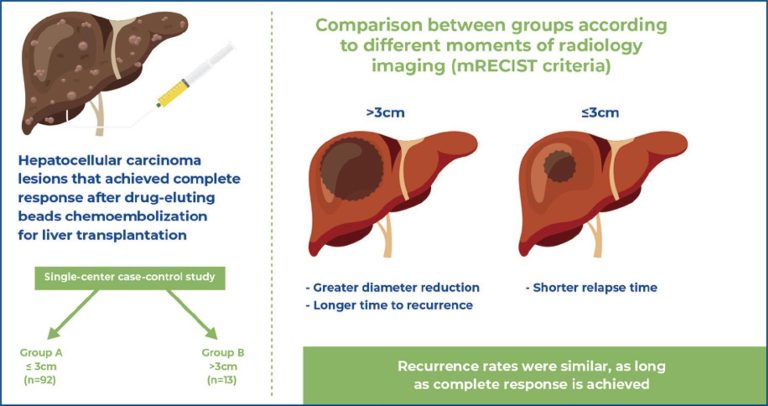
Highlights Once complete hepatocellular carcinoma necrosis is achieved, the diameter of the hepatocellular carcinoma decreases significantly, regardless of its initial size. Hepatocellular carcinoma >3cm showed greater reduction and longer time to recurrence. Hepatocellular carcinoma ≤3cm exhibited a shorter time to relapse. Recurrence rates were similar, as long as complete response was achieved. ABSTRACT Objective: To describe the radiological characteristics of hepatocellular carcinoma (HCC) lesions that achieved a complete response following drug-eluting bead transarterial chemoembolization (DEB-TACE) preceding liver transplantation. Methods: This […]
Keywords: Carcinoma, hepatocellular; Chemoembolization, therapeutic; Liver neoplasms; Living donors; Neoadjuvant therapy; Radiology, Interventional; Response evaluation criteria in solid tumors
07/Apr/2022
Lung nodule localization in hybrid room before minimally invasive thoracic surgery: series of 20 cases and literature review
einstein (São Paulo). 07/Apr/2022;20:eAO6665.
View Article07/Apr/2022
Lung nodule localization in hybrid room before minimally invasive thoracic surgery: series of 20 cases and literature review
DOI: 10.31744/einstein_journal/2022AO6665
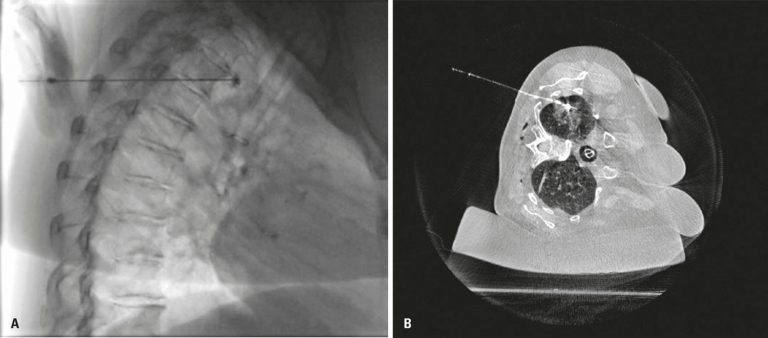
ABSTRACT Objective To describe an experience in the preoperative localization of small pulmonary nodules and ground-glass lesions to guide minimally invasive thoracic surgery; in addition, a literature review was conducted, including the main advantages and disadvantages of the different agents used, and site marking in a hybrid operating room. Methods A retrospective search was conducted in a Interventional Radiology Department database, between March 2015 and May 2019, to identify patients undergoing preoperative percutaneous marking of lung injuries measuring up to […]
Keywords: Lung neoplasms; Preoperative period; Radiology, Interventional; Solitary pulmonary nodule; Thoracic surgery, video-assisted
01/Oct/2011
Interventional radiology to treat severe obstetric hemorrhages
einstein (São Paulo). 01/Oct/2011;9(4):552-4.
View Article01/Oct/2011
Interventional radiology to treat severe obstetric hemorrhages
DOI: 10.1590/S1679-45082011MD2315
ABSTRACT The author discusses the recent role of interventional radiology to prevent postpartum hemorrhagic complications that represent an important cause of maternal morbidity and mortality all over the world. Hence, hemorrhage control is mandatory. Traditional management and recent minimally invasive radiological procedures by means of inserting occluding balloons into appropriate vessels are analyzed. It is advisable that maternity hospitals have protocols for the management of obstetric hemorrhage by means of interventional radiology, either in their own departments or in association […]
Keywords: Placenta; Placenta accreta; Postpartum, hemorrhage; Radiology, Interventional
01/Jan/2010
A mobile interventional radiology unit: innovation and social responsibility
einstein (São Paulo). 01/Jan/2010;8(1):75-9.
View Article01/Jan/2010
A mobile interventional radiology unit: innovation and social responsibility
DOI: 10.1590/S1679-45082010AO1468
ABSTRACT Objective: To present the preliminary results of a feasibility study performed to determine the value of a mobile interventional radiology unit used to promote a uterine embolization program for low-income patients. Methods: Forty patients with symptomatic fibroids were treated with uterine embolization. Procedures were performed in four public hospitals in the metropolitan area of Sao Paulo. This study was approved by the institutional research ethics committee and all patients signed an informed consent form. A mobile interventional radiology unit, […]
Keywords: Hospitals, public; Mobile health units; Mobile health units/supply & distribution; Myoma/radiotherapy; Quality of life; Radiology, Interventional; Social responsibility; Uterine artery embolization; Uterine artery embolization/economics; Uterine artery embolization/utilization; Women; Women's health services; Women's health services/supply & distribution