3 results
08/Apr/2026
08/Apr/2026
DOI: 10.31744/einstein_journal/2026RW1656
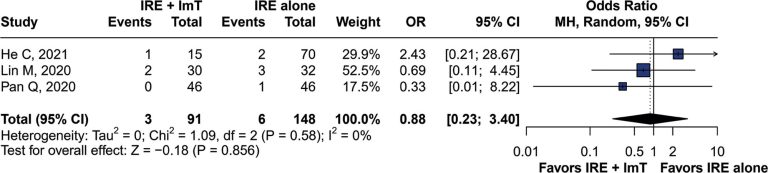
ABSTRACT Objective: The aim of this meta-analysis was to determine the efficacy and safety of percutaneous irreversible electroporation combined with immunotherapy compared with irreversible electroporation alone in patients with locally advanced pancreatic cancer. Methods: We systematically searched Embase, Cochrane Central Register of Controlled Trials, and PubMed/Medline for relevant studies. The outcomes of interest were progression-free survival, overall survival, carbohydrate antigen 19-9 (CA 19-9) levels, and adverse events. Progression-free survival and overall survival were assessed using pooled hazard ratios (HR), odds […]
Keywords: Ablation techniques; Electroporation; Immunotherapy; Pancreatic neoplasms
31/Oct/2024
DOI: 10.31744/einstein_journal/2024RC0779
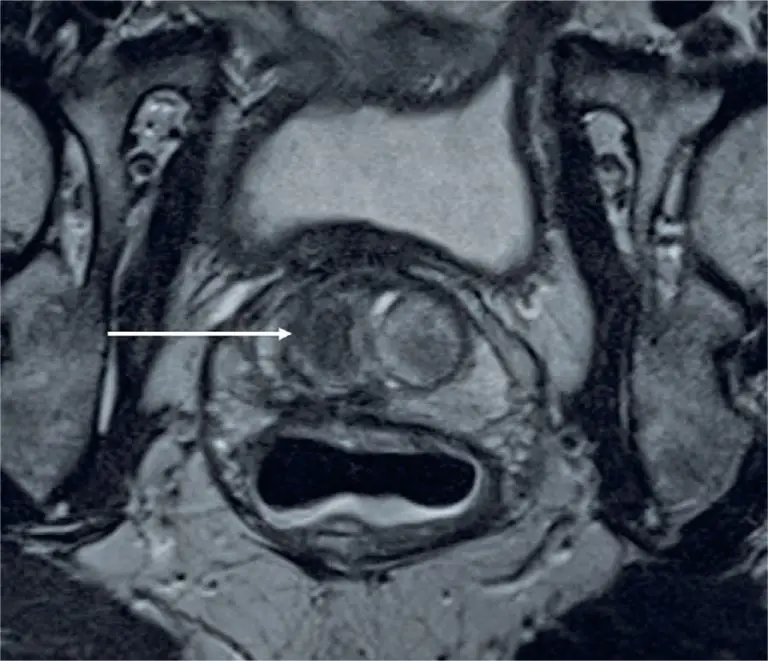
ABSTRACT Radical treatment for prostate cancer is associated with significant morbidity. Percutaneous image-guided irreversible electroporation is a non-thermal ablative technique that has emerged as a valuable option. This study describes the case of a patient with prostate cancer who was successfully treated using irreversible electroporation. We report the case of a 72-year-old male patient who presented with elevated PSA (4.0ng/mL) during routine testing. Multiparametric magnetic resonance imaging of the prostate revealed a 0.8 cm lesion in the posterolateral aspect of […]
Keywords: Ablation techniques; interventional; Irreversible electroporation therapy; Multiparametric magnetic resonance imaging; Prostatic neoplasms; Radiology
25/Sep/2024
25/Sep/2024
DOI: 10.31744/einstein_journal/2024GS0683
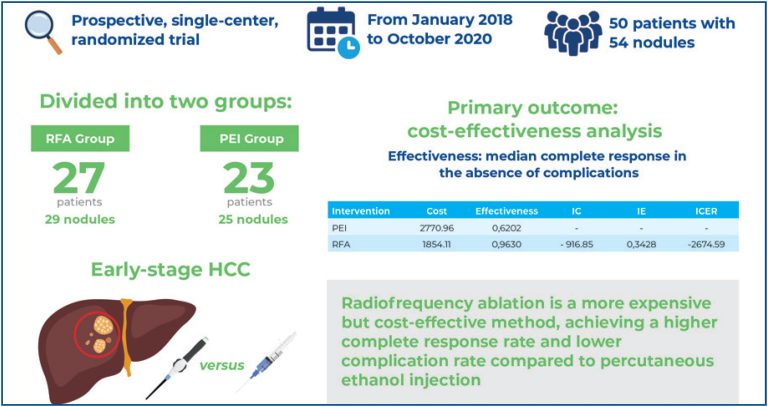
Highlights Radiofrequency ablation and percutaneous ethanol injection are neoadjuvant hepatocellular carcinoma treatment methods. Radiofrequency ablation achieves a higher complete response rate (96.3% versus 60.0%, p=0.001). Total cost analyses showed radiofrequency ablation as a more expensive method (p<0.001). The incremental cost-effectiveness ratio was US$ -2674.59 with an advantage for radiofrequency ablation. Incremental effectiveness (34.2%) was in favor of radiofrequency ablation versus percutaneous ethanol injection. ABSTRACT Objective: This study assessed the cost-effectiveness of radiofrequency ablation compared with percutaneous ethanol injection in patients […]
Keywords: Ablation techniques; Cost-effectiveness evaluation; Liver neoplasms; Liver transplantation; Radiology, Interventional