01/Jul/2026
Rapid response team activations for ambulatory oncology patients within a tertiary Hospital: a retrospective study
einstein (São Paulo). 01/Jul/2026;24:eAO2054.
View Article01/Jul/2026
Rapid response team activations for ambulatory oncology patients within a tertiary Hospital: a retrospective study
DOI: 10.31744/einstein_journal/2026AO2054
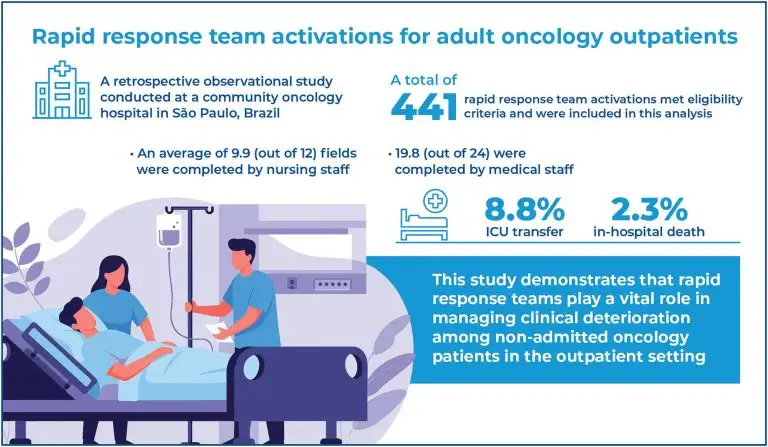
Highlights ■ A total of 441 rapid response team activations among adult oncology outpatients in 2023. ■ Most activations occurred during clinic visits or imaging exams; few in chemotherapy. ■ Key triggers included staff concern and arterial hypertension. ■ Outcomes: 8.8% of patients required intensive care unit transfer and 2.3% died in the hospital. ABSTRACT Objective: To describe the characteristics, timing, documentation completeness, and outcomes of Rapid Response Team activations among adult oncology outpatients. Methods: This retrospective study analyzed all […]
Keywords: Ambulatory care; Emergency medical services; Medical oncology; Outpatient; Patient safety; Rapid response team
24/Jun/2026
In situ simulation for trauma victim care in a hospital fire scenario
DOI: 10.31744/einstein_journal/2026AO2275
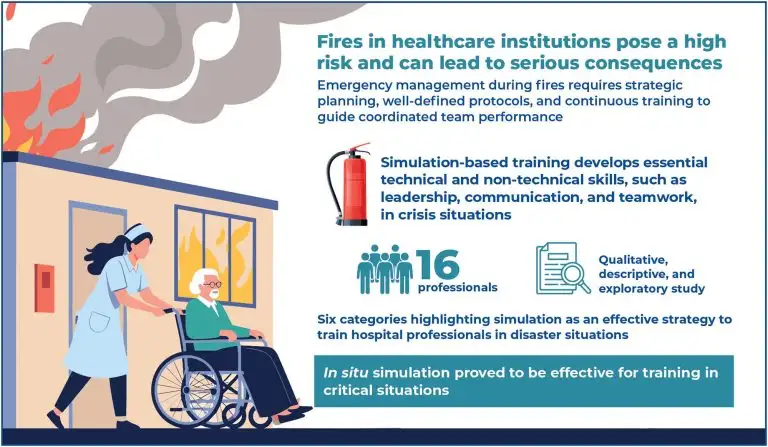
Highlights ■ In situ simulation prepares healthcare teams for hospital fire emergencies. ■ Simulation strengthens teamwork, communication, and safety culture. ■ This study demonstrates that simulation enables the identification of latent threats and gaps in institutional protocols. ■ In situ training contributes to organizational readiness and emergency planning. ABSTRACT Objective: To evaluate in situ simulations as a training strategy for the initial care of trauma victims in a hospital fire scenario. Methods: A qualitative, descriptive, and exploratory study was conducted […]
Keywords: Disasters; Education, continuing; Fires; Hospitals; Patient safety; Safety; Simulation training; Wounds and injuries
10/Nov/2023
Efficacy and safety of medical cannabinoids in children with cerebral palsy: a systematic review
DOI: 10.31744/einstein_journal/2023RW0387
ABSTRACT Introduction The increasing popularity of cannabinoids for treating numerous neurological disorders has been reported in various countries. Although it reduces tetrahydrocannabinol psychoactivity, it helps patients tolerate higher doses and complements the anti-spasmodic effects of tetrahydrocannabinol. One of the most important potential of cannabinoids are related to its potential to help children with cerebral palsy, a contributor of lifelong disability. Therefore, this systematic review aimed to assess the efficacy and safety of medical cannabinoids in children with cerebral palsy. Methods […]
Keywords: Cannabinoids; Cerebral palsy; Child; Efficacy; Patient safety; Safety
25/Jul/2023
SWOT analysis to reduce surgical center idleness and increase revenue in a hospital
DOI: 10.31744/einstein_journal/2023GS0408
Highlights Reduction of idleness by 67.84% in the surgical center. Increase in the volume of surgical procedures. Increased revenues and profits. ABSTRACT Objective To reduce surgical center idleness by analyzing the competitive structure of the surgical center in a hospital, and thereby generate value in operations and increase hospital revenue. Methods The study used qualitative and quantitative methods and an action research approach involving the surgical center leadership of a small private specialized hospital in southeastern Brazil. We used […]
Keywords: Costs and cost analysis; Health management; Nursing; Organization and administration; Patient safety; Quality of Health Care; Surgicenters; Total quality management
13/Sep/2021
The use of an electronic medication organizer device with alarm to improve medication adherence of older adults with hypertension
einstein (São Paulo). 13/Sep/2021;19:eAO6011.
View Article13/Sep/2021
The use of an electronic medication organizer device with alarm to improve medication adherence of older adults with hypertension
DOI: 10.31744/einstein_journal/2021AO6011
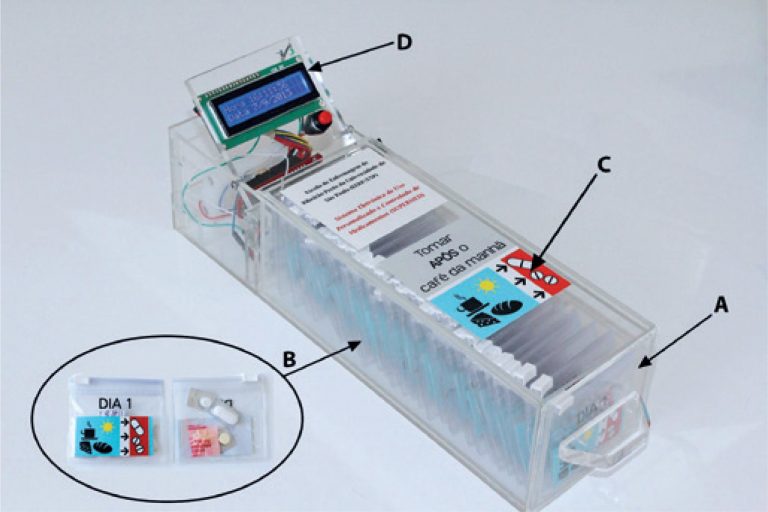
ABSTRACT Objective: To examine whether the use of a monthly electronic medication organizer device equipped with an alarm clock, called Electronic System for Personal and Controlled Use of Medications (Supermed), improves medication adherence of older adults with hypertension. Methods: This is a quali-quantitative, prospective, before-and-after study performed with 32 older adult patients with diagnosis of hypertension, who were recruited at a Primary Care Unit in Brazil. Results: The main outcome measures were improvement of medication adherence and blood pressure control […]
Keywords: Aged; Drug utilization; Equipment and supplies; Patient safety; Reminder systems
10/Jun/2021
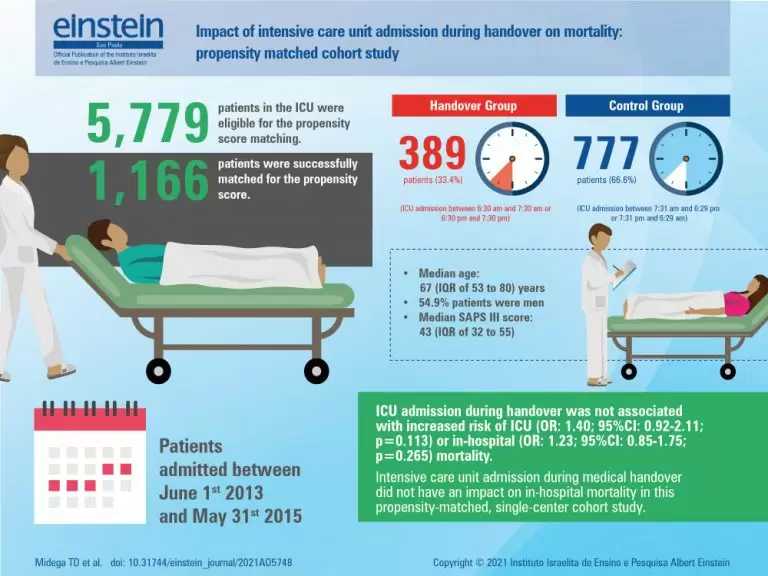
Impact of intensive care unit admission during handover on mortality: propensity matched cohort study
DOI: 10.31744/einstein_journal/2021AO5748
ABSTRACT Objective: To investigate the impact of intensive care unit admission during medical handover on mortality. Methods: Post-hoc analysis of data extracted from a prior study aimed at addressing the impacts of intensive care unit readmission on clinical outcomes. This retrospective, single-center, propensity-matched cohort study was conducted in a 41-bed general open-model intensive care unit. Patients were assigned to one of two cohorts according to time of intensive care unit admission: Handover Group (intensive care unit admission between 6:30 am […]
Keywords: Communication; Health resources/statistics & numerical data; Hospital mortality; Intensive care units/statistics & numerical data; Patient discharge; Patient handoff; Patient outcome assessment; Patient readmission; Patient safety
20/Dec/2019
Pharmaceutical intervention in the rational use of intravenous omeprazole
DOI: 10.31744/einstein_journal/2020AO4433
ABSTRACT Objective: To describe the pharmaceutical interventions of a vertical clinical pharmacy service to promote the rational use of intravenous omeprazole. Methods: A prospective and descriptive study carried out at a university hospital in the Midwestern Region of Brazil, from November 2014 to May 2015. The service consisted of the analysis of adequacy of the route of administration of omeprazole in relation to the clinical conditions of the patient, as well as the use of the appropriate diluent. Interventions were […]
Keywords: Drug utilization; Infusions, intravenous; Omeprazole; Patient safety; Pharmaceutical services
25/Jun/2019
Implementing technologies to prevent medication errors at a high-complexity hospital: analysis of cost and results
DOI: 10.31744/einstein_journal/2019GS4621
ABSTRACT Objective: To calculate the cost and assess the results on implementing technological resources that can prevent medication errors. Methods: A retrospective, descriptive-exploratory, quantitative study (2007-2015), in the model of case study at a hospital in the Brazilian Southeastern Region. The direct cost of each technology was calculated in the drug chain. Technological efficacy was observed from the reported series of the indicator incidence of medication errors. Results: Thirteen technologies were identified to prevent medication errors. The average cost of […]
Keywords: Accident prevention; Costs and cost analysis; Medication errors; Medication systems, hospital; Patient safety; Technology
06/Feb/2019
Risk factors associated with in-hospital falls reported to the Patient Safety Commitee of a teaching hospital
DOI: 10.31744/einstein_journal/2019AO4432
ABSTRACT Objective To investigate the use of fall-risk-increasing drugs among patients with falls reported to the Patient Safety Office of a hospital, and to identify the factors associated with high risk for fall. Methods A cross-sectional study, carried out in a teaching hospital. The study population was the universe of fall reports received by the Patient Safety Office. The dependent variable was a high risk for falls. The Medication Fall Risk Score was used to measure fall risk. Descriptive, univariate […]
Keywords: Drug therapy; Fall; Near miss, healthcare; Patient safety; Pharmaceutical preparations; Risk Factors
11/Dec/2018
When color helps
DOI: 10.31744/einstein_journal/2019AO4410
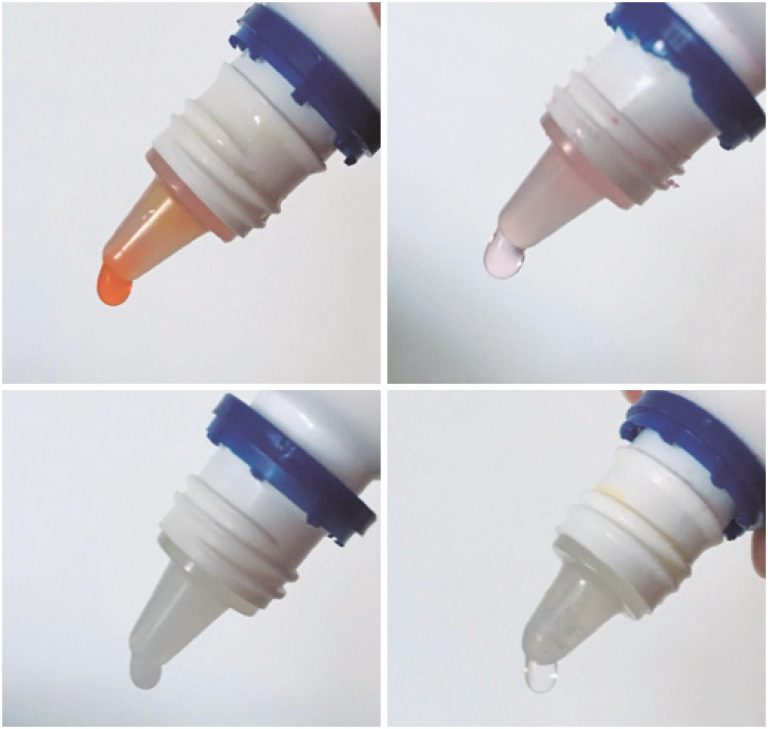
ABSTRACT Objective: To reduce the inappropriate identification of eye drops, through the use of different colors. Methods: A group of 34 healthy volunteers was presented to two groups of four eye drops each. All eye drops were placed in identical, unlabelled vials. In one group, all four eye drops were transparent. In the other group, each had a different color. A number was assigned to each eye drop, and the volunteer was asked to identify it by color. We measured […]
Keywords: Color; Consumer behavior; Drug labeling/methods; Drug packaging/methods; Ophthalmic solutions; Patient safety