8 results
25/Jul/2023
DOI: 10.31744/einstein_journal/2023GS0408
Highlights Reduction of idleness by 67.84% in the surgical center. Increase in the volume of surgical procedures. Increased revenues and profits. ABSTRACT Objective To reduce surgical center idleness by analyzing the competitive structure of the surgical center in a hospital, and thereby generate value in operations and increase hospital revenue. Methods The study used qualitative and quantitative methods and an action research approach involving the surgical center leadership of a small private specialized hospital in southeastern Brazil. We used […]
Keywords: Costs and cost analysis; Health management; Nursing; Organization and administration; Patient safety; Quality of Health Care; Surgicenters; Total quality management
01/Apr/2017
01/Apr/2017
DOI: 10.1590/S1679-45082017GS4002
ABSTRACT Objective To conduct an economic analysis of enteral and parenteral diet costs according to the type of disease and outcome (survivors versus deaths). Methods It is a cross-sectional, observational, retrospective study with a qualitative and quantitative design, based on analysis of hospital accounts from a healthcare insurance provider in the Southern region of Brazil. Results We analyzed 301 hospital accounts of individuals who used enteral and parenteral diets. The total cost of the diet was 35.4% of hospital account […]
Keywords: Costs and cost analysis; Health Evaluation; Health management; Malnutrition; Nutrition therapy
01/Apr/2017
DOI: 10.1590/S1679-45082017GS3759
ABSTRACT Objective To present the implementation of an apportionment strategy proportional to the productive areas of a multidisciplinary clinic, defining the minimum values to be passed monthly to health professionals who work there. Methods A study of the clinic structure was carried out, in which the area of occupation of each service was defined. Later the cost was prorated, allocating a value to each room, proportional to the space occupied. Results The apportionment implementation allowed the clinic managers to visualize […]
Keywords: Ambulatory care facilities/economics; Cost allocation; Costs and cost analysis; Health management; Strategies
01/Oct/2016
DOI: 10.1590/S1679-45082016GS3615
ABSTRACT Objective To analyze the major impact variables in the opinion of nursing staff about the Quality Program of a teaching hospital. Methods An exploratory-descriptive study was performed with 72 nursing staff. Data were collected through self-administered questionnaire containing 24 statements about the Quality Program; and the degree of agreement of the participants was expressed in a Likert scale. The collected data were analyzed by factor analysis and Pearson’s correlation coefficient. Results The analysis grouped the statements in six factors. […]
Keywords: Health management; Nursing staff hospital; Nursing, team; Quality management; Quality of Health Care; Working Conditions
01/Jul/2014
DOI: 10.1590/S1679-45082014GS3029
Objective To describe and analyze the results of a public-private partnership between the Ministry of Health and a private hospital in a project of assistance and scientific research in the field of endovascular surgery. Methods: The flows, costs and clinical outcomes of patients treated in a the public-private partnership between April 2012 and July 2013 were analyzed. All patients underwent surgery and stayed at least one day at the intensive care unit of the private hospital. They also participated in […]
Keywords: Angioplasty/economics; Aortic aneurysm; Health management; Unified Health System; Vascular surgery procedures/economics
01/Apr/2014
DOI: 10.1590/S1679-45082014AO2833
Objective To analyze the nursing staff opinion about the continuous quality improvement program at a University Hospital. Methods A descriptive study designed as a case study, analyzing the quality program at a University Hospital, with the opinion of a sample stratified by nursing team category through a self-administered questionnaire, from May to July 2012. The answers were submitted to factor analysis, having the dialectical and historical materialism as the theoretical-methodological reference. Results The factor analysis grouped the variables in six […]
Keywords: Health management; Health systems; Nursing staff hospital; Quality management; Working Conditions
29/Oct/2012
DOI: 10.1590/S1679-45082012000300018
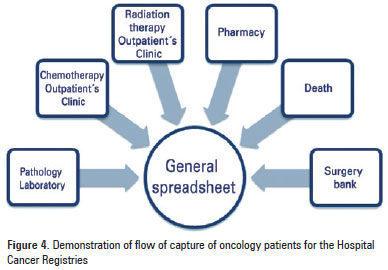
OBJECTIVE: To present the epidemiological profile of cancer patients belonging to a database of a Hospital Cancer Registry and to report on the importance of this database in managing healthcare services at an Oncology and Hematology Center. METHODS: A retrospective survey conducted with 1617 records of patients diagnosed with cancer at the institution between 2004 and 2009. The types of cancer analyzed were of the colon and rectum, breast, prostate and lung. The variables used in the study were age, […]
Keywords: Database; Health management; Neoplasms
01/Apr/2010
DOI: 10.1590/S1679-45082010AO1478
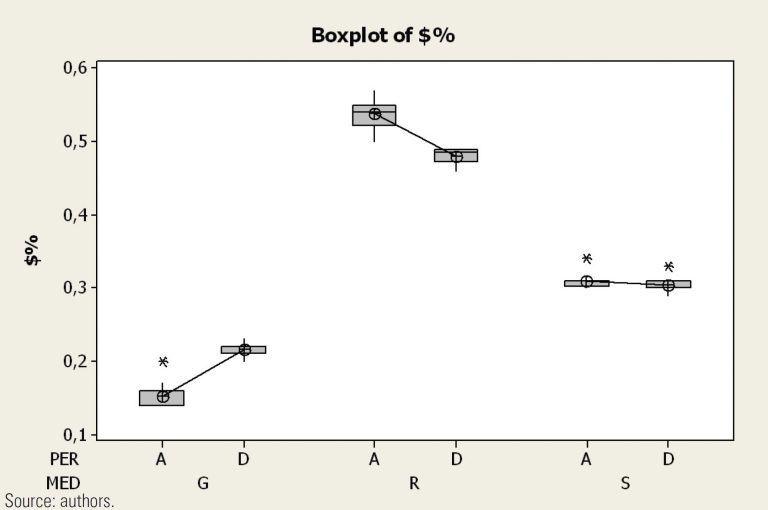
ABSTRACT Objective: To discuss the use of financial incentives in choice of medication and to assess the economic results concerning the use of financial incentives to promote the use of genetic medication in lieu of reference drugs in a company with a reimbursement program. Methods: A case study was carried out in a large supermarket. The data was obtained in the company responsible for managing medication. The study reached 83,625 users between August 2005 and July 2007. The data was […]
Keywords: Drugs, generic/supply & distribution; Health management; Reference drugs; Reimbursement, incentive/economics