09/Jun/2026
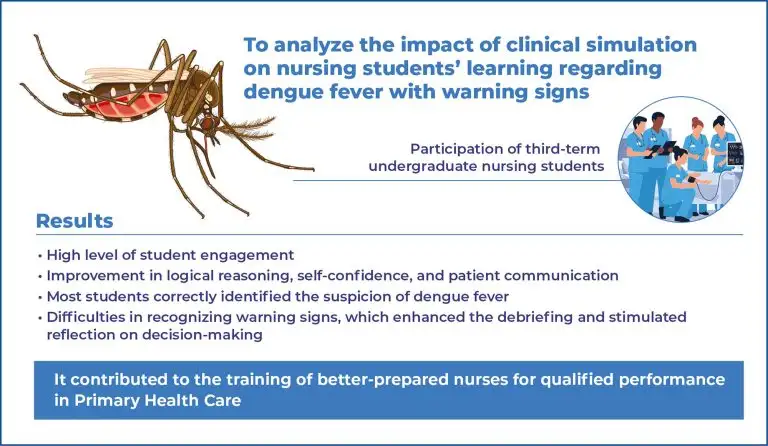
Nursing education: use of clinical simulation in the care of patients with dengue fever
DOI: 10.31744/einstein_journal/2026AO2278
Highlights ■ Clinical simulations enhance dengue management and clinical reasoning in undergraduate studies. ■ Mixed methods revealed gaps in physical examinations and uncertainties in risk classification. ■ Structured debriefing promotes metacognition and critical reflection on errors. ■ Realistic scenarios strengthen empathetic communication and enhance patient safety. ABSTRACT Objective: To analyze how clinical simulation impacts nursing students’ proficiency in clinical evaluation, decision-making, therapeutic communication, and reporting of dengue fever with warning signs within a primary health care context. Methods: Third-term nursing […]
Keywords: Dengue; Health education; Nursing; Primary Health Care; Simulation training
25/Jul/2023
SWOT analysis to reduce surgical center idleness and increase revenue in a hospital
DOI: 10.31744/einstein_journal/2023GS0408
Highlights Reduction of idleness by 67.84% in the surgical center. Increase in the volume of surgical procedures. Increased revenues and profits. ABSTRACT Objective To reduce surgical center idleness by analyzing the competitive structure of the surgical center in a hospital, and thereby generate value in operations and increase hospital revenue. Methods The study used qualitative and quantitative methods and an action research approach involving the surgical center leadership of a small private specialized hospital in southeastern Brazil. We used […]
Keywords: Costs and cost analysis; Health management; Nursing; Organization and administration; Patient safety; Quality of Health Care; Surgicenters; Total quality management
07/Mar/2022
Needs of family members of patients in a coronary care unit
DOI: 10.31744/einstein_journal/2022AO6258
ABSTRACT Objective: To identify the need of family members of patients hospitalized in a coronary intensive care unit and their degree of satisfaction with the care provided. Methods: An observational and cross-sectional study including family members of patients hospitalized in the coronary intensive care unit for acute coronary syndrome in Killip I or II. After the second visit of the same family member to the patient in the unit, a 43-item inventory of needs and stressors of family members was […]
Keywords: Acute coronary syndrome; Critical care; Family; Humanization of assistance; Inpatients; Intensive care units; Nursing; Patient-centered care