einstein (São Paulo). 01/Jul/2026;24:eAO2054.
Rapid response team activations for ambulatory oncology patients within a tertiary Hospital: a retrospective study

DOI: 10.31744/einstein_journal/2026AO2054
Highlights
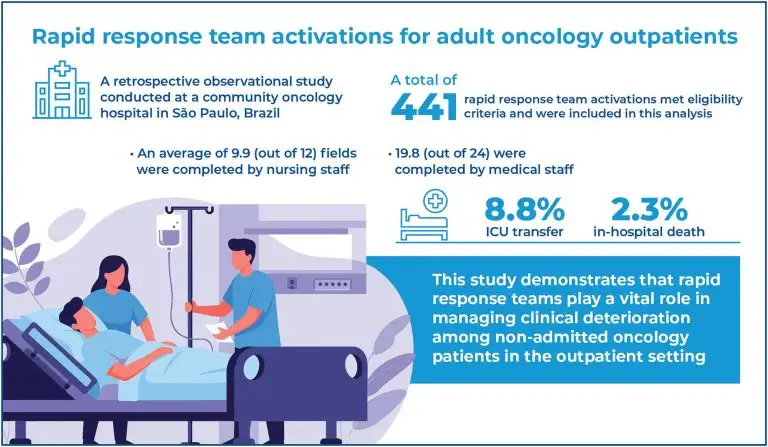
■ A total of 441 rapid response team activations among adult oncology outpatients in 2023.
■ Most activations occurred during clinic visits or imaging exams; few in chemotherapy.
■ Key triggers included staff concern and arterial hypertension.
■ Outcomes: 8.8% of patients required intensive care unit transfer and 2.3% died in the hospital.
ABSTRACT
Objective:
To describe the characteristics, timing, documentation completeness, and outcomes of Rapid Response Team activations among adult oncology outpatients.
Methods:
This retrospective study analyzed all Rapid Response Team activations involving non-admitted adult oncology patients in a community oncology hospital in Brazil during 2023. Data, including the time of activation, clinical triggers, response time, completed documentation fields, and clinical outcomes, were collected from standardized electronic forms. We explored the factors associated with the composite outcome of intensive care unit admission or in-hospital death using multivariable logistic regression.
Results:
We analyzed 441 activations, corresponding to 44.08 activations per 10,000 outpatient visits, 68.77 per 10,000 imaging procedures, and 13.58 per 10,000 chemotherapy sessions. Most occurred in outpatient clinics (55.1%) and imaging areas (37.4%). The most common triggers were clinical concerns and hypertension. The median response time was 3 minutes (interquartile range [IQR] 2-4), with 92.1% meeting the hospital’s 5-minute goal. Regarding documentation, nursing and medical staff completed an average of 9.9/12 and 19.8/24 fields, respectively. Intensive care unit transfer occurred in 39 (8.8%) activations, while 10 (2.3%) patients died during hospitalization (median: 17 days from activation). In the adjusted analyses, age, sex, and trigger category were not independently associated with the composite outcome.
Conclusion:
Rapid Response Team activations in oncological outpatients were relatively frequent and often linked to significant clinical deterioration. These findings underscore the need for well-structured emergency protocols and real-time response capacity in ambulatory cancer care.
[…]