01/Jul/2026
Rapid response team activations for ambulatory oncology patients within a tertiary Hospital: a retrospective study
einstein (São Paulo). 01/Jul/2026;24:eAO2054.
View Article01/Jul/2026
Rapid response team activations for ambulatory oncology patients within a tertiary Hospital: a retrospective study
DOI: 10.31744/einstein_journal/2026AO2054
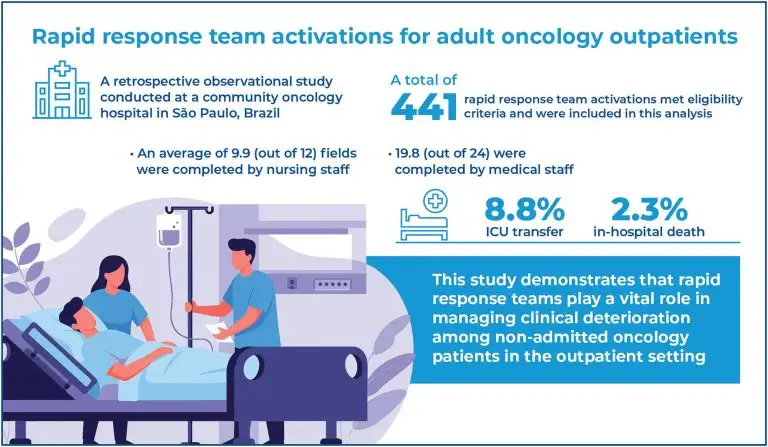
Highlights ■ A total of 441 rapid response team activations among adult oncology outpatients in 2023. ■ Most activations occurred during clinic visits or imaging exams; few in chemotherapy. ■ Key triggers included staff concern and arterial hypertension. ■ Outcomes: 8.8% of patients required intensive care unit transfer and 2.3% died in the hospital. ABSTRACT Objective: To describe the characteristics, timing, documentation completeness, and outcomes of Rapid Response Team activations among adult oncology outpatients. Methods: This retrospective study analyzed all […]
Keywords: Ambulatory care; Emergency medical services; Medical oncology; Outpatient; Patient safety; Rapid response team
02/Aug/2022
Clinical management of fever in children in Brazil: practical recommendations from an expert panel
DOI: 10.31744/einstein_journal/2022RW6045
ABSTRACT The objective of this study was to answer several questions related to the assessment and treatment of fever, as well as other controversies that exist during its management in pediatric patients. First, an advisory board with medical experts was conducted to discuss the clinical journey of these patients, considering the main challenges and possible solutions. After this discussion, a non-systematic literature review was performed, between November 2019 and January 2020, to collect the most relevant evidence available in the […]
Keywords: Ambulatory care; Child; Fever; Health Knowledge, Attitudes, Practice
06/Dec/2019
Scientometrics on interventions used for adherence of hypertension and diabetes therapies
DOI: 10.31744/einstein_journal/2020AO4723
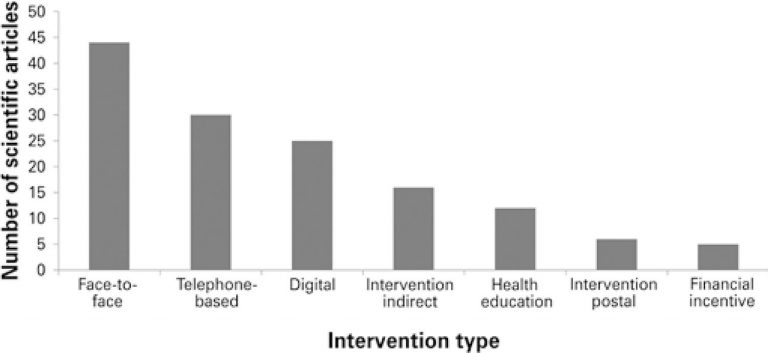
ABSTRACT Objective To identify interventions aimed to improve adherence to medical and non-medical antihypertensive and antidiabetic therapy. Methods Scientometric study conducted in February and March 2018, based on data collected on PubMed® and SciELO databases, using the following search terms: “interventions to improve adherence to diabetes therapy”, “interventions to improve adherence to hypertension therapy” and “interventions to improve adherence to therapy for hypertension and diabetes”. Results A total of 95 articles were selected. Scientific production increased as of 2009, with […]
Keywords: Ambulatory care; Bibliometrics; Biomedical technology; Community health nursing; Diabetes mellitus; Drug therapy; Health Promotion; Hypertension; Patient care team
01/May/2015
Outpatient treatment of sleep disorders in Alzheimer patients
DOI: 10.1590/S1679-45082015RW3021
Sleep disorders are common in patients with Alzheimer dementia and affect the quality of life of patients and of their caregivers. Despite the rising number of studies in the area, almost all of them are about non-pharmacological treatment. Our objective was to review the literature concerning pharmacological and non-pharmacological approaches to treat sleep disorders of elderly patients with Alzheimer dementia in the ambulatory setting. The treatments revised consisted of sleep hygiene and/or use of intense light coupled or not with […]
Keywords: Alzheimer disease; Ambulatory care; Insomnia/therapy; Sleep disorders/therapy
01/Apr/2010
Follow-up of premature children with high risk for growth and development delay: a multiprofessional assessment
einstein (São Paulo). 01/Apr/2010;8(2):180-6.
View Article01/Apr/2010
Follow-up of premature children with high risk for growth and development delay: a multiprofessional assessment
DOI: 10.1590/S1679-45082010AO1569
ABSTRACT Objective: To describe the activities of a multiprofessional outpatient clinic performed by neonatologist, physiatrist, physical therapist, occupational therapist, speech therapist, audiologist and psychologist, who evaluated the development of premature newborns. Methods: Twenty children born at a tertiary-care hospital (São Paulo, Brazil), between April 2006 and April 2007, with birth weight below 1250 g or less than 32 weeks of gestation, were evaluated. The multiprofessional evaluation included assessment of development using the Bayley III scale, at the corrected age of […]
Keywords: Ambulatory care; Child development; Continuity of patient care; Gestational age; Hearing loss; Muscle tonus