42 results
07/Mar/2022
DOI: 10.31744/einstein_journal/2022AO6258
ABSTRACT Objective: To identify the need of family members of patients hospitalized in a coronary intensive care unit and their degree of satisfaction with the care provided. Methods: An observational and cross-sectional study including family members of patients hospitalized in the coronary intensive care unit for acute coronary syndrome in Killip I or II. After the second visit of the same family member to the patient in the unit, a 43-item inventory of needs and stressors of family members was […]
Keywords: Acute coronary syndrome; Critical care; Family; Humanization of assistance; Inpatients; Intensive care units; Nursing; Patient-centered care
22/Nov/2021
22/Nov/2021
DOI: 10.31744/einstein_journal/2021AO6739
ABSTRACT Objective: To describe clinical characteristics, resource use, outcomes, and to identify predictors of in-hospital mortality of patients with COVID-19 admitted to the intensive care unit. Methods: Retrospective single-center cohort study conducted at a private hospital in São Paulo (SP), Brazil. All consecutive adult (≥18 years) patients admitted to the intensive care unit, between March 4, 2020 and February 28, 2021 were included in this study. Patients were categorized between survivors and non-survivors according to hospital discharge. Results: During the […]
Keywords: Betacoronavirus; Coronavirus; Coronavirus infections; COVID-19; Critical care outcomes; Extracorporeal membrane oxygenation; Intensive care units; Mortality; Noninvasive ventilation; Respiration artificial; SARS-CoV-2
13/Oct/2021
DOI: 10.31744/einstein_journal/2021AO6211
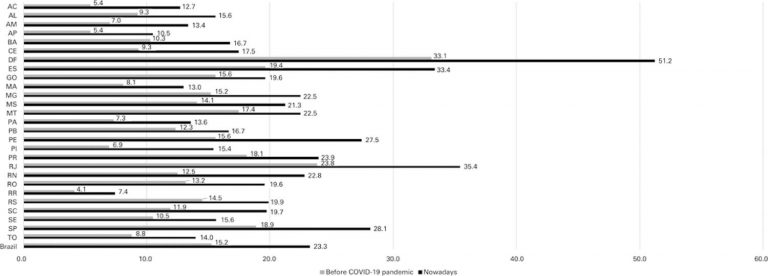
ABSTRACT Objective To analyze the COVID-19 pandemic in Brazil, a continental-sized country, considered as an emerging economy but with several regional nuances, focusing on the availability of human resources, especially for intensive care units. Methods The database of the National Registry of Health Facilities was accessed. Healthcare professionals in the care of COVID-19 were georeferenced. We correlated the number of professionals with the parameters used by the World Health Organization. According to the Brazilian Intensive Care Medicine Association, we correlated […]
Keywords: Coronavirus infections; Health personnel; Intensive care units
29/Sep/2021
29/Sep/2021
DOI: 10.31744/einstein_journal/2021AO6283
ABSTRACT Objective To explore an artificial intelligence approach based on gradient-boosted decision trees for prediction of all-cause mortality at an intensive care unit, comparing its performance to a recent logistic regression system in the literature, and a logistic regression model built on the same platform. Methods A gradient-boosted decision trees model and a logistic regression model were trained and tested with the Medical Information Mart for Intensive Care database. The 1-hour resolution physiological measurements of adult patients, collected during 5 […]
Keywords: Artificial intelligence; Discrimination; Gradient boosted decision trees; Intensive care units; Logistic regression; MIMIC-III database; Mortality
12/Nov/2020
12/Nov/2020
DOI: 10.31744/einstein_journal/2020AO5480
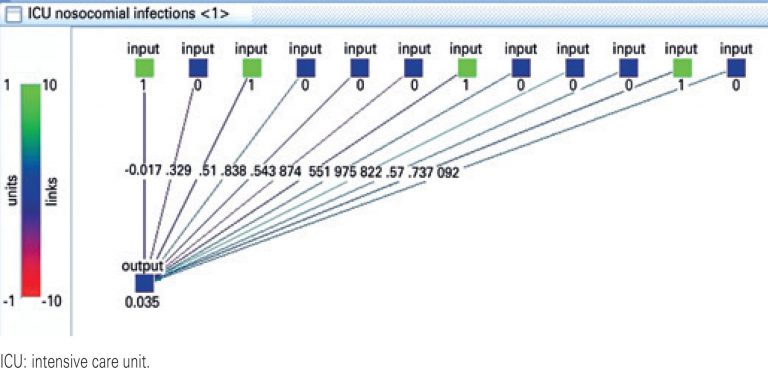
ABSTRACT Objective: To propose a preliminary artificial intelligence model, based on artificial neural networks, for predicting the risk of nosocomial infection at intensive care units. Methods: An artificial neural network is designed that employs supervised learning. The generation of the datasets was based on data derived from the Japanese Nosocomial Infection Surveillance system. It is studied how the Java Neural Network Simulator learns to categorize these patients to predict their risk of nosocomial infection. The simulations are performed with several […]
Keywords: APACHE; Artificial intelligence; Artificial neural network; Intensive care units; Nosocomial infection
29/May/2020
29/May/2020
DOI: 10.31744/einstein_journal/2020AE5793
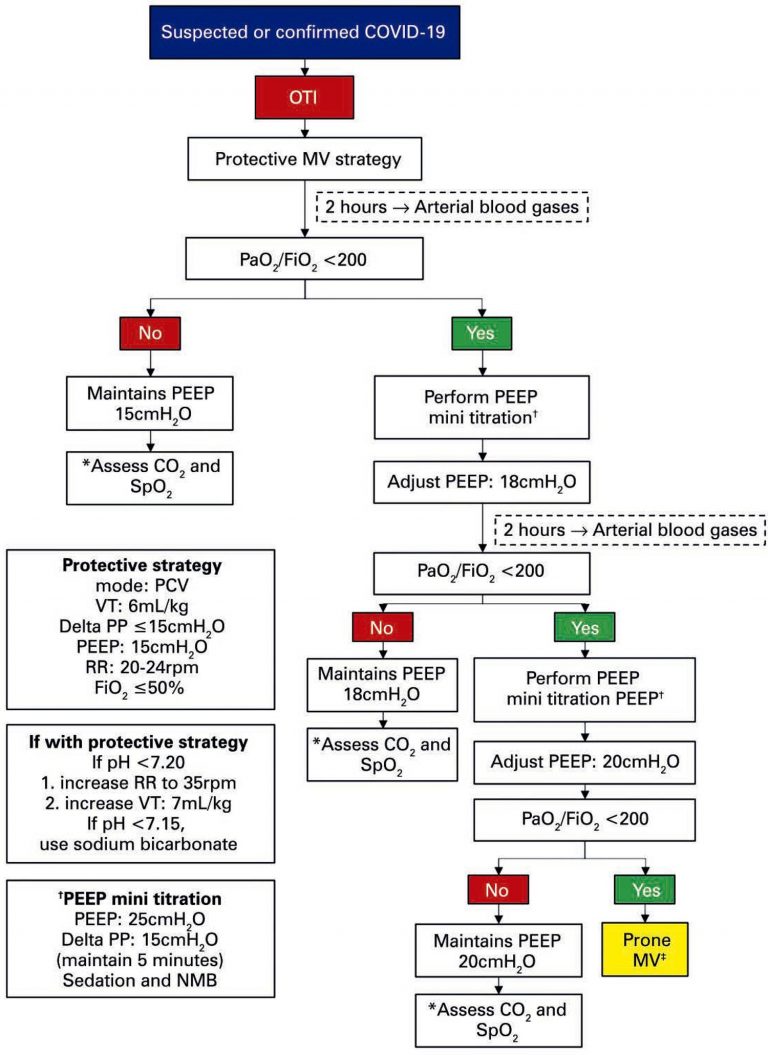
ABSTRACT In December 2019, a series of patients with severe pneumonia were identified in Wuhan, Hubei province, China, who progressed to severe acute respiratory syndrome and acute respiratory distress syndrome. Subsequently, COVID-19 was attributed to a new betacoronavirus, the severe acute respiratory syndrome coronavirus 2 (SARS-CoV-2). Approximately 20% of patients diagnosed as COVID-19 develop severe forms of the disease, including acute hypoxemic respiratory failure, severe acute respiratory syndrome, acute respiratory distress syndrome and acute renal failure and require intensive care. […]
Keywords: Coronavirus; COVID-19; Intensive care units; Respiratory distress syndrome, adult; Respiratory insufficiency
23/Jan/2020
DOI: 10.31744/einstein_journal/2020AO5023
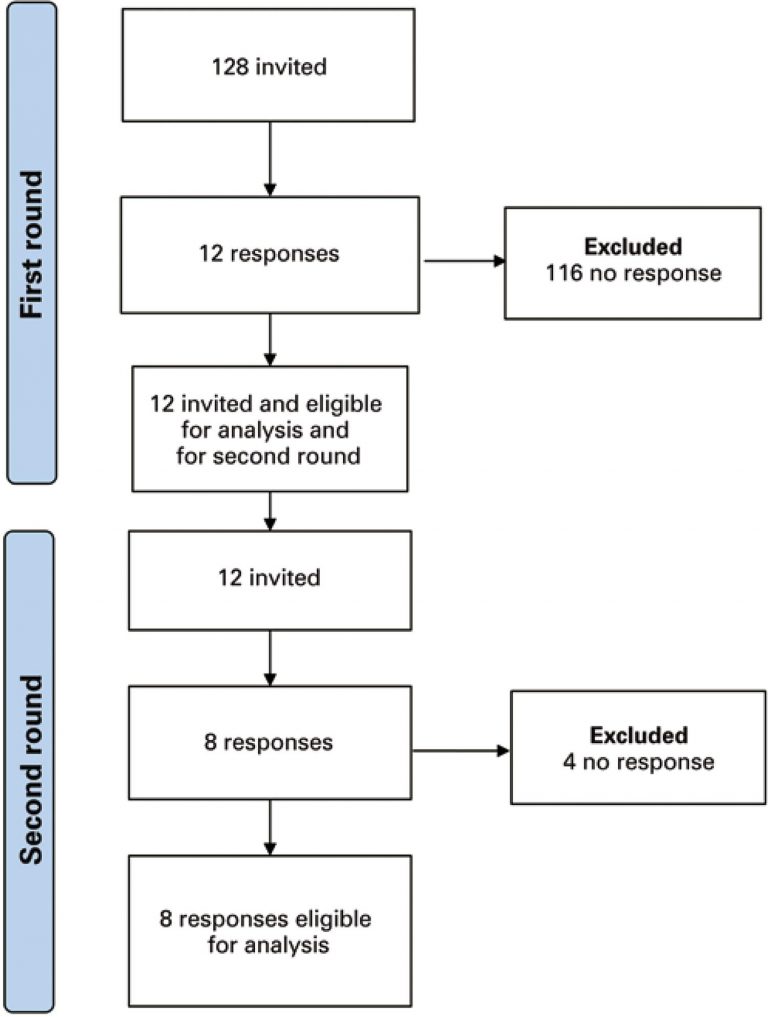
ABSTRACT Objective To adapt an antibiotic dose adjustment software initially developed in English, to Portuguese and to the Brazilian context. Methods This was an observational, descriptive study in which the Delphi method was used to establish consensus among specialists from different health areas, with questions addressing the visual and operational aspects of the software. In a second stage, a pilot experimental study was performed with the random comparison of patients for evaluation and adaptation of the software in the real […]
Keywords: Anti-infective agents; Brazil; Dosage forms; Intensive care units; Piperacillin; Software; Surveys and questionnaires
22/May/2019
DOI: 10.31744/einstein_journal/2019AO4521
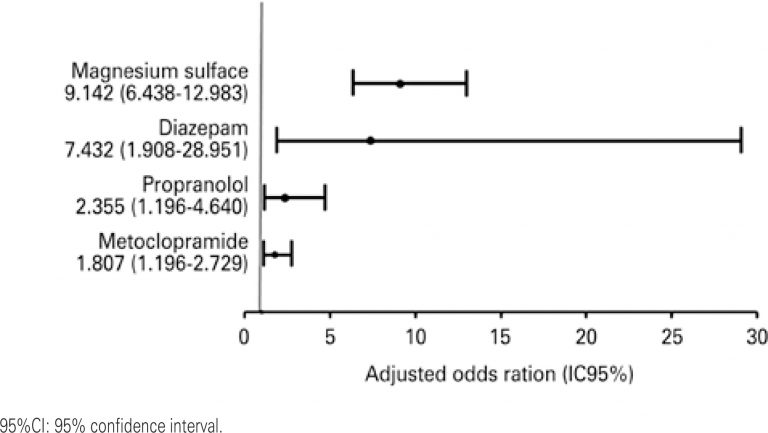
ABSTRACT Objective: To characterize severe potential drug interactions in maternal intensive care, and to determine their frequency, risk factors and potential risk medications. Methods: An observational and longitudinal study conducted between December 2014 and December 2015 in a maternal intensive care unit. Clinical data were collected and severe potential drug interactions were identified on pregnant inpatients. The drug interactions were classified by type, prevalence and exposure rate. A multivariate logistic regression model was used to identify the severe potential drug […]
Keywords: Drug interactions; Drug therapy; Intensive care units; Maternal health; Pregnancy
22/May/2019
DOI: 10.31744/einstein_journal/2019AO4399
ABSTRACT Objective: To determine whether pre-hospital statin use is associated with lower renal replacement therapy requirement and/or death during intensive care unit stay. Methods: Prospective cohort analysis. We analyzed 670 patients consecutively admitted to the intensive care unit of an academic tertiary-care hospital. Patients with ages ranging from 18 to 80 years admitted to the intensive care unit within the last 48 hours were included in the study. Results: Mean age was 66±16.1 years old, mean body mass index 26.6±4/9kg/m2 […]
Keywords: C-reactive protein; Hydroxymethylglutaryl-CoA reductase inhibitors; Intensive care units; Mortality; Renal replacement therapy
08/Dec/2017
DOI: 10.1590/S1679-45082017AO4028
ABSTRACT Objective: To estimate the workload and size the nursing team using the scales TISS-28 and NEMS in a pediatric intensive care unit. Methods: An observational prospective study with a quantitative approach was conducted at the pediatric intensive care unit of a university hospital from Jan 1st, 2009 to Dec 31st, 2009. All children who remained hospitalized for more than 8 hours were included, with length of stay of 4 hours in case of death. Clinical data were collected and […]
Keywords: Indicators; Intensive care units; Nursing staff; Pediatric nursing; Personnel management; Workload