einstein (São Paulo). 13/Aug/2026;24:eAO2168.
Insights from long-term follow-up of patients treated with oral immunotherapy for cow’s milk allergy

DOI: 10.31744/einstein_journal/2026AO2168
Highlights
■ Cow’s milk oral immunotherapy maintained desensitization over five years.
■ Anaphylactic reactions were more frequent during the first maintenance year.
■ The risk of eosinophilic esophagitis persisted throughout follow-up.
■ Continuous monitoring for allergic reactions and esophagitis symptoms is required.
ABSTRACT
Objective:
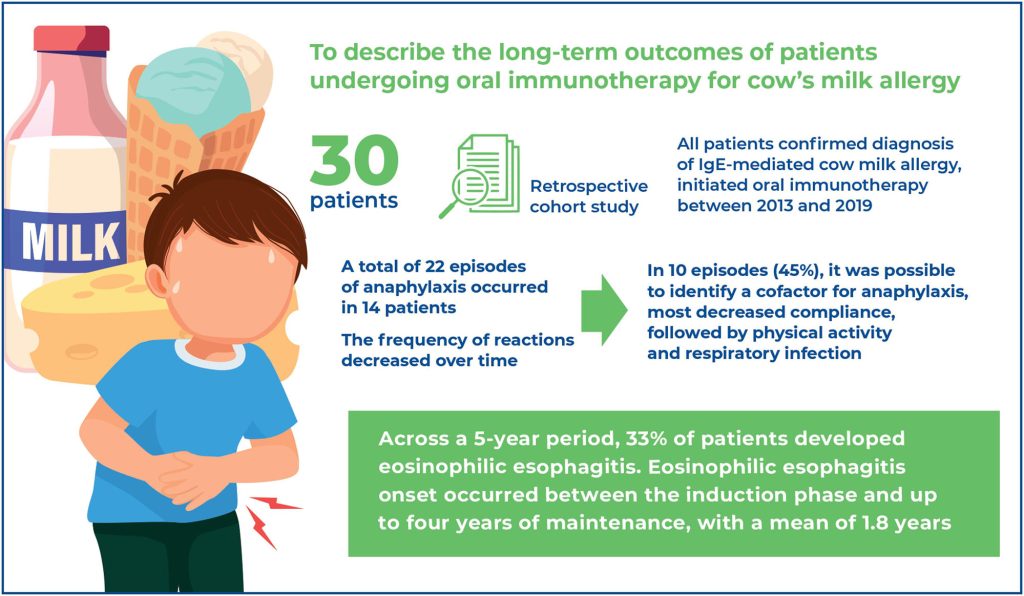
To describe the long-term outcomes of patients undergoing oral immunotherapy for cow’s milk allergy in a pediatric allergy clinic, focusing on treatment efficacy and adverse reactions over 5 years of follow-up.
Methods:
This retrospective cohort study reviewed medical records of patients aged 5-18 years who underwent cow’s milk oral immunotherapy at Instituto da Criança, São Paulo. All patients initiated treatment between 2013 and 2019 and completed at least 5 years of maintenance follow-up. Evaluated outcomes included treatment adherence, adverse reactions, anaphylaxis, and eosinophilic esophagitis. Data were analyzed descriptively, and statistical tests were applied.
Results:
Thirty patients entered the maintenance phase (median age, 8.2 years). Most had allergic comorbidities and a history of anaphylaxis. Four patients discontinued treatment within the first trimester: two due to anaphylaxis and two due to eosinophilic esophagitis. Adverse reactions were predominantly mild and decreased significantly over time (p=0.01). Severe reactions accounted for 17% of events, including 22 episodes of anaphylaxis. Eosinophilic esophagitis was diagnosed in 33% of patients and occurred more frequently among those initiating treatment after 12 years of age.
Conclusion:
Long-term oral immunotherapy increased tolerance and enabled regular milk ingestion in most patients. Older age at treatment initiation was associated with a higher incidence of eosinophilic esophagitis. Careful patient selection and structured monitoring during and after treatment are essential for early identification of severe reactions and eosinophilic esophagitis. Larger studies with longer follow-up are needed to optimize protocols and improve safety strategies.
[…]