25/Jun/2026
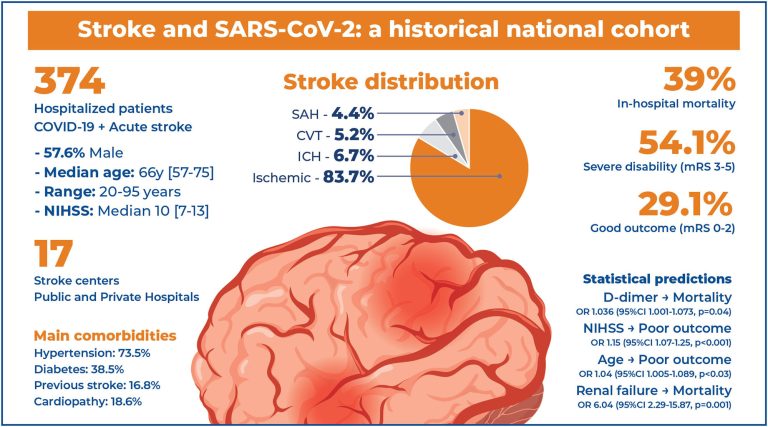
Clinical characteristics and outcomes of SARS-CoV-2-associated stroke: a large multicenter national cohort study
einstein (São Paulo). 25/Jun/2026;24:eAO2027.
View Article25/Jun/2026
Clinical characteristics and outcomes of SARS-CoV-2-associated stroke: a large multicenter national cohort study
DOI: 10.31744/einstein_journal/2026AO2027
Highlights ■ SARS-CoV-2 patients had 83.7% ischemic stroke and 39% in-hospital mortality rates. ■ D-dimer levels independently predict mortality in patients with COVID-19 and stroke. ■ Patients with COVID-19 and stroke have high complication rates: pneumonia 61%, renal failure 35%, sepsis 30.3% sepsis. ■ Time from symptom onset to admission was shorter than the pre-pandemic average. ABSTRACT Objective: This study aimed to characterize the clinical, laboratory, and neuroimaging profiles of hospitalized Brazilian patients with confirmed SARS-CoV-2 and acute cerebrovascular events. […]
Keywords: Developing countries; Neurological manifestations; Risk Factors; SARS-CoV-2; Severe acute respiratory syndrome-related coronavirus; Stroke
06/Jun/2024
Effect of transcranial direct current stimulation in the initial weeks post-stroke: a pilot randomized study
DOI: 10.31744/einstein_journal/2024AO0450
Highlights Differences ≥9 points in Fugl–Meyer Assessment scores: sham>active. Connectivity measures: active>sham. ABSTRACT Objective: This study aimed at assessing the alterations in upper limb motor impairment and connectivity between motor areas following the post-stroke delivery of cathodal transcranial direct current stimulation sessions. Methods: Modifications in the Fugl-Meyer Assessment scores, connectivity between the primary motor cortex of the unaffected and affected hemispheres, and between the primary motor and premotor cortices of the unaffected hemisphere were compared prior to and following six […]
Keywords: Connectome; Magnetic resonance imaging; Motor cortex; Neurological rehabilitation; Stroke; Transcranial direct current stimulation
06/Jun/2023
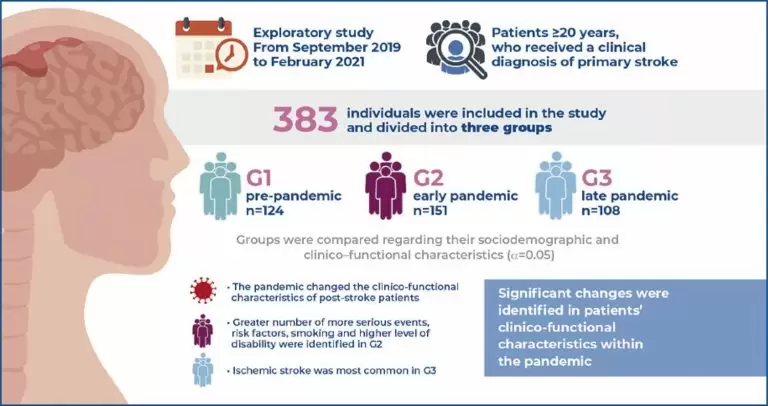
Changes in the clinico-functional characteristics of stroke patients in the acute phase during the COVID-19 pandemic
einstein (São Paulo). 06/Jun/2023;21:eAO0226.
View Article06/Jun/2023
Changes in the clinico-functional characteristics of stroke patients in the acute phase during the COVID-19 pandemic
DOI: 10.31744/einstein_journal/2023AO0226
Highlights ■ The clinico-functional characteristics of post-stroke patients changed in the pandemic. ■ The sociodemographic characteristics of post-stroke patients did not change in the pandemic. ■ Post-stroke patients had a greater stroke severity and disability at the beginning of the pandemic. ■ The occurrence of ischemic stroke increased with the advancement of the pandemic. ABSTRACT Objective To compare the sociodemographic and clinico-functional characteristics of patients admitted to a stroke unit immediately before and during two different COVID-19 pandemic phases. Methods […]
Keywords: Coronavirus infections; COVID-19; Health Services; Pandemics; Public health; SARS-CoV-2; Stroke
28/Apr/2022
Post-varicella arterial ischemic stroke in children and neurocognitive performance: a 4-year follow-up study
DOI: 10.31744/einstein_journal/2022AO6360
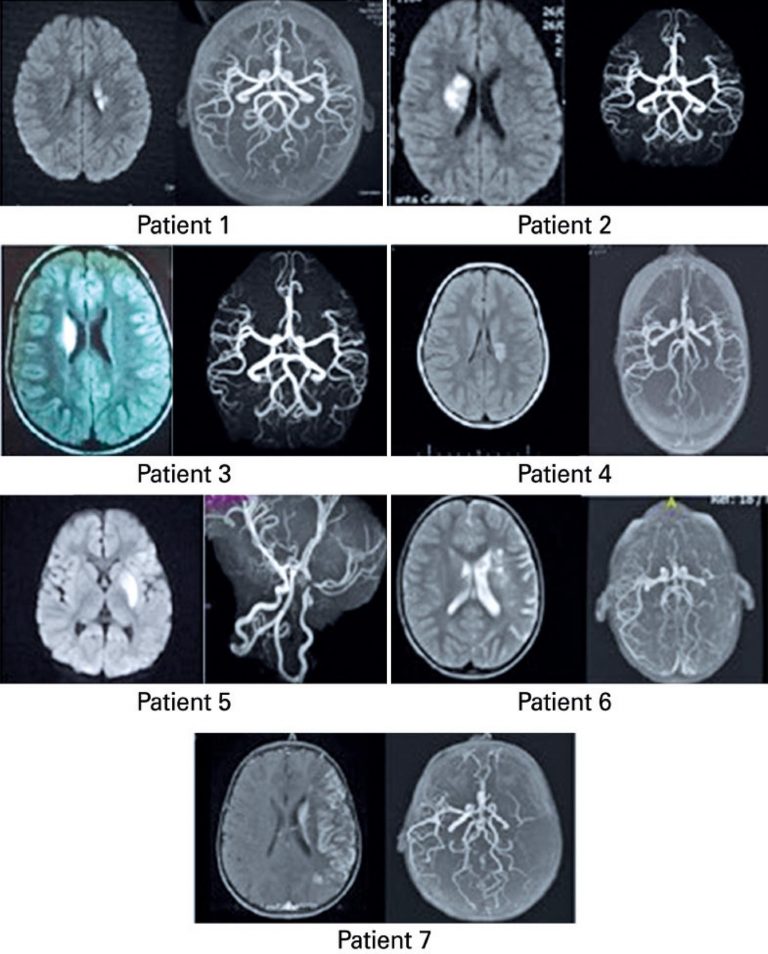
ABSTRACT Objective To analyze data from children who were previously healthy and presented with post-varicella arterial ischemic stroke upon arrival when admitted to the emergency room, with focus on the clinical/laboratory aspects, and neurocognitive performance after four-year follow-up. Methods Seven children presenting with arterial ischemic stroke after varicella were evaluated at pediatric emergency services in the city of São Paulo (SP), Brazil. Ischemic stroke was determined by magnetic resonance imaging/magnetic resonance angiography in a topography compatible with the areas supplied […]
Keywords: Basal ganglia cerebrovascular disease; Chickenpox; Child; Stroke
29/Mar/2022
Neurovascular manifestations in patients with COVID-19: a case series
DOI: 10.31744/einstein_journal/2022AO6562
ABSTRACT Objective To describe cerebrovascular manifestations in patients hospitalized for treatment of severe COVID-19, highlighting the comorbidities observed, and those that may play a relevant role as risk factors for severe outcomes. Methods This case series retrospective analyzed, from June to November, 2020, ten patients admitted to the emergency department, with positive nasopharyngeal swab polymerase chain reaction assay for SARS-CoV-2, presenting with neurological symptoms and positive findings at brain imaging studies. Results In this sample, the clinical severity of the […]
Keywords: Cerebrovascular diseases; Comorbidity; Coronavirus infections; COVID-19; Intracranial hemorrhages; SARS-CoV-2; Stroke
20/Sep/2012
Imaging findings and cerebral perfusion in arterial ischemic stroke due to transient cerebral arteriopathy in children
DOI: 10.1590/S1679-45082012000200021
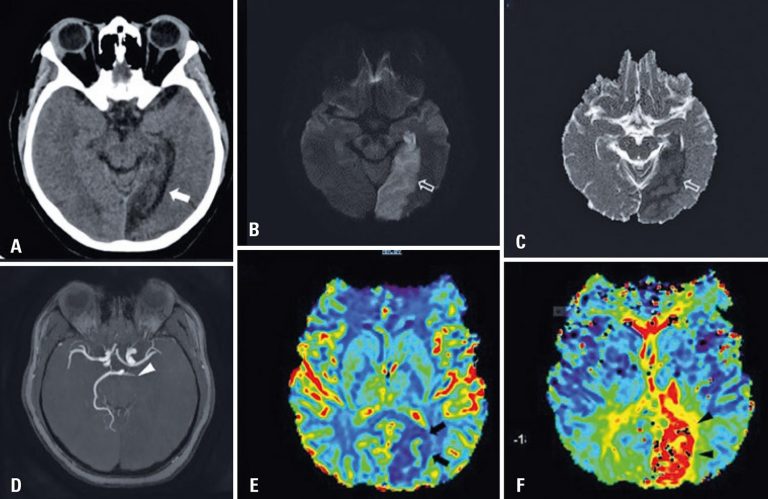
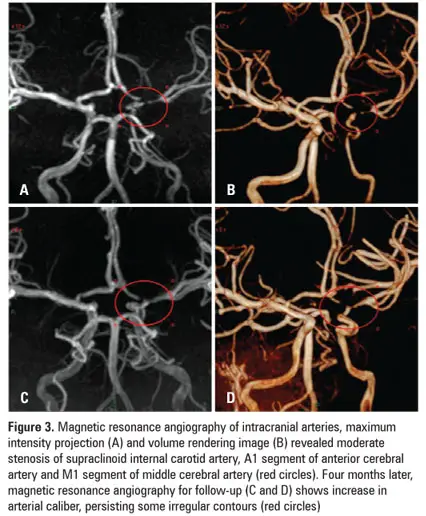
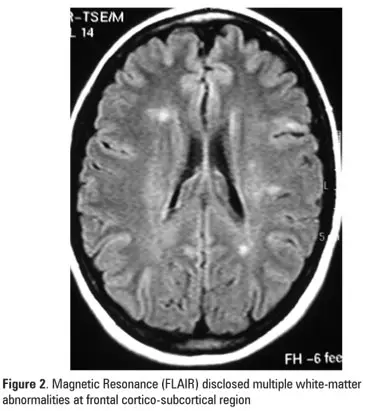
We report the case of a 4-year-old female child who developed an arterial ischemic stroke in the left middle cerebral artery territory, due to a proximal stenosis of the supraclinoid internal carotid artery, most probably related to transient cerebral arteriopathy of childhood. Computed tomography scan, magnetic resonance imaging, perfusion magnetic resonance and magnetic resonance angiography are presented, as well as follow-up by magnetic resonance and magnetic resonance angiography exams. Changes in cerebral perfusion and diffusion-perfusion mismatch call attention. As far […]
Keywords: Brain ischemia; Case reports; Child; Diffusion magnetic resonance imaging; Magnetic resonance angiography; Perfusion imaging; Stroke
20/Sep/2012
Advances in stroke evaluation and treatment
DOI: 10.1590/S1679-45082012000200025
One of neurology’s most challenging and evolving fields, vascular neurology has been constantly calling for attention. From small breakthroughs to large randomized trials, the quest for new answers in stroke treatment has brought us many advances and keeps bringing problems and solutions as new trials are coming.
Keywords: Neuroimaging; Reperfusion; Stroke
20/Sep/2012
Sneddon’s syndrome: case report and review of its relationship with antiphospholipid syndrome
einstein (São Paulo). 20/Sep/2012;10(2):230-2.
View Article20/Sep/2012
Sneddon’s syndrome: case report and review of its relationship with antiphospholipid syndrome
DOI: 10.1590/S1679-45082012000200018
The Sneddon’s syndrome is a rare disorder characterized by the occurrence of cerebrovascular disease associated with livedo reticularis. The antiphospholipid syndrome is the most frequent type of acquired thrombophilia, defined by the occurrence of thrombosis or pregnancy morbidity in the presence of persistently positive antiphospholipid antibodies. Approximately 80% of Sneddon’s syndrome patients have an antiphospholipid antibody marker. These antibodies may play a pathogenetic role in some cases of Sneddon’s syndrome, and many authors consider these two syndromes as the same […]
Keywords: Antibodies, anticardiolipin; Antibodies, antiphospholipid; Antiphospholipid syndrome; Case reports; Livedo reticularis; Sneddon syndrome; Stroke
01/Oct/2010
Adductor pollicis muscle and hand grip strength: potential methods of nutritional assessment in outpatients with stroke
DOI: 10.1590/S1679-45082010AO1763
ABSTRACT Objective: To evaluate and compare the effectiveness of different methods used for nutritional assessment of outpatients who had hemiplegic stroke. Methods: A cross-section study with adult and elderly patients of both genders enrolled in a rehabilitation center. The analyzed variables were anthropometric measurements, bioelectrical impedance, hand grip strength and thickness of the adductor pollicis muscle. The Pearson χ2 test was used to check the association between variables with a significance level of α = 5%. Results: When evaluating the […]
Keywords: Anthropometry; Body composition; Dynamometer; Muscle strength; Nutrition assessment; Stroke