01/Jul/2026
Evaluation of anticoagulation quality in patients with primary antiphospholipid syndrome at a tertiary hospital
DOI: 10.31744/einstein_journal/2026AO1668
Highlights ■ Only 34.4% of patients with primary Antiphospholipid Syndrome achieved adequate anticoagulation (time in therapeutic range ≥60%). ■ More than half had insufficient INR monitoring, precluding time in therapeutic range calculation. ■ No clinical or demographic factors were associated with poor anticoagulation control. ■ Gaps in follow-up and adherence issues appear to be key contributors to suboptimal anticoagulation. ABSTRACT Objective: This study aimed to evaluate the quality of anticoagulation control in patients with primary antiphospholipid syndrome, using time in […]
Keywords: Acarboxiprotrombin; Antiphospholipid syndrome; Warfarin
13/Aug/2019
Consensus on the investigation of thrombophilia in women and clinical management
DOI: 10.31744/einstein_journal/2019AE4510
ABSTRACT Objective To standardize the investigation and clinical management of women with laboratory and/or clinical abnormalities suggestive of thrombophilia, in order to optimize antithrombotic approach and indication of laboratory tests. Methodology A discussion was carried out among 107 physicians (gynecologists/obstetricians, hematologists and vascular surgeons) present at a forum held at the Hospital Israelita Albert Einstein, in São Paulo (SP), Brazil. As a minimum criterion, 80% agreement was established in the voting to each recommendation of conduct in the final document. […]
Keywords: Abortion, habitual; Antiphospholipid syndrome; Contraception; Pregnancy; Pregnancy complications; Thrombophilia; Venous thromboembolism; Venous thrombosis
20/Sep/2012
Sneddon’s syndrome: case report and review of its relationship with antiphospholipid syndrome
einstein (São Paulo). 20/Sep/2012;10(2):230-2.
View Article20/Sep/2012
Sneddon’s syndrome: case report and review of its relationship with antiphospholipid syndrome
DOI: 10.1590/S1679-45082012000200018
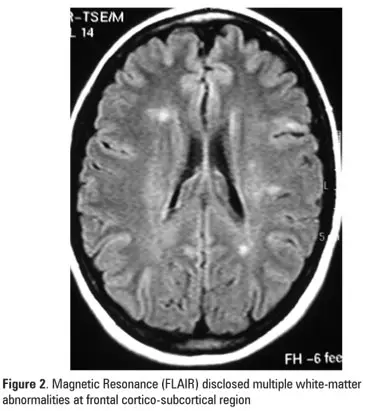
The Sneddon’s syndrome is a rare disorder characterized by the occurrence of cerebrovascular disease associated with livedo reticularis. The antiphospholipid syndrome is the most frequent type of acquired thrombophilia, defined by the occurrence of thrombosis or pregnancy morbidity in the presence of persistently positive antiphospholipid antibodies. Approximately 80% of Sneddon’s syndrome patients have an antiphospholipid antibody marker. These antibodies may play a pathogenetic role in some cases of Sneddon’s syndrome, and many authors consider these two syndromes as the same […]
Keywords: Antibodies, anticardiolipin; Antibodies, antiphospholipid; Antiphospholipid syndrome; Case reports; Livedo reticularis; Sneddon syndrome; Stroke