einstein (São Paulo). 25/Jun/2026;24:eAO2027.
Clinical characteristics and outcomes of SARS-CoV-2-associated stroke: a large multicenter national cohort study

DOI: 10.31744/einstein_journal/2026AO2027
Highlights
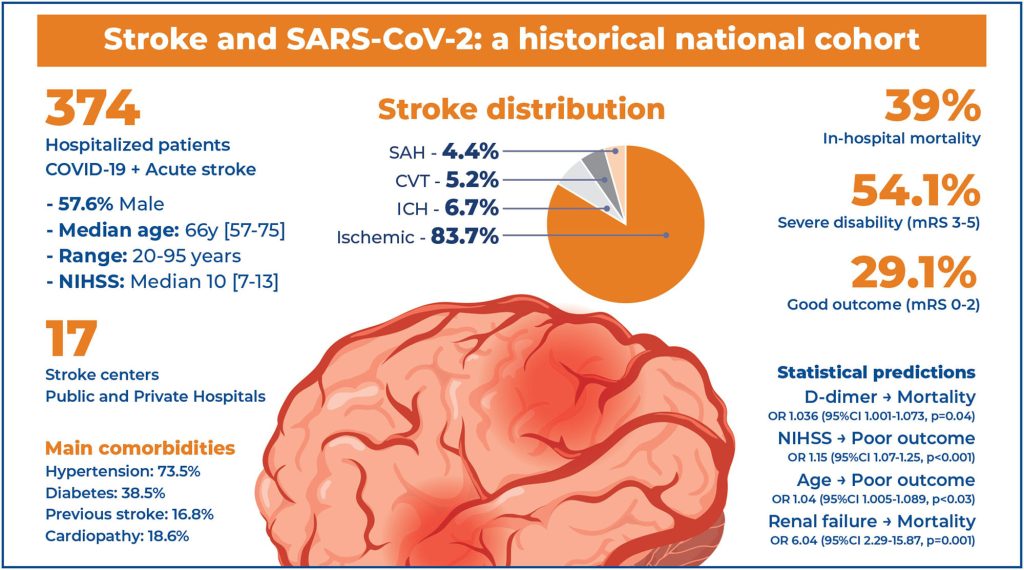
■ SARS-CoV-2 patients had 83.7% ischemic stroke and 39% in-hospital mortality rates.
■ D-dimer levels independently predict mortality in patients with COVID-19 and stroke.
■ Patients with COVID-19 and stroke have high complication rates: pneumonia 61%, renal failure 35%, sepsis 30.3% sepsis.
■ Time from symptom onset to admission was shorter than the pre-pandemic average.
ABSTRACT
Objective:
This study aimed to characterize the clinical, laboratory, and neuroimaging profiles of hospitalized Brazilian patients with confirmed SARS-CoV-2 and acute cerebrovascular events.
Methods:
This retrospective multicenter study included 374 patients from 17 stroke centers between March and November 2020. Eligible events were ischemic stroke, intracerebral hemorrhage, subarachnoid hemorrhage, and cerebral venous thrombosis. The stroke subtypes were further classified using the TOAST, Oxfordshire, and SMASH-U criteria. Demographics, National Institutes of Health Stroke Scale (NIHSS) scores, laboratory results, imaging findings, complications, and outcomes were analyzed. Multivariate logistic regression was used to assess the predictors of in-hospital mortality and good functional outcomes (modified Rankin Scale; mRS 0- 2).
Results:
Ischemic stroke accounted for approximately 83% of all stroke cases. The median patient age and NIHSS score at admission were 66 years and 10, respectively. The major complications included pneumonia (61%), renal failure (35%), and sepsis (30%). The in-hospital mortality rate reached 31%, and only 28% of the patients achieved good functional outcomes. Higher NIHSS scores and D-dimer levels were independently associated with worse outcomes. Notably, the median time from stroke onset to admission (4.4 h) was shorter than the pre-pandemic average.
Conclusion:
In this national cohort, SARS-CoV-2-associated stroke was severe, predominantly ischemic, and commonly complicated by systemic organ dysfunction. D-dimer levels emerged as a significant prognostic biomarker of mortality and poor functional outcomes. Contrary to earlier assumptions, stroke admission delays were not prolonged during the pandemic. These findings highlight the need for integrated stroke care in patients with COVID-19 and inform future management strategies.
[…]