9 results
13/Nov/2025
DOI: 10.31744/einstein_journal/2025AO1192
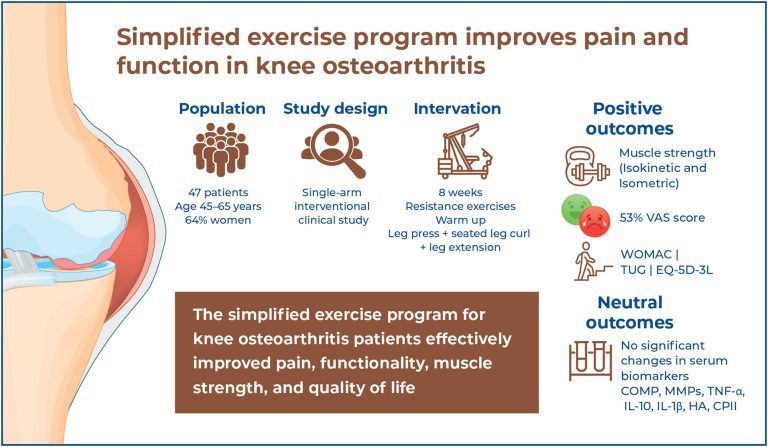
Highlights ■ The exercise program reduced the WOMAC score by 50%, VAS score by 53%, and improved isokinetic strength. ■ There were no significant changes in levels of serum COMP, MMPs, or pro-inflammatory cytokines. ■ Biomarker levels did not correlate with clinical improvement outcomes. ■ This exercise program is feasible for knee osteoarthritis management in primary care. ABSTRACT Objective: To evaluate a simplified exercise program for patients with knee osteoarthritis in terms of pain, functionality, muscle strength, and quality of […]
Keywords: Biomarkers; Exercise therapy; Muscle strength; Osteoarthritis, knee; Pain measurement; Quality of life
23/Jul/2025
DOI: 10.31744/einstein_journal/2025AO0222
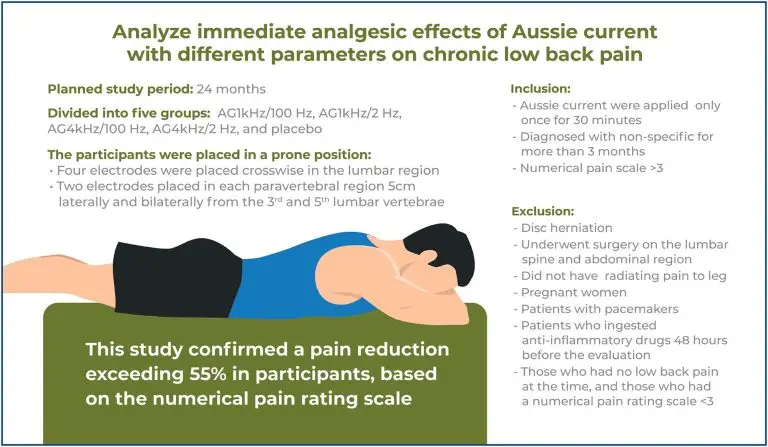
Highlights ■ Aussie Current decreases immediate pain intensity. ■ Both carrier frequencies of Aussie Current were efficient in decreasing pain. ■ There are no ideal parameters for using the Aussie Current to relieve pain in individuals with chronic lower back pain. ABSTRACT Objective: To analyze the immediate analgesic effects of Aussie Current on chronic low back pain using different parameters. Methods: A total of 105 patients (aged 18-80 years, of both sexes, with chronic low back pain) were randomized into […]
Keywords: Low back pain; Pain measurement; Transcutaneous electric nerve stimulation
03/Dec/2021
03/Dec/2021
DOI: 10.31744/einstein_journal/2021AO6027
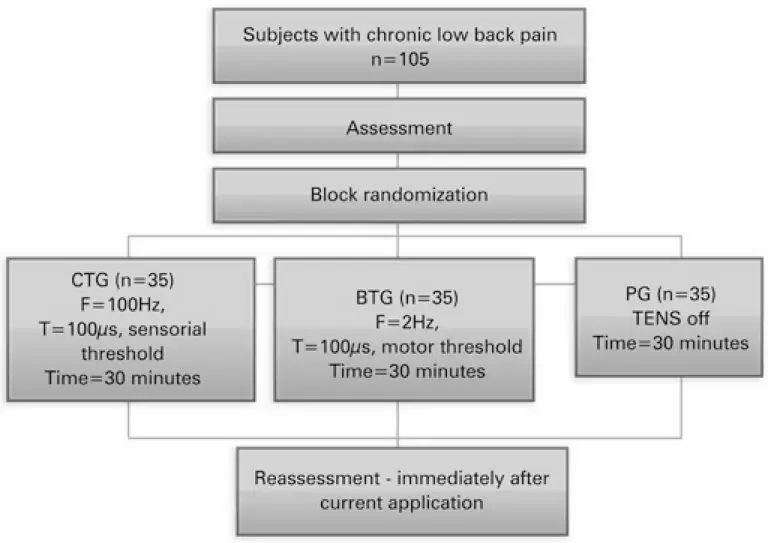
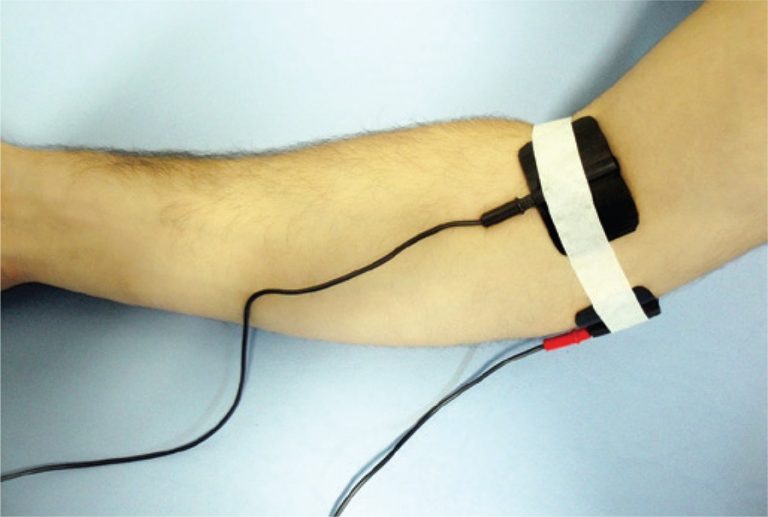
ABSTRACT Objective To compare and assess the immediate analgesic effects of conventional and burst transcutaneous electrical nerve stimulation in patients with chronic low back pain. Methods We conducted a three-arm single-blinded randomized controlled trial. A total of 105 patients with non-specific chronic low back pain aged between 18 and 85 years were randomly assigned into the following groups: Placebo Group (sham electrical stimulation), Conventional TENS Group (continuous stimulation at 100Hz for 100µs with sensory intensity), and Burst TENS Group (stimulation […]
Keywords: Chronic pain; Low back pain; Pain measurement; Physical therapy modalities; Transcutaneous electric nerve stimulation
01/Apr/2016
DOI: 10.1590/S1679-45082016AO3628
ABSTRACT Objective To validate the Pain Assessment Checklist for Seniors with Limited Ability to Communicate – Portuguese in demented elderly and to analyze its measurement properties. Methods We evaluated 50 elderly with dementia, residing in a nursing home and with limited communication ability, when exposed to potentially painful situations. The tool was applied at two different moments. First, two interviewers applied it simultaneously, and the intensity of pain was asked based on the caregiver’s opinion. After 14 days, with no […]
Keywords: Aged, 80 and over; Dementia; Pain; Pain measurement; Validation studies as topic
01/Jan/2015
01/Jan/2015
DOI: 10.1590/S1679-45082015AO3036
Objective To adapt the Pain Assessment in Advanced Dementia (PAINAD) scale to Brazilian Portuguese with respect to semantic equivalence and cultural aspects, and to evaluate the respective psychometric properties (validity, feasibility, clinical utility and inter-rater agreement). Methods Two-stage descriptive, cross-sectional retrospective study involving cultural and semantic validation of the Brazilian Portuguese version of the scale, and investigation of its psychometric properties (validity, reliability and clinical utility). The sample consisted of 63 inpatients presenting with neurological deficits and unable to self-report […]
Keywords: Aged; Dementia; Pain measurement; Scales
01/Jul/2014
01/Jul/2014
DOI: 10.1590/S1679-45082014AO3092
Objective To investigate the effects of different transcutaneous electrical nerve stimulation frequencies in nociception front of a pressure pain threshold and cold in healthy individuals. Methods Twenty healthy subjects were divided into four groups, all of which have gone through all forms of electrical stimulation at different weeks. Assessments were pre and post-therapy, 20 and 60 minutes after stimulation. To evaluate the pressure pain threshold, an algometer was used with one tapered tip, pressing the hypothenar region until voluntary report […]
Keywords: Cold temperature; Electric stimulation; Pain; Pain measurement; Pressure
01/Apr/2014
DOI: 10.1590/S1679-45082014AO2825
Objective To determine the relation between the degrees of chronic pain and drowsiness levels. Methods The study was conducted with 115 patients, who answered the questionnaire as diagnostic criteria in the survey. After evaluation based on the protocol of chronic pain registry RDC/TMD− Axis II, the Epworth Sleepiness Scale was applied to assess drowsiness levels. Results Among the participating patients, there were more females (80%), and the type of pain more prevalent was chronic (70.4%). Concerning the grades of chronic […]
Keywords: Chronic pain; Pain; Pain measurement; Quality of life; Sleep initiation and maintenance disorders; Sleep stages
29/Oct/2012
DOI: 10.1590/S1679-45082012000300012
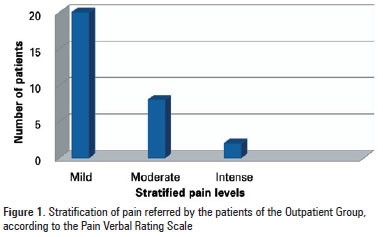
OBJECTIVE: To compare results of hysteroscopic polypectomy of the endometrium performed in an outpatient clinic, under no anesthesia, to conventional hysteroscopic polypectomy under anesthesia in the operating theatre, assessing success rate, procedure time and complications; and to measure pain referred by patients in both groups. METHODS: An observational cross-sectional study of 60 patients with hysteroscopic diagnosis of endometrial polyps, divided into two groups: the Outpatient Group, comprising patients submitted to outpatient´s hysteroscopic polypectomy by continuous flow vaginoscopy using endoscopic forceps […]
Keywords: Anesthesia; Endometrium; Hysteroscopy; Outpatients' surgical procedures; Pain measurement; Polyps
01/Jan/2010
DOI: 10.1590/S1679-45082010AO1342
ABSTRACT Objective: To evaluate the intensity of pain reported by patients undergoing outpatient diagnostic hysteroscopy. Methods: Exam performed with a 5-mm lens hysteroscope, vaginal speculum, tenaculum and uterine distention with carbon dioxide gas. Before and after the examination, patients were interviewed to define, in a verbal scale from 0 to 10, pain values that they expected to feel and that they experienced after the end, and also if they would repeat it if indicated. Data were analyzed using Statistical Package […]
Keywords: Ambulatorial care; Hysteroscopy/methods; Outcome and process assessment (Health Care); Pain measurement; Pain measurement/diagnosis