einstein (São Paulo). 24/Jun/2026;24:eAO1104.
Temporal trends in LDL cholesterol levels from 2009 to 2023: a comprehensive analysis of 2.4 million patient records in São Paulo, Brazil

DOI: 10.31744/einstein_journal/2026AO1104
Highlights
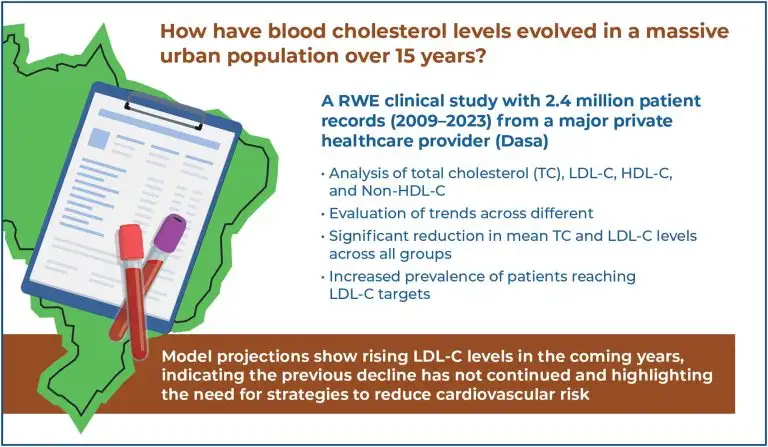
■ This large real-world study analyzed blood cholesterol trends over a 15-year period in São Paulo, Brazil.
■ Mean total and LDL-C decreased significantly across all groups.
■ A higher proportion of patients achieved recommended LDL-C target levels.
■ The observed trends may reflect improvements in cardiovascular prevention strategies and treatment efficacy.
ABSTRACT
Objective:
This study aimed to evaluate monthly trends in low-density lipoprotein cholesterol (LDL-C) levels in the examined population.
Methods:
Monthly trends in LDL-C levels from 2009 to 2023 were analyzed in a predominantly outpatient cohort that underwent testing at Laboratório Dasa units in São Paulo, Brazil. A comprehensive analysis was conducted using 2,469,979 complete records with valid LDL-C results obtained from databases of a national clinical laboratory. Monthly mean and median LDL-C values were calculated and analyzed according to sex and age groups.
Results:
Piecewise regression analysis of temporal trends identified a breakpoint in 2018, indicating a change in slope. The average monthly decline in LDL-C levels from 2009 to 2018 was 0.159 mg/dL (p<0.001). After 2018, the average LDL-C level increased, with a monthly increase of 0.142 mg/dL (p<0.001). This pattern was consistent across both sexes and across most of the examined age groups. Autoregressive integrated moving average time series analysis revealed seasonal variations in LDL-C levels, with a tendency towards lower levels during warmer months and higher levels during colder months.
Conclusion:
Model projections suggest a potential upward trend in LDL-C levels in the coming years. These trends indicate that the historical decline in LDL-C levels observed from 2009 to 2018 has not persisted in recent years. Further research is needed to elucidate the underlying causes of these observed trends and to develop strategies aimed at reducing serum lipid levels associated with cardiovascular risk.
[…]
Keywords: Cholesterol; LDL; Cardiovascular diseases; Primary prevention