einstein (São Paulo). 14/Aug/2026;24(spe3):eAO2383.
Quality of life and caregiver burden among caregivers of children with autism spectrum disorder and neurotypical children: a cross-sectional study

DOI: 10.31744/einstein_journal/2026AO2383
Highlights
■ Caregivers of children with autism spectrum disorder reported higher caregiver burden.
■ Children with autismo spectrum disorder showed greater dependence in activities of daily living.
■ Overall quality of life was similar between groups, but specific items differed.
ABSTRACT
Objectives:
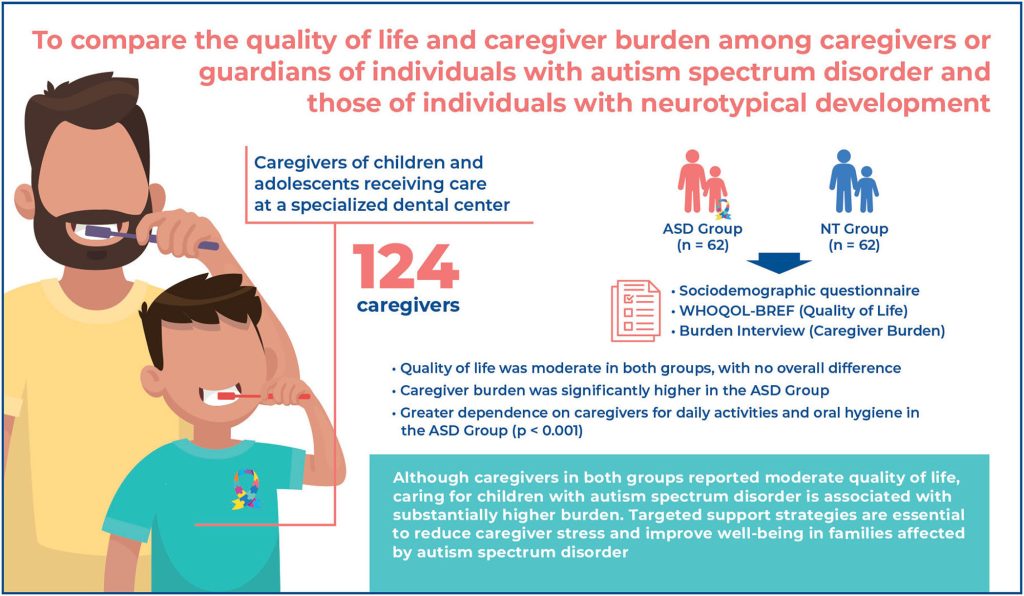
This study aimed to compare quality of life and caregiver burden between caregivers and guardians of children with autism spectrum disorder and those of neurotypical children.
Methods:
A total of 124 caregivers participated and were assigned to two groups: autism spectrum disorder (ASD; n=62) and neurotypical (NT; n=62). Participants were recruited from a specialized multiprofessional dental care institution. Data were collected using a sociodemographic questionnaire, the WHOQOL-BREF, and the Zarit Burden Interview. Data were tabulated and analyzed using a 5% significance level.
Results:
The mean age of the children was 9.45 years in the ASD Group and 8.29 years in the NT Group. The proportion of boys was higher in the ASD Group than in the NT Group (p<0.001). Regarding functional independence, 69.4% of children with ASD depended on caregivers for activities of daily living, whereas 67.7% of neurotypical children were independent (p<0.001). For oral hygiene, 64.4% of children with ASD required caregiver assistance, whereas 82.3% of neurotypical children performed oral hygiene independently (p<0.001). Overall quality of life did not differ significantly between groups. However, specific items in the physical and psychological domains differed significantly between groups (Q3: p=0.021; Q4: p=0.001; Q26: p=0.003). By contrast, caregiver burden was significantly higher among caregivers of children with autism spectrum disorder than among caregivers of NT children, as reflected by higher total and domain scores (p<0.001).
Conclusion:
Although caregivers in both groups reported moderate quality of life, those caring for children with autism spectrum disorder experienced substantially greater caregiver burden. These findings support the need for targeted strategies to reduce caregiver stress and improve well-being in families of children with autism spectrum disorder.
[…]