einstein (São Paulo). 27/Apr/2026;24:eAO2003.
Cost-effectiveness of microsurgical reconstructions in reconstructive plastic surgery within the Brazilian Public Health System: a 15-year overview (2009-2023)

DOI: 10.31744/einstein_journal/2026AO2003
Highlights
■ 1,902 microsurgical reconstructions performed in the Brazilian Public Health System (2009-2023).
■ Southern and Southeastern regions concentrate >85% of the procedures.
■ Microsurgery is cost-effective despite its greater complexity.
■ Centralization in São Paulo indicates a need for regional expansion.
ABSTRACT
Objective:
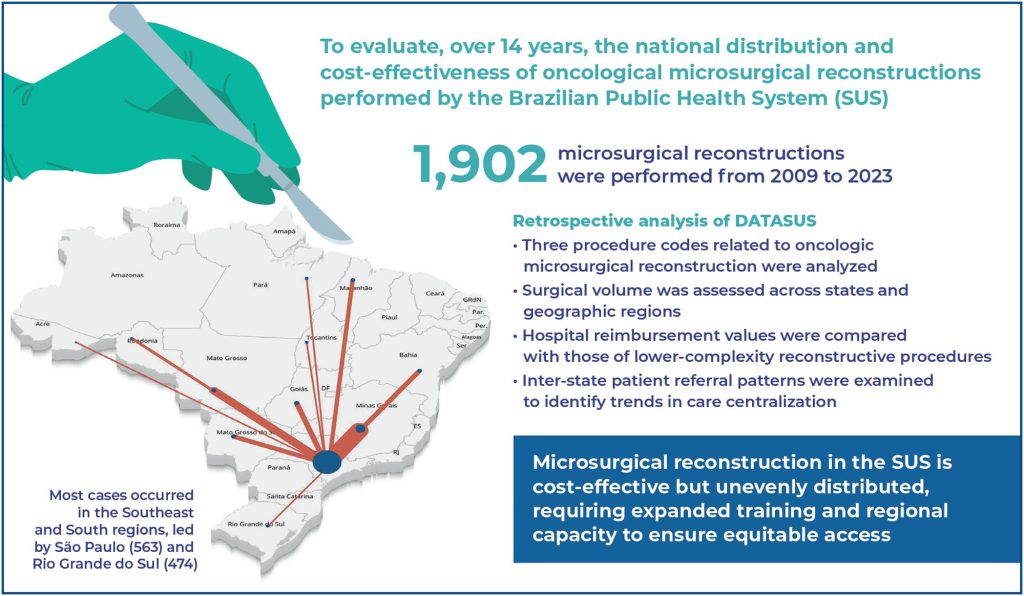
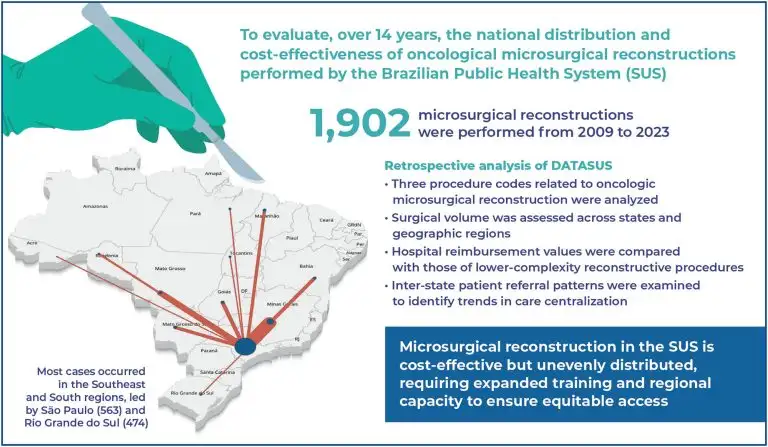
To evaluate the national distribution and cost-effectiveness of oncologic microsurgical reconstructions performed within the Brazilian Public Health System over a 14-year period.
Methods:
A retrospective analysis of DATASUS data was conducted using three procedure codes related to oncologic microsurgical reconstruction. Surgical volume was assessed by state and geographic region. Hospital reimbursement values were compared with those of less complex reconstructive procedures, and inter-state patient referral patterns were analyzed to identify trends in service centralization.
Results:
Between 2009 and 2023, a total of 1,902 microsurgical reconstructions were performed nationwide. The Southeast and South regions accounted for the majority of cases, with São Paulo (n=563) and Rio Grande do Sul (n=474) representing the highest-volume states. In contrast, the North and Center-West regions exhibited substantially lower availability of microsurgical services. Reimbursement analyses demonstrated that microsurgical procedures were compensated at levels comparable to those of less complex reconstructions, despite their greater technical and infrastructural requirements. Referral flow analyses revealed a pronounced concentration of patients toward a limited number of high-volume centers.
Conclusion:
Microsurgical reconstruction within the Brazilian Public Health System is cost-effective; however, its availability remains unevenly distributed, restricting equitable access to complex oncologic reconstructive care. Public policies focused on workforce training, capacity-building, and regional decentralization are necessary to expand access and reduce reliance on a small number of specialized centers.
[…]