07/Mar/2022
Valuing tonsillitis manifestations in schoolchildren in Rio de Janeiro
DOI: 10.31744/einstein_journal/2022AO6342
ABSTRACT Objective: To evaluate the importance attributed to tonsillitis by guardians and their level of knowledge about the disease, correlating their management with their schooling and socioeconomic profiles. Methods: A quantitative, descriptive and observational cross-sectional study involving students aged 5 to 17 years from state-owned and private schools. A questionnaire was applied on management of tonsillitis and knowledge about rheumatic fever, addressing demographic and socioeconomic data. Results: A total of 323 students were included, predominantly females (61.3%), from state-owned schools […]
Keywords: Pharyngitis; Rheumatic fever; Rheumatic heart disease; Streptococcal infections; Tonsillitis
07/Mar/2022
COVID-19 containment management strategies in a nursing home
DOI: 10.31744/einstein_journal/2022AO6175
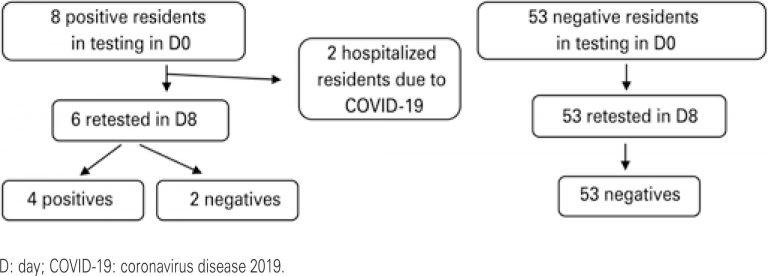
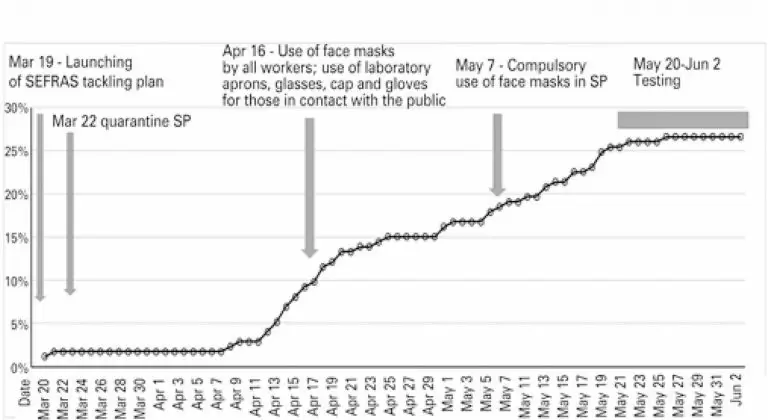
ABSTRACT Objective: To describe the first COVID-19 pandemic at Casa Ondina Lobo, a philanthropic nursing home in São Paulo city, and the containment measures against the pandemic that proved to be effective. Methods: Several preventive measures were taken before and during the pandemic, with emphasis on universal testing by reverse transcription polymerase chain reaction for COVID-19. All residents and employees were tested twice in a D9 period. Results: Among the 62 residents and 55 employees, in both testing, eight residents […]
Keywords: Carrier state; Communicable disease control; Coronavirus infections; COVID-19; Homes for the aged; Infection control; Nursing homes; Polymerase chain reaction; SARS-CoV-2
07/Mar/2022
Needs of family members of patients in a coronary care unit
DOI: 10.31744/einstein_journal/2022AO6258
ABSTRACT Objective: To identify the need of family members of patients hospitalized in a coronary intensive care unit and their degree of satisfaction with the care provided. Methods: An observational and cross-sectional study including family members of patients hospitalized in the coronary intensive care unit for acute coronary syndrome in Killip I or II. After the second visit of the same family member to the patient in the unit, a 43-item inventory of needs and stressors of family members was […]
Keywords: Acute coronary syndrome; Critical care; Family; Humanization of assistance; Inpatients; Intensive care units; Nursing; Patient-centered care
04/Mar/2022
Hyoid displacement patterns in healthy swallowing
DOI: 10.31744/einstein_journal/2022AO6268
ABSTRACT Objective To describe the patterns of displacement of the hyoid bone in healthy individuals, considering their displacements during swallowing of different consistencies. Methods Two hundred one swallowing videofluoroscopy exams of 67 adult and elderly individuals without swallowing disorders were analyzed. Descriptive analysis was performed to identify and describe the patterns of displacement of the hyoid bone. Results Seven types of displacement of the hyoid bone were found: H1 (horizontal), H2 (short vertical and long horizontal), H3 (vertical and diagonal […]
Keywords: Aged; Deglutition/physiology; Hyoid bone/anatomy & histology; Hyoid bone/physiology; Videofluoroscopy
04/Mar/2022
COVID-19 among workers assisting homeless and socially vulnerable people
DOI: 10.31744/einstein_journal/2022AO6237
ABSTRACT Objective To describe the profile of professionals assisting homeless and socially vulnerable populations tested for COVID-19, and to determine potential associations with exposure at the workplace, on the way to work, or at home, among infected professionals. To describe disease symptoms and progression and to investigate potential associations with age, sex and exposure at the workplace, on the way to work, or at home. Methods A retrospective analysis of data of 173 workers employed by Serviço Franciscano de Solidariedade […]
Keywords: Communicable diseases; Coronavirus infections; COVID-19; Health care (Public health; Homeless persons; Infectious disease transmission, patient-to-professional; Occupational Health; Occupational Risks; SARS-CoV-2; Vulnerable populations
04/Mar/2022
COVID-19 in healthcare workers in the state of Espírito Santo, Brazil: clinical and sociodemographic characteristics associated with death and hospitalization
DOI: 10.31744/einstein_journal/2022AO6241
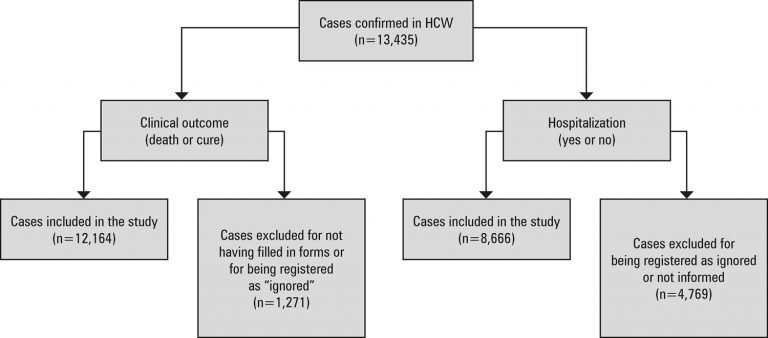
ABSTRACT Objective To analyze clinical and sociodemographic characteristics associated with death and hospitalization of healthcare workers due to COVID-19, in addition to calculating the incidence rates per profession. Methods A cross-sectional observational study using secondary open data from the State Health Department of Espírito Santo (ES), Brazil. The cases of COVID-19 in healthcare workers were recorded between February 27 and August 17, 2020, in Espírito Santo, excluding cases with missing information. Results Of the confirmed cases, 75.6% (n=9,191) were female. […]
Keywords: Brazil; Coronavirus infections; COVID-19; Epidemiology; Health personnel; Occupational Health; SARS-CoV-2
04/Mar/2022
Identification of Seniors at Risk: transcultural adaptation for Brazilian Portuguese
DOI: 10.31744/einstein_journal/2022AO5705
ABSTRACT Objective To perform cross-cultural adaptation of the Identification of Seniors at Risk tool. Methods This methodological study was based on the guidelines process proposed by Beaton, attending the stages of translation, back-translation, judgment by judges and content validation of the Identification of Seniors at Risk tool. The goal of this tool is to allow the identification of the elderly at risk for hospitalization, composed of six dichotomous questions (yes or no) related to functional decline, comorbidities, previous hospitalization (last […]
Keywords: Aged; Continuity of patient care; Hospitalization; Integrality in health; Risk management
23/Feb/2022
Epidemiology and treatment of sepsis at a public pediatric emergency department
DOI: 10.31744/einstein_journal/2022AO6131
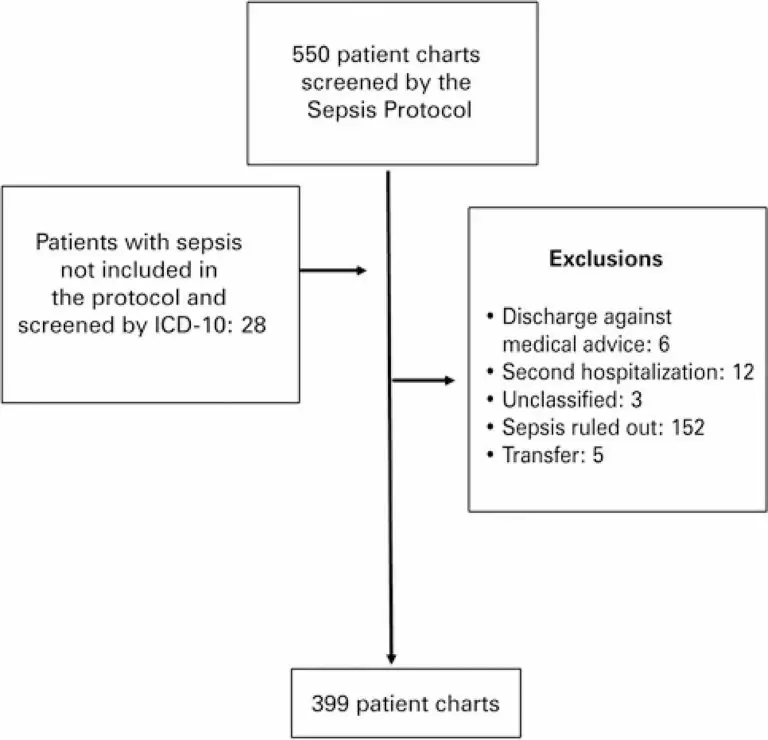
ABSTRACT Objective To describe the clinical characteristics and treatment of children with sepsis, severe sepsis, and septic shock at a pediatric emergency department of a public hospital. Methods A retrospective, observational study. The medical records of patients included in the hospital Pediatric Sepsis Protocol and patients with discharge ICD-10 A41.9 (sepsis, unspecified), R57 (shock) and A39 (meningococcal meningitis) were evaluated. Results A total of 399 patients were included. The prevalence of sepsis, severe sepsis, and septic shock at the emergency […]
Keywords: Child; Emergency medical services; Epidemiology; Infant; International Classification of Diseases; Length of stay; Patient discharge; Sepsis; Shock, septic
08/Feb/2022
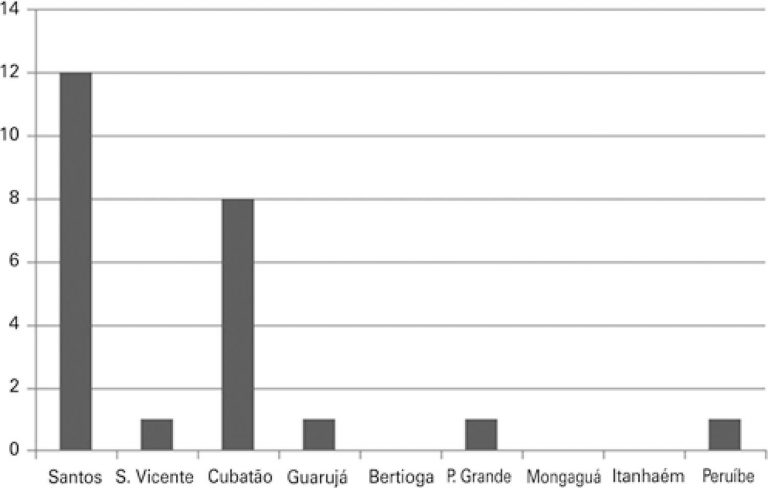
Epidemiological profile and follow-up of patients with pulmonary disease by non-tuberculous mycobacteria in Baixada Santista area, São Paulo
einstein (São Paulo). 08/Feb/2022;20:eAO5510.
View Article08/Feb/2022
Epidemiological profile and follow-up of patients with pulmonary disease by non-tuberculous mycobacteria in Baixada Santista area, São Paulo
DOI: 10.31744/einstein_journal/2022AO5510
ABSTRACT Objective To present the frequency and species diversity of non-tuberculous mycobacteria, estimate the prevalence of non-tuberculous mycobacterial pulmonary disease, describe the epidemiological profile, and determine the follow-up of patients with non-tuberculous mycobacterial pulmonary disease living in a region with a high burden of tuberculosis. Methods This a retrospective cohort observational study using data records obtained from the Instituto Adolfo Lutz – Santos and from the São Paulo Sistema de Vigilância de Tuberculose do Estado de São Paulo in the […]
Keywords: Lung diseases/diagnosis; Lung diseases/epidemiology; Nontuberculous mycobacteria; Opportunistic infections
08/Feb/2022
Maternal and early childhood factors associated with asthma and obesity in children aged 6 to 7 years: a case control study
DOI: 10.31744/einstein_journal/2022AO5609
ABSTRACT Objective To determine the maternal and early childhood factors associated with asthma and obesity in children aged 6 to 7 years. Methods A case-control study conducted with children aged 6 to 7 years. Applications with questions about asthma symptoms in the last 12 months, maternal and childhood data in the first 2 years of life, and anthropometric data were collected. Children who presented asthma symptoms were considered as cases and those without asthma symptoms were considered as controls, later […]
Keywords: Asthma; Child; Obesity; Overweight