23/Oct/2025
Complex diagnosis and management of metastatic esophagogastric junction adenocarcinoma with colonic and meningeal involvement
DOI: 10.31744/einstein_journal/2025RC1460
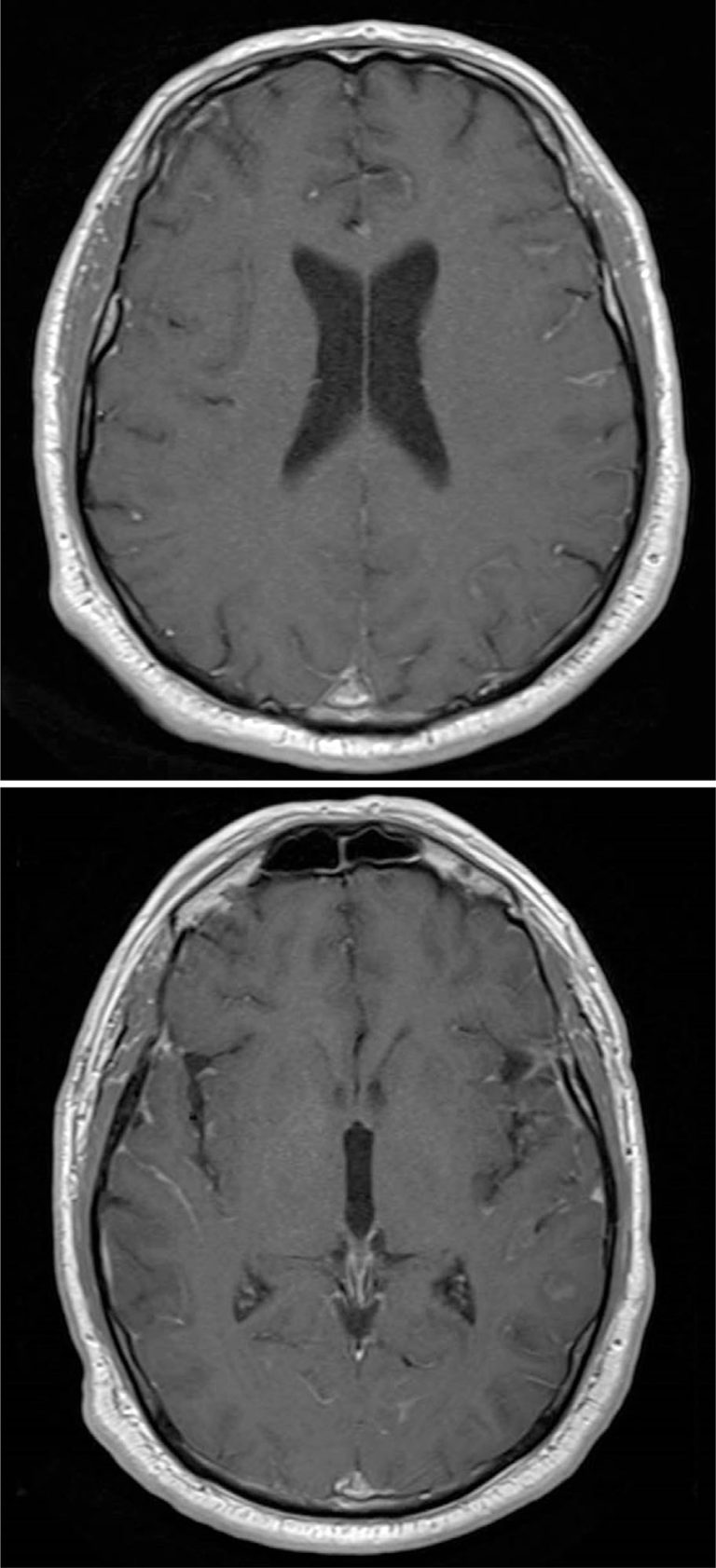
ABSTRACT This report presents a case of a 59-year-old male diagnosed with metastatic esophagogastric junction adenocarcinoma, who presented with mild dysphagia and vertigo. Brain magnetic resonance imaging initially showed no abnormalities. Upper gastrointestinal endoscopy revealed a vegetative lesion in the distal esophagus, and concurrent colonoscopy identified a laterally-spreading tumor in the transverse colon. Immunohistochemistry confirmed a poorly differentiated adenocarcinoma, suggesting an upper gastrointestinal origin. Further investigation of the worsening neurological symptoms led to the identification of leptomeningeal carcinomatosis via cerebrospinal […]
Keywords: Adenocarcinoma; Colon neoplasms; Colon, transverse; Disease progression; Esophageal neoplasms; Esophagogastric junction; Meningeal carcinomatosis; Neoplasm metastasis
20/Sep/2024
Cluster classification of a Brazilian gastric cancer cohort reveals remarkable populational differences in normal p53 rate
einstein (São Paulo). 20/Sep/2024;22:eAO0508.
View Article20/Sep/2024
Cluster classification of a Brazilian gastric cancer cohort reveals remarkable populational differences in normal p53 rate
DOI: 10.31744/einstein_journal/2024AO0508
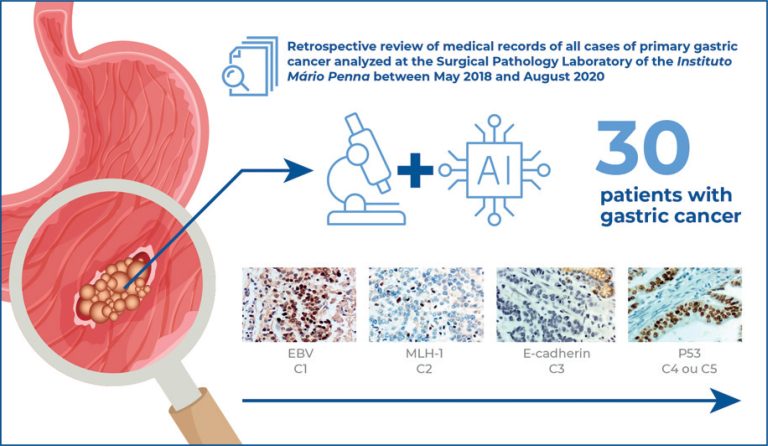
ABSTRACT In Brief Queiroz et al. showed that the application of cluster methodology for classifying gastric cancer is suitable and efficient within a Brazilian cohort, which is known for its population heterogeneity. The study highlighted the potential utilization of this method within public health services due to its low-cost, presenting a viable means to improve the diagnosis and prognosis of gastric cancer. Highlights Our Brazilian cohort with gastric cancer has a distinct distribution between mutated and normal p53. New genetic […]
Keywords: Adenocarcinoma; Biomarkers; Cluster analysis; Gastric neoplasms; Genes p53; Genetic heterogeneity; Immunohistochemistry
25/Jun/2024
Assessment of genomic variants and overall survival in primary tumor lung adenocarcinoma and corresponding mediastinal lymph nodes obtained by EBUS- TBNA
einstein (São Paulo). 25/Jun/2024;22(Suppl 1):STO001.
View Article25/Jun/2024
Assessment of genomic variants and overall survival in primary tumor lung adenocarcinoma and corresponding mediastinal lymph nodes obtained by EBUS- TBNA
DOI: 10.31744/einstein_journal/2024ABS_BTS_STO001
Category: Respiratory Endoscopy Introduction: Histopathological analyses and classification by the Tumor, Node, Metastasis System (TNM) are key-elements in therapeutic decision-making for non-small cell lung cancer (NSCLC).() Endobronchial ultrasound-guided transbronchial needle aspiration (EBUS-TBNA) is effective in obtaining biopsies of hilar and mediastinal lymph nodes (MLN), for tissue collection to mediastinal staging in NSCLC.(,) The assessment of clinically significant genomic alterations in surgically resected primary tumors (PT) and MLN aspirates obtained by EBUS-TBNA can provide valuable insights into the risk of recurrence, […]
Keywords: Adenocarcinoma; Cancer genomic; EBUS-TBNA; Mediastinal lymph node; NGS
06/Jun/2024
Prognostic value of programmed cell death ligand 1 (PD-L1) expression in patients with stage III non-small cell lung cancer under different treatment types: a retrospective study
einstein (São Paulo). 06/Jun/2024;22:eAO0575.
View Article06/Jun/2024
Prognostic value of programmed cell death ligand 1 (PD-L1) expression in patients with stage III non-small cell lung cancer under different treatment types: a retrospective study
DOI: 10.31744/einstein_journal/2024AO0575
Highlights PD-L1 expression by immunohistochemistry is positive in more than half on stage III non-small lung cancer. PD-L1 expression by immunohistochemistry had no relationship with clinical characteristics. PD-L1 expression by immunohistochemistry is not related to progression-free or overall survival in patients treated with chemoradiotherapy with or without surgery. ABSTRACT Objective: Currently programmed cell death protein 1 (PD-1) inhibitors in combination with other therapies are being evaluated to determine their efficacy in cancer treatment. However, the effect of PD-ligand (L) 1 […]
Keywords: Adenocarcinoma; Carcinoma, non-small-cell lung cancer; Lung neoplasms; Programmed cell death 1 receptor
01/Jan/2010
En bloc pancreaticoduodenectomy and right hemicolectomy to treat locally advanced right colon cancer: report of three cases
DOI: 10.1590/S1679-45082010RC786
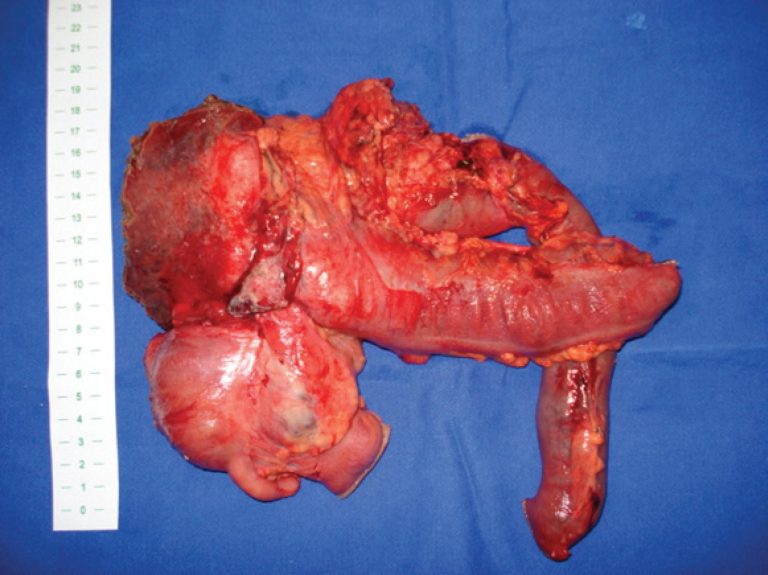
ABSTRACT Although colorectal tumors are fairly common surgical conditions, 5 to 12% of these tumors are locally advanced (T4 tumors) upon diagnosis. In this particular situation, the efficacy of en bloc multivisceral resection has been proven. When right-colon cancer invades the proximal duodenum or even the pancreatic head, a challenging dilemma arises due to complexity of the curative surgical procedure. Therefore, en bloc pancreaticoduodenectomy with right hemicolectomy should be performed to obtain free margins. The present study reports three cases […]
Keywords: Adenocarcinoma; Case reports; Colonic neoplasms; Colorectal neoplasms; Pancreaticoduodenectomy