einstein (São Paulo). 02/Apr/2026;24:eAO1666.
Feasibility, outcomes, and cost analysis of robotic head and neck surgery in the Public Health System

DOI: 10.31744/einstein_journal/2026AO1666
Highlights
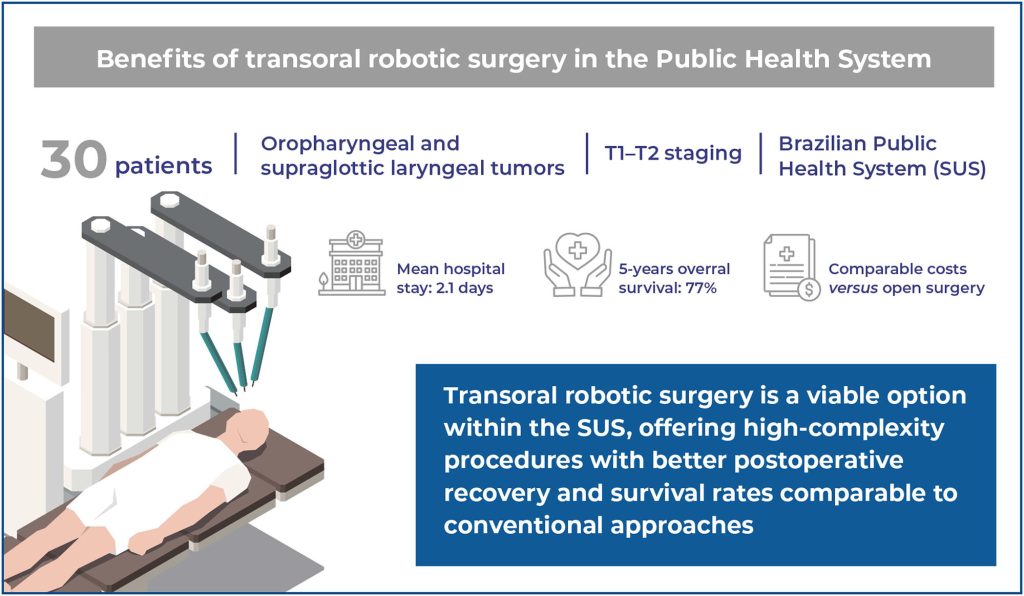
■ Transoral robotic surgery applied in patients with T1–T2 oropharyngeal and laryngeal tumors.
■ Mean hospital stay: 2.1 days.
■ Minimal postoperative complications.
■ 5-year survival: 77%, with comparable cost-effectiveness.
ABSTRACT
Objective:
To assess the feasibility and benefits of transoral robotic surgery in the public healthcare system and to conduct a cost analysis of its implementation.
Methods:
This prospective, nonrandomized, observational cohort study was conducted over 24 months and included patients with T1-T2 oropharyngeal and supraglottic laryngeal tumors.
Results:
Thirty patients were included. The mean surgery duration was 204 min, and the mean hospital stay was 2.1 days. Postoperative complications included one case of bleeding and one case of aspiration. The estimated 5-year survival rate was 77%. Cost analysis revealed a higher initial cost for robotic surgery compared with conventional approaches; however, reduced postoperative complications mitigated the overall expenses.
Conclusion:
Transoral robotic surgery is a feasible and safe option within the public healthcare system. It enables highly complex procedures with faster postoperative recovery, lower morbidity, and survival outcomes comparable to conventional approaches.
[…]
2