einstein (São Paulo). 01/Jul/2026;24:eAO1907.
Association between self-changes in body mass index patterns and depressive symptoms: a longitudinal follow-up study

DOI: 10.31744/einstein_journal/2026AO1907
Highlights
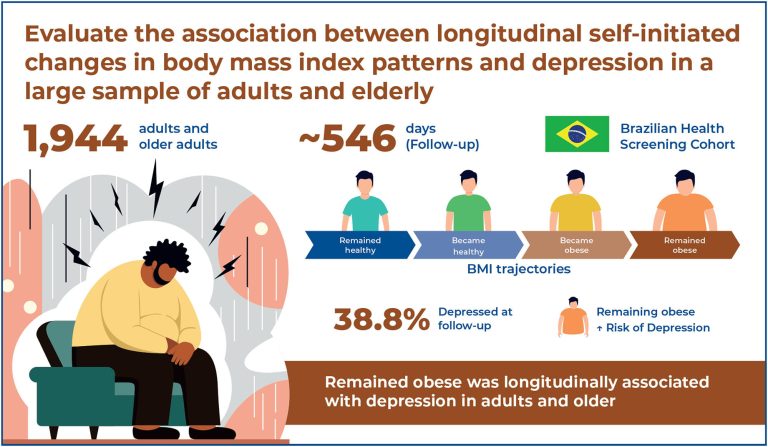
■ Remaining obese over time was independently associated with higher odds of depression.
ABSTRACT
Objective:
To evaluate the association between longitudinal self-initiated changes in body mass index patterns and depression in a large sample of adults and older individuals.
Methods:
Participants included 1,944 adults and older individuals with depressive symptoms at baseline who underwent routine health screening examinations. Depression was defined as Beck Depression Inventory-II scores ≥14. Body mass index, blood pressure, blood samples, alcohol consumption, smoking status, physical activity levels, perceived stress, depressive symptoms, and lower urinary tract symptoms were collected at baseline and follow-up (mean 545.9±152.9 days). Participants were stratified according to their body mass index patterns at baseline and follow-up as follows: i) remained healthy, ii) became healthy, iii) became obese, and iv) remained obese. Hierarchical logistic regression was performed to evaluate the association between body mass index patterns and depression at follow-up.
Results:
At follow-up, participants who remained obese had higher odds of depression (odds ratio: 1.33 95% confidence interval: 1.04-1.71, p=0.026) after adjustment for clinical and lifestyle variables.
Conclusion:
In participants who remained obese, obesity was longitudinally associated with depression in both adults and older individuals.
[…]
Keywords: Obesity; Depression; Body mass index; Chronic disease