10 results
10/Nov/2025
10/Nov/2025
DOI: 10.31744/einstein_journal/2025AO1491
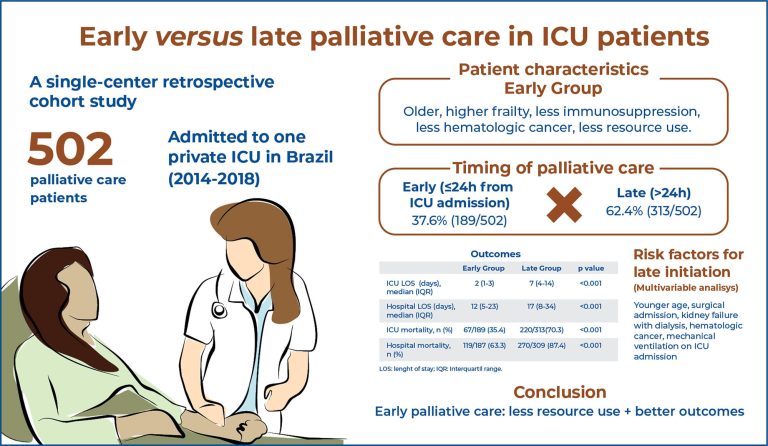
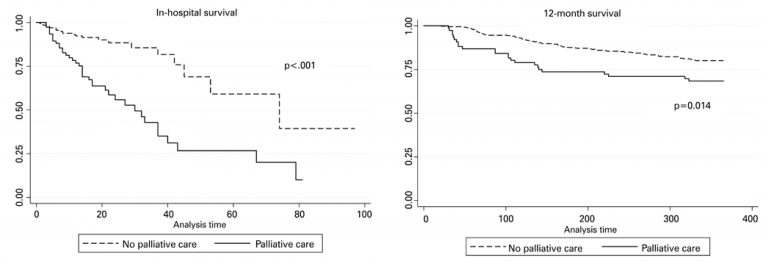
Highlights ■ Patients who received early palliative care were younger with more immunosuppression. ■ Intensive care unit and hospital mortality were higher with late palliative care. ■ Early palliative care reduced the use of advanced life support resources. ABSTRACT Objectives: To describe the use of advanced life support, resource utilization, and clinical outcomes and to identify the risk factors for late initiation of palliative care support in patients at the intensive care unit. Methods: A retrospective, single-center cohort study conducted […]
Keywords: Attitude of health personnel; Dehumanization; Family support; Palliative care; Patient care team; Professional-family relations
30/Jul/2025
30/Jul/2025
DOI: 10.31744/einstein_journal/2025AO1243
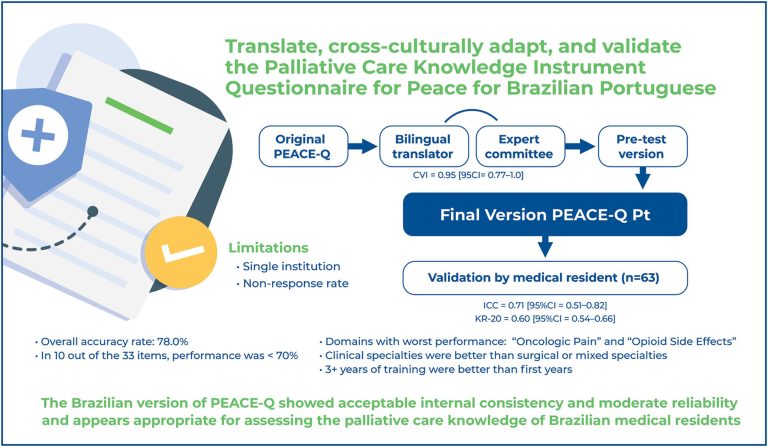
Highlights ■ Performance was <70% in 10 of the 33 items. ■ Lowest performance domains were Oncologic Pain and Opioid Side Effects. ■ Residents in clinical specialties outperformed those in surgical or mixed specialties. ■ Residents with ≥3 years of training outperformed those on their first 2 years. ABSTRACT Objective: To translate, cross-culturally adapt, and validate the Palliative Care Knowledge Questionnaire for PEACE (PEACE-Q) in Brazilian Portuguese. Methods: This study followed five steps: translation, back-translation, cultural adaptation, pre-test, and test-retest. […]
Keywords: Clinical competence; Education, medical; Internship and residency; Palliative care; Psychometrics; Surveys and questionnaires; Validation study as topic
25/Sep/2024
25/Sep/2024
DOI: 10.31744/einstein_journal/2024AO0536
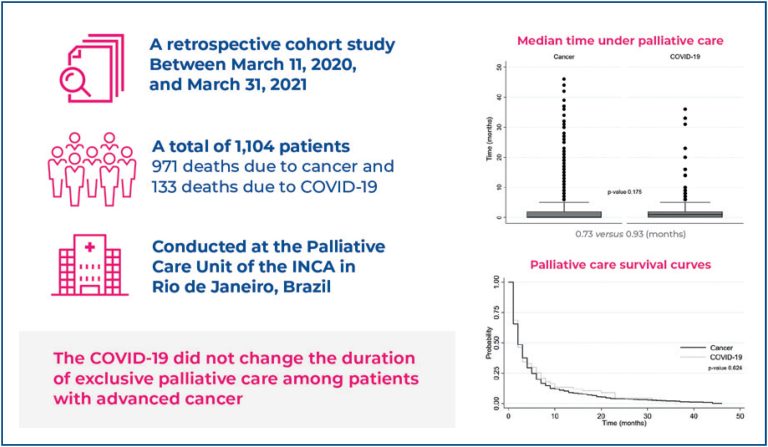
Highlights Fatality due to COVID-19 does not alter the time under oncological palliative care. The retrospective design of this pioneering study allows causal inference. Access to oncological palliative care frequently approaches terminality of life. ABSTRACT Objective: This study aimed at investigating the extent to which COVID-19-induced fatalities affect the duration of palliative care among patients with advanced cancer. Methods: A retrospective cohort study was conducted at the Palliative Care Unit of the Brazilian Instituto Nacional de Câncer in Rio de […]
Keywords: Cause of Death; COVID-19; Neoplasms; Palliative care; Pandemics; Survival; Underlying cause of death
19/Dec/2023
DOI: 10.31744/einstein_journal/2023AO0481
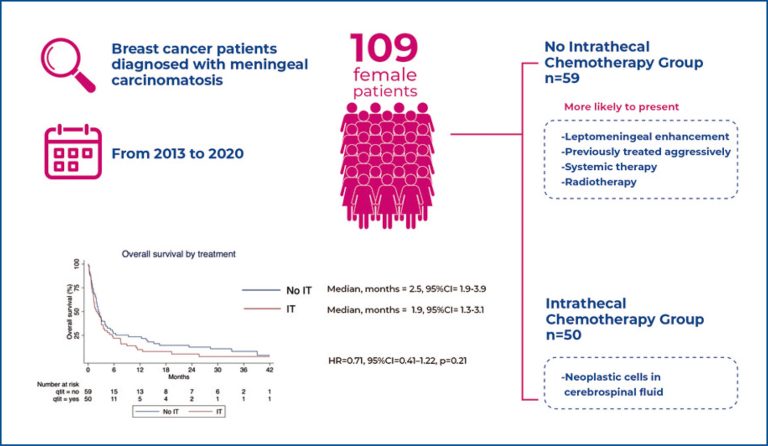
Highlights Intrathecal chemotherapy did not increase overall survival or time to neurologic deterioration. Compared with no treatment, systemic therapy with no intrathecal chemotherapy afforded better overall survival. Intrathecal chemotherapy should not postpone or preclude systemic treatment. ABSTRACT Objective: To evaluate whether intrathecal chemotherapy improves clinical outcomes in patients with meningeal carcinomatosis. Methods: This retrospective cohort study included consecutive patients with breast cancer diagnosed with meningeal carcinomatosis. Clinical and treatment data were collected from the patients’ medical charts. The primary outcome […]
Keywords: Breast neoplasm; Injections, spinal; Meningeal carcinomatosis; Metastases; Methotrexate; Neoplasm; Neurologic manifestations; Palliative care; Survival
18/May/2022
DOI: 10.31744/einstein_journal/2022AO6459
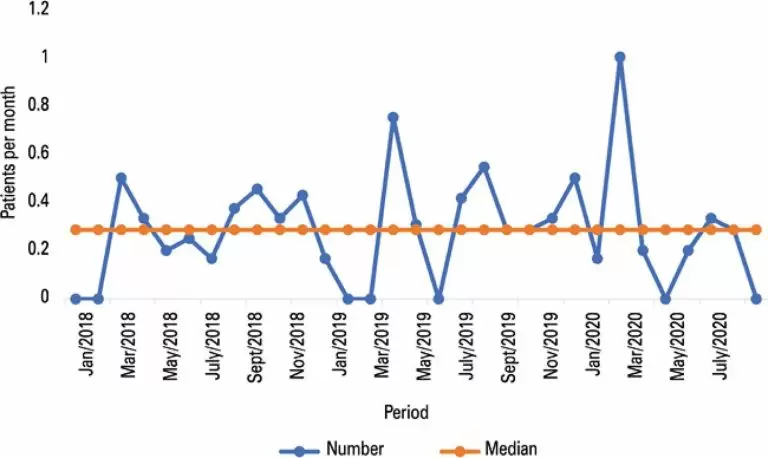
ABSTRACT Objective To evaluate the impact of COVID-19 pandemic on the care delivered to hospitalized cancer patients in end-of-life. Methods A retrospective analysis of data of hospitalized patients with advanced solid tumors, who died under exclusive palliative care during first wave (March 2020 to July 2020) compared with the period previous pandemic (January 2018 to February 2020). Results A total of 190 oncologic patients were included, 161 patients before the pandemic, and 29 in the period from March 2020 to […]
Keywords: Betacoronavirus; Coronavirus infections; COVID-19; Neoplasms; Palliative care; Quality of Health Care; SARS-CoV-2
02/Oct/2020
DOI: 10.31744/einstein_journal/2020AO5539
ABSTRACT Objective To translate and make cross-cultural adaptation of NECPAL CCOMS-ICO© tool to Portuguese, and to analyze its semantic validity. Methods A methodological research about NECPAL CCOMS-ICO© tool cross-cultural adaptation, translated from Spanish into Portuguese and measurement of semantic validity. The cross-cultural adaptation process was conducted according to Beaton recommendations, including translation, translation synthesis, back-translation, and analysis of semantic, idiomatic, conceptual, and cultural equivalence of translated and back-translated tool versions, resulting in a pre-final version, which was submitted to a […]
Keywords: Chronic disease; Palliative care; Patient care management; Patient identification systems; Surveys and questionnaires; Validation study
09/Sep/2020
DOI: 10.31744/einstein_journal/2020AO5395
ABSTRACT Objective To investigate the prevalence of palliative sedation use and related factors. Methods An observational study based on data collected via electronic questionnaire comprising 23 close-ended questions and sent to physicians living and working in the state of São Paulo. Demographic data, prevalence and frequency of palliative sedation use, participant’s familiarity with the practice and related motivating factors were analyzed. In order to minimize memory bias, questions addressing use frequency and motivating factors were limited to the last year […]
Keywords: Advance care planning; Bioethics; Deep sedation; Pain management; Palliative care; Terminal care
06/Apr/2018
DOI: 10.1590/S1679-45082018AO4092
ABSTRACT Objective To investigate clinical and laboratory characteristics associated with referral of acutely ill older adults to exclusive palliative care. Methods A retrospective cohort study based on 572 admissions of acutely ill patients aged 60 years or over to a university hospital located in São Paulo, Brazil, from 2009 to 2013. The primary outcome was the clinical indication for exclusive palliative care. Comprehensive geriatric assessments were used to measure target predictors, such as sociodemographic, clinical, cognitive, functional and laboratory data. […]
Keywords: Aged; Clinical decision-making; Decision Making; Hospital care; Palliative care; Prognosis
24/Mar/2015
24/Mar/2015
DOI: 10.1590/S1679-45082015RW2572
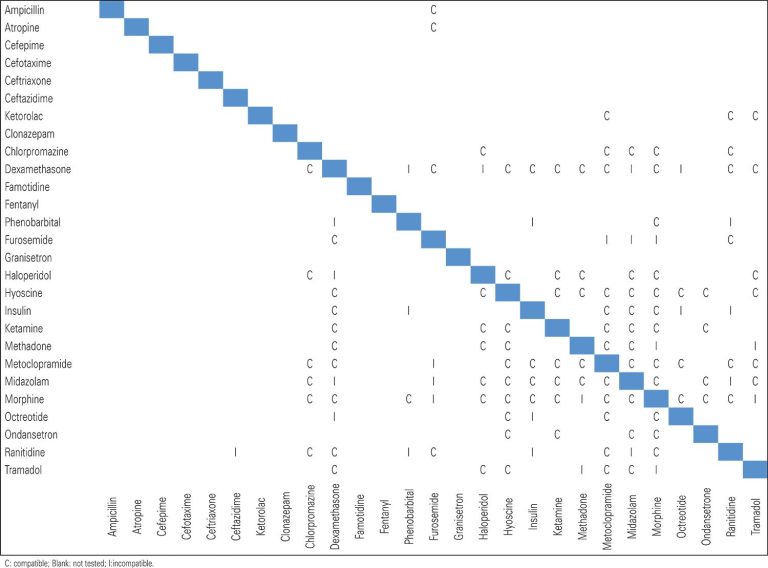
The aim of this study was to analyze the information available in the literature about the drugs that can be administered through hypodermoclysis and the resulting impact that this information may have on the routine of the pharmacist working at a hospital. The study was based on a review of the literature. The results showed positive points of the procedure, but little specific information about medications such as routes of administration, standard dilutions, optimal doses, etc. Thus, it was possible […]
Keywords: Hypodermoclysis; Infusions, subcutaneous; Palliative care
16/Dec/2014
16/Dec/2014
DOI: 10.1590/S1679-45082014RC3091
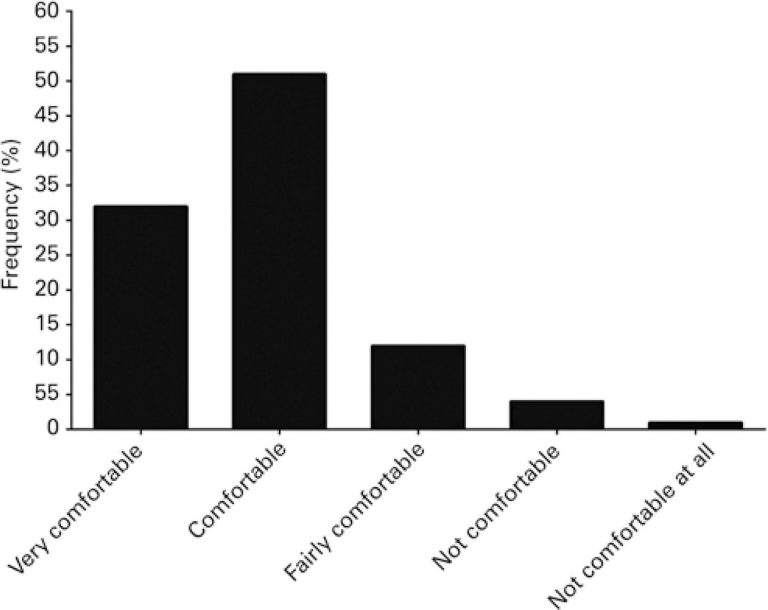
Objective To evaluate the perception of oncology patients and their caregivers upon diagnosis and beginning of the therapy and during palliative care. Methods A cross-sectional study at the oncology and palliative care outpatients clinics of the Faculdade de Medicina do ABC. Clinical and demographic data from patients and their caregivers were collected and questionnaires regarding the elements considered important in relation to the treatment were applied. Results We enrolled 32 patients and 23 caregivers that were initiating treatment at the […]
Keywords: Caregivers; Communication; Neoplasm; Pacient acceptance of health care; Palliative care