3 results
25/Jun/2026
DOI: 10.31744/einstein_journal/2026RW1900
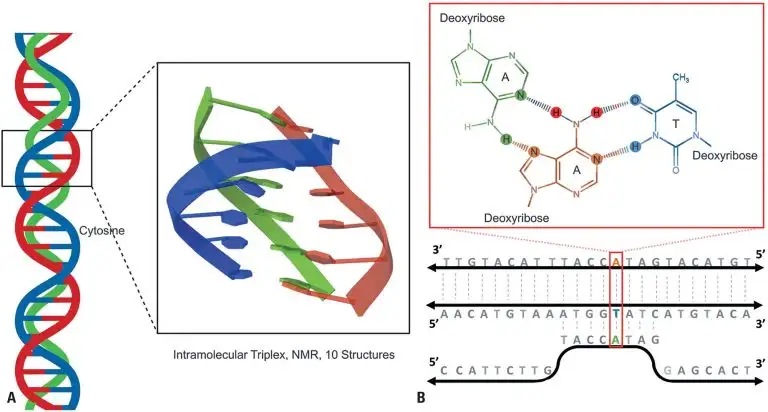
ABSTRACT Non-B DNA structures represent alternative conformations to the canonical double helix, characterized by unconventional base pairing that diverge from the Watson-Crick model. Among these, the i-motifs, formed in cytosine-rich regions, has attracted considerable attention due to its potential regulatory roles. This review examines the molecular mechanisms underlying the formation and stability of i-motifs, which rely on hydrogen bonding between protonated cytosines. These structures can form under slightly acidic and even neutral pH conditions, depending on the DNA sequence context. […]
Keywords: Gene expression regulation; Genetics; Molecular targeted therapy; Nucleic acid conformation; Oncogenes; Promoter regions
12/Jul/2017
12/Jul/2017
DOI: 10.1590/S1679-45082017RC4006
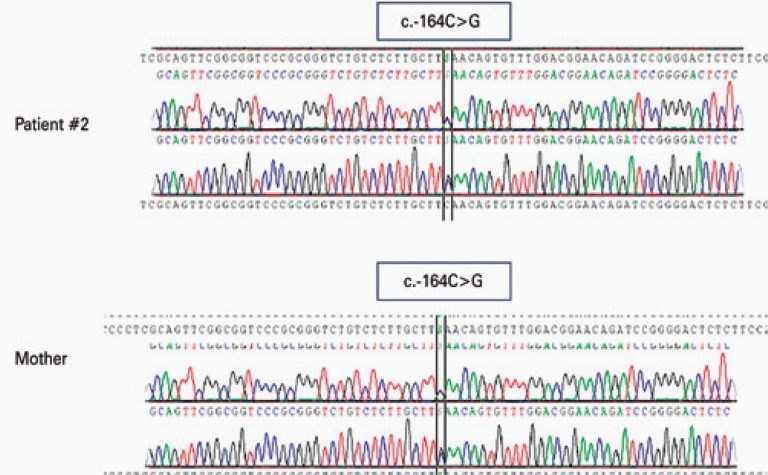
ABSTRACT Hereditary hyperferritinemia-cataract syndrome is an autosomal dominant genetic disorder associated with mutations in the 5’UTR region of the ferritin light chain gene. These mutations cause the ferritin levels to increase even in the absence of iron overload. Patients also develop bilateral cataract early due to accumulation of ferritin in the lens, and many are misdiagnosed as having hemochromatosis and thus not properly treated. The first cases were described in 1995 and several mutations have already been identified. However, this […]
Keywords: Case reports; Cataract; Ferritins; Genetics; Heredity; Point mutation
01/Jul/2014
DOI: 10.1590/S1679-45082014RW2859
Personalized medicine is the use of biomarkers, most of them molecular markers, for detection of specific genetic traits to guide various approaches for preventing and treating different conditions. The identification of several genes related to heredity, oncology and infectious diseases lead to the detection of genetic polymorphisms that are involved not only in different clinical progression of these diseases but also in variations in treatment response. Currently, it is possible to detect these polymorphisms using several methodologies: detection of single […]
Keywords: Anticoagulants; Blood coagulation; DNA; Genetics; Hepatitis C; Individualized medicine; medical; Molecular medicine; Neoplasms; Pharmacogenetics