einstein (São Paulo). 02/Apr/2026;24:eAO1802.
Feasibility of transthoracic echocardiography in the prone position with a low-cost adaptation: morphological, functional, and hemodynamic analysis

DOI: 10.31744/einstein_journal/2026AO1802
Highlights
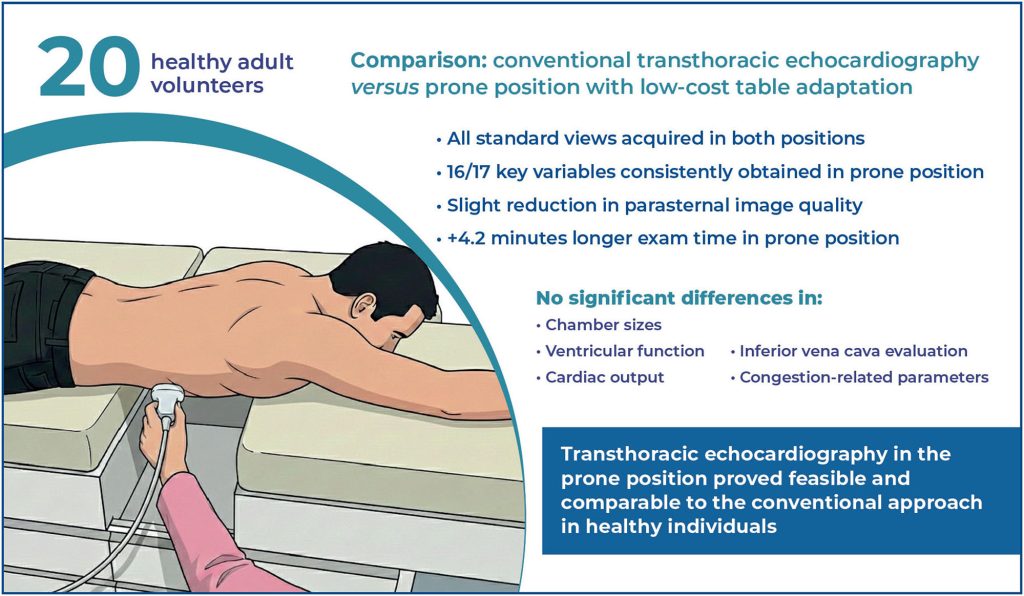
■ All standard echocardiographic views were obtained in the prone position.
■ In the prone position, 16 of 17 key variables were consistently acquired.
■ Image quality was slightly reduced only in the parasternal view.
■ Quantitative measurements were comparable between the prone and supine positions.
ABSTRACT
Objective:
Transthoracic echocardiography is essential for hemodynamic assessment in critically ill patients; however, its use in the prone position remains challenging. This study aimed to assess the feasibility of performing transthoracic echocardiography using a low-cost ultrasound table adaptation in the prone position.
Methods:
This was a single-center, cross-sectional, comparative pilot study. Anthropometric and clinical data were collected along with echocardiographic image acquisition in the conventional and prone positions by the same operator. Feasibility was assessed by the acquisition of echocardiographic windows and the number of key variables in both positions. Comparative analyses were conducted for image quality, examination duration, and quantitative parameters such as variables related to systemic congestion, biventricular function, and cardiac output estimation. Statistical analysis was performed using the Wilcoxon signed-rank test, Fisher’s exact test, binomial test, and false discovery rate correction for multiple comparisons.
Results:
Echocardiographic views were obtained for all patients in both positions. Imaging in the prone position allowed consistent acquisition of 16 of 17 key variables, with no significant difference. Image quality in the parasternal view was slightly reduced in the prone position but remained appropriate (p=0.015). Examinations in the prone position were on average 4.2 min longer (p=0.037). No significant differences were observed between the positions for any quantitative echocardiographic parameters, including chamber dimensions, systolic and diastolic function, cardiac output, and inferior vena cava assessment.
Conclusion:
Transthoracic echocardiography in the prone position was feasible, with measurements comparable to those in the conventional position in healthy individuals undergoing routine evaluations in a regular echocardiography laboratory. Further studies are required to validate the accuracy and applicability of this method, particularly for patients in intensive care and emergency settings.
[…]
3