einstein (São Paulo). 17/Dec/2025;24:eRW0695.
Effect of non-invasive ventilation and high-flow nasal cannula on hospital mortality in COVID-19-induced acute respiratory failure: a meta-analysis

DOI: 10.31744/einstein_journal/2026RW0695
ABSTRACT
Background
Non-invasive respiratory support strategies, such as high-flow nasal cannula therapy and non-invasive ventilation, were widely employed during the coronavirus disease 2019 (COVID-19) pandemic, yet their comparative effectiveness remains uncertain.
Objective
To compare the effects of high-flow nasal cannula therapy, non-invasive ventilation, and conventional oxygen therapy on intubation rates and hospital mortality in adults with COVID-19-related acute respiratory failure.
Methods
A systematic review and meta-analysis was conducted following PRISMA and Cochrane guidelines, with searches performed in nine databases for publications up to May 2023. Eligible studies were those on adults (≥18 years) with confirmed severe acute respiratory syndrome coronavirus 2 infection and that included intubation and mortality as primary outcomes. Risk of bias was assessed using the National Institutes of Health Quality Assessment Tool for Observational Cohorts and the Cochrane Risk of Bias tool. Pooled results were reported as odds ratios (ORs) with 95% confidence intervals (95%CIs).
Results
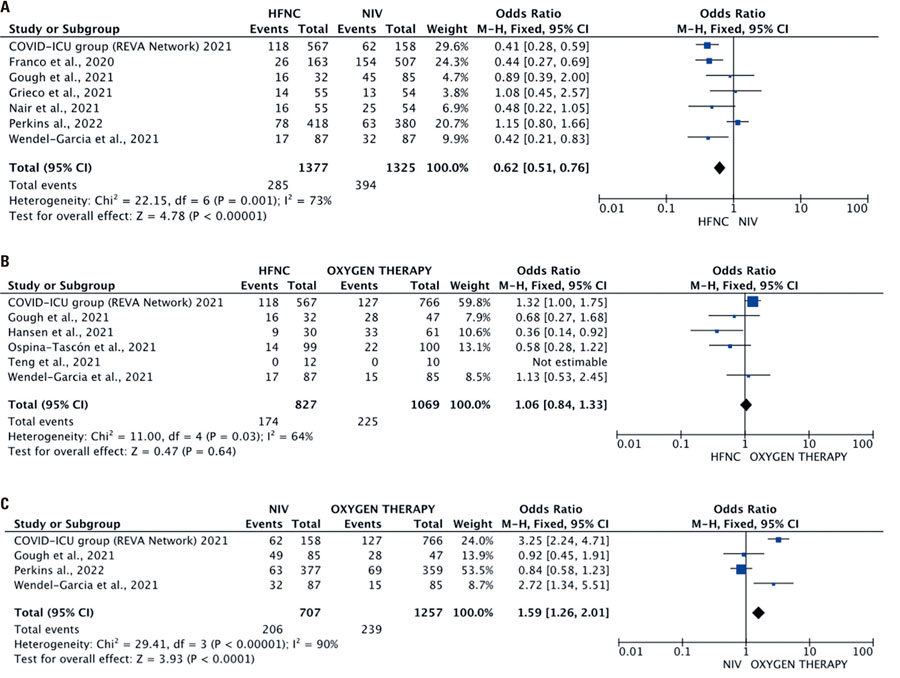
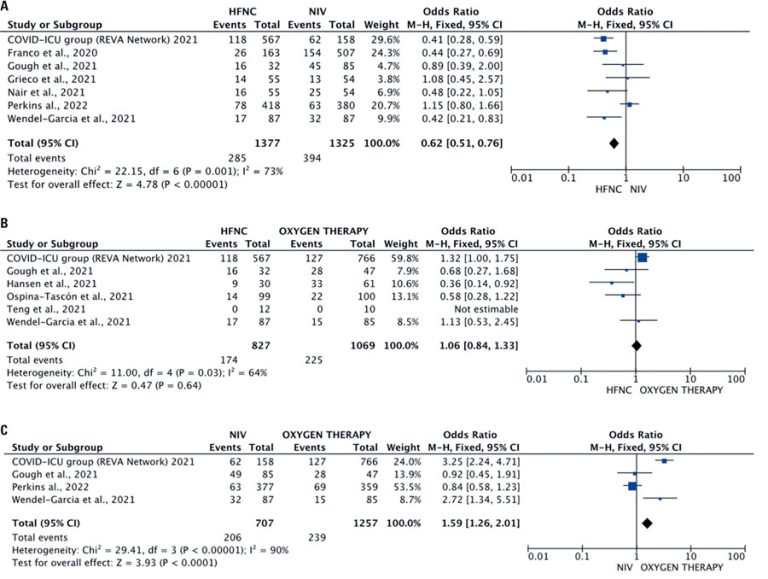
Forty-one studies were included in the review and ten in the meta-analysis (2,843 patients). High-flow nasal cannula therapy did not differ from non-invasive ventilation in terms of the intubation rate (OR=1.07, 95%CI=0.89-1.29, p=0.45) but was superior to oxygen therapy (OR=0.79, 95%CI=0.64-0.97, p=0.02). High-flow nasal cannula therapy was also associated with lower mortality than non-invasive ventilation (OR=0.62, 95%CI=0.51-0.76, p<0.0001) but did not differ from oxygen therapy (OR=1.06, 95%CI=0.84-1.33, p=0.64). Substantial heterogeneity was observed in the subgroup analyses (I2=64%-90%).
Interpretation
High-flow nasal cannula therapy may reduce the need for intubation compared with oxygen therapy and may lower the hospital mortality rate compared with non-invasive ventilation. However, heterogeneity in the studies suggests that patient-specific factors and disease severity may influence outcomes.
Conclusion
High-flow nasal cannula therapy shows potential benefits over oxygen therapy and non-invasive ventilation for COVID-19-related acute respiratory failure, particularly in the mortality rate. Clinical use of these therapies should be context-specific, given the need for cautious interpretation of our results and for further high-quality trials.
118