einstein (São Paulo). 01/Jul/2026;24:eAE1497.
Development of a low-fidelity simulation model for ultrasound-guided vascular puncture

DOI: 10.31744/einstein_journal/2026AE1497
Highlights
■ Ultrasound improves success rates and reducescomplications during vascular puncture.
■ Simulation-based training enables safe and effectiveacquisition of procedural skills.
■ A low-cost, reproducible simulation model was developed.
■ Specialists validated the model as effective for teaching and training.
ABSTRACT
Objective:
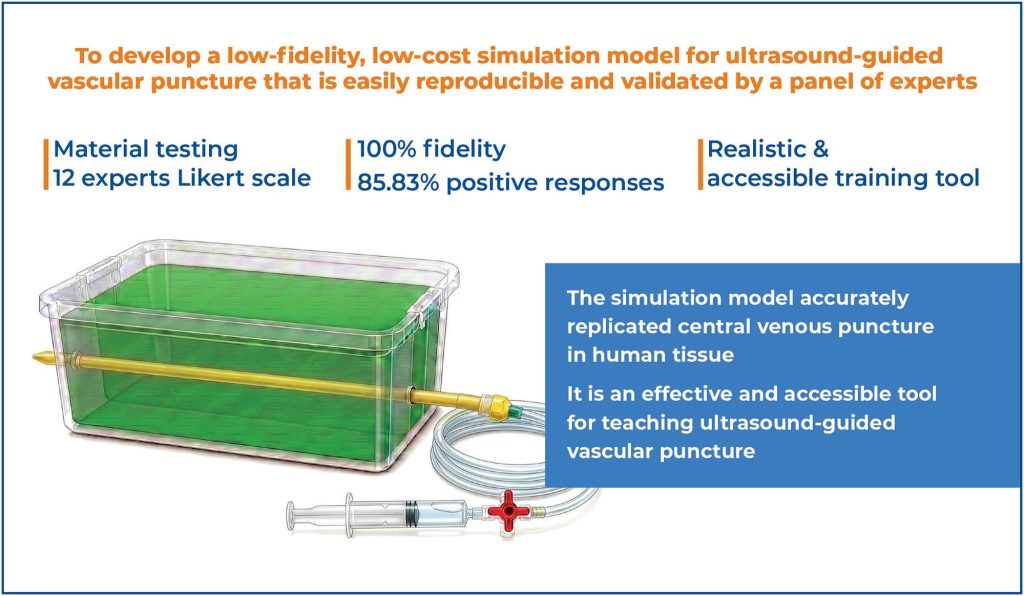
To develop a low-fidelity, low-cost simulation model for ultrasound-guided vascular puncture that is easily reproducible and validated by an expert panel.
Methods:
Sequential tests using different materials were conducted based on phantom models described in the literature. The final model underwent evaluation by 12 volunteer expert physicians, who assessed usability, fidelity, and reproducibility during repeated ultrasound-guided punctures. Feedback was collected using a Likert scale instrument.
Results:
All specialists agreed on model fidelity, including echogenicity, scenario reproduction, and tactile sensation, as well as suitability for training and reproducibility. Overall, positive responses accounted for 85.83% of evaluated items.
Conclusion:
The proposed simulation model closely resembled the scenario of central venous puncture in human tissue and represented an effective and accessible tool for teaching ultrasound-guided vascular puncture techniques.
[…]