18/May/2022
Palliative care to cancer patients: how COVID-19 pandemic could affect quality of care
DOI: 10.31744/einstein_journal/2022AO6459
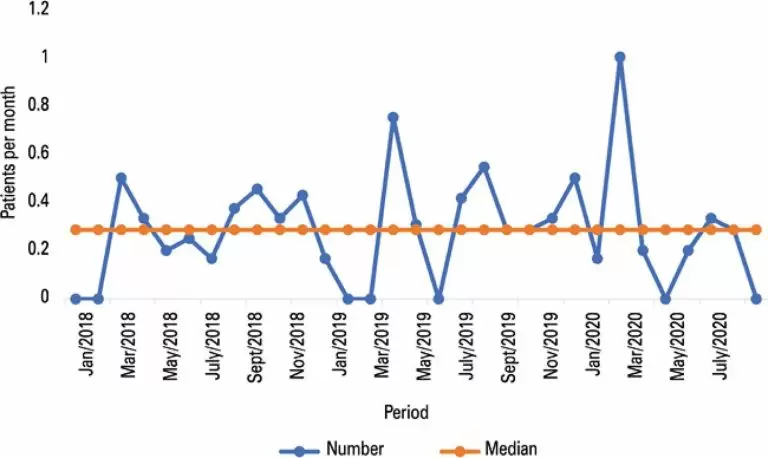
ABSTRACT Objective To evaluate the impact of COVID-19 pandemic on the care delivered to hospitalized cancer patients in end-of-life. Methods A retrospective analysis of data of hospitalized patients with advanced solid tumors, who died under exclusive palliative care during first wave (March 2020 to July 2020) compared with the period previous pandemic (January 2018 to February 2020). Results A total of 190 oncologic patients were included, 161 patients before the pandemic, and 29 in the period from March 2020 to […]
Keywords: Betacoronavirus; Coronavirus infections; COVID-19; Neoplasms; Palliative care; Quality of Health Care; SARS-CoV-2
18/May/2022
T2-weighted imaging hypointensity in an ovarian lesion: is it a benign finding?
DOI: 10.31744/einstein_journal/2022AO6851
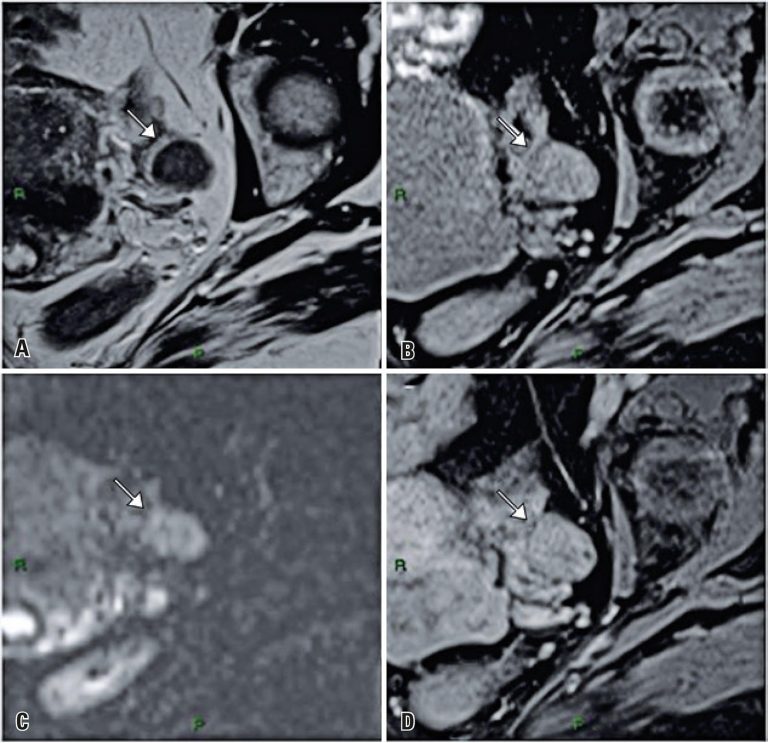
ABSTRACT Objective To evaluate whether the presence of a hypointense signal at T2-weighted imaging in a solid ovarian lesion on magnetic resonance imaging is a predictor of stability and benignity. Methods This is a single center study, prospectively read with retrospective acquired data. The database was searched for patients who underwent magnetic resonance imaging between January 2008 and October 2019 and whose reports mentioned solid ovarian lesions with low signal on T2-weighted imaging. A total of 47 nodules were included. […]
Keywords: Algorithms; Magnetic resonance imaging; Magnetic resonance spectroscopy; Ovarian neoplasms
18/May/2022
Actinic cheilitis in rural workers: prevalence and associated factors
DOI: 10.31744/einstein_journal/2022AO6862
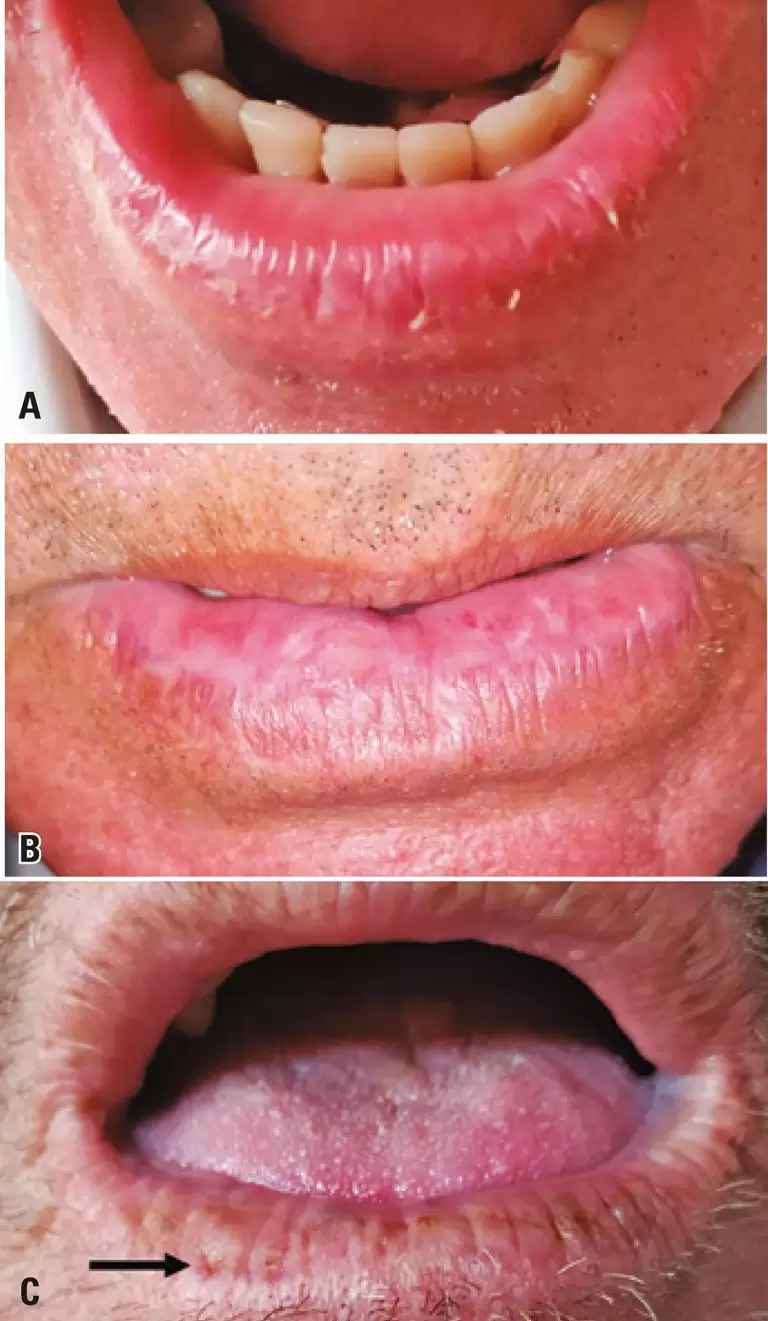
ABSTRACT Objective To evaluate the prevalence of actinic cheilitis in rural workers and factors associated with the development of this condition. Methods A cross-sectional study was conducted in a city in Northeastern Brazil. Data were collected by clinical examination and use of a questionnaire validated with 300 rural workers. The χ2 test was employed to identify possible associations between the presence of actinic cheilitis and clinical and demographic variables. Multiple logistic regression analysis was performed using forward stepwise selection. A […]
Keywords: Cheilitis; Pathology, oral; Prevalence; Rural population; Ultraviolet rays
06/May/2022
Incidence of hemoglobinopathies and spatialization of newborns with sickle cell trait in Mato Grosso do Sul, Brazil
einstein (São Paulo). 06/May/2022;20:eAO6535.
View Article06/May/2022
Incidence of hemoglobinopathies and spatialization of newborns with sickle cell trait in Mato Grosso do Sul, Brazil
DOI: 10.31744/einstein_journal/2022AO6535
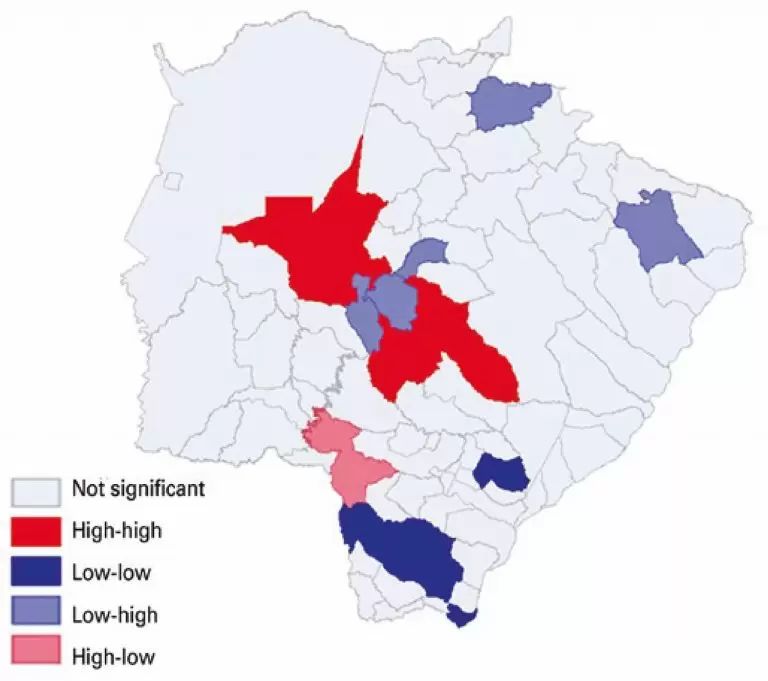
ABSTRACT Objective To evaluate the incidence of variant hemoglobins of newborn samples from the Neonatal Screening Center in the state of Mato Grosso do Sul, Brazil, and to analyze the distribution and spatial autocorrelation of newborns with sickle cell trait. Methods Samples from 35,858 newborns screened by the Neonatal Screening Center. The samples with inconclusive diagnosis were submitted to electrophoretic, chromatographic, cytological and molecular analyses. The spatial distribution analysis of newborns with sickle cell trait was performed by spatial autocorrelation. […]
Keywords: Infant, Newborn; Neonatal screening; Residence characteristics; Sickle cell trait; Spatial Analysis
06/May/2022
In-hospital outcomes in preterm and small-for-gestational-age newborns: a cohort study
DOI: 10.31744/einstein_journal/2022AO6781
ABSTRACT Objective To compare in-hospital outcomes between small-for-gestational-age and appropriate-for-gestational-age preterm neonates who needed intensive care. Methods A retrospective cohort study with preterm newborns, from January to December 2017. The results are presented as median, frequency, and odds ratio. Numerical variables were compared using the Wilcoxon test. Categorical variables were compared using the χ2 test. We considered p
Keywords: Critical care; Enterocolitis, necrotizing; Infant, Newborn; Infant, premature; Infant, premature, diseases; Infant, small for gestational age; Retinopathy of prematurity
06/May/2022
Degree of food processing and association with overweight and abdominal obesity in adolescents
einstein (São Paulo). 06/May/2022;20:eAO6619.
View Article06/May/2022
Degree of food processing and association with overweight and abdominal obesity in adolescents
DOI: 10.31744/einstein_journal/2022AO6619
ABSTRACT Objective To evaluate the association between the degree of food processing, overweight, and abdominal obesity in adolescents. Methods This is a cross-sectional study, with 576 adolescents aged 10 to 17 years, of both sexes. Food consumption was collected using the Food Frequency Questionnaire and foods classified as in natura or minimally processed, processed foods associated with culinary ingredients, and ultraprocessed foods. Sociodemographic data, body mass index, waist circumference and waist-to-height ratio were collected. The analysis was evaluated by the […]
Keywords: Adolescent; Eating; Industrialized foods; Obesity, abdominal; Overweight
06/May/2022
Ultrasound classification of thyroid nodules: does size matter?
DOI: 10.31744/einstein_journal/2022AO6747
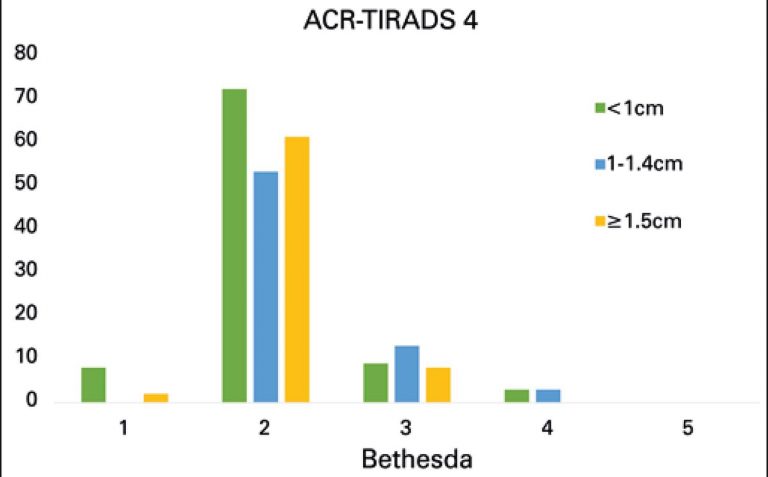
ABSTRACT Objective To determine whether the size of thyroid nodules in ACR-TIRADS ultrasound categories 3 and 4 is correlated with the Bethesda cytopathology classification. Methods Thyroid nodules (566) subclassified as ACR-TIRADS 3 or 4 were divided into three size categories according to American Thyroid Association guidelines. The frequency of different Bethesda categories in each size range within ACR-TIRADS 3 and 4 classifications was analyzed. Results Most nodules in both ACR-TIRADS classifications fell in the Bethesda 2 category, regardless of size […]
Keywords: ACR-TIRADS; Bethesda; Malignance; Thyroid gland nodule; Thyroid gland/pathology; Ultrasonography
06/May/2022
Accuracy of 68Ga-PSMA PET-CT and PET-MRI in lymph node staging for localized prostate cancer
DOI: 10.31744/einstein_journal/2022AO6599
ABSTRACT Objective To evaluate the predictive value of positron emission computed tomography or magnetic resonance (PET-CT and PET-MRI) using gallium-68-labeled prostate-specific membrane antigen (68Ga-PSMA) in lymph node involvement in prostate cancer. Methods A retrospective study comprising 91 patients diagnosed with prostate cancer between 2016 to 2020, who underwent 68Ga-PSMA PET-CT or PET-MRI for staging before prostatectomy. The patients were divided into Group 1, with 65 patients with satisfactory pathological lymph node analysis, and Group 2, with 91 patients representing the […]
Keywords: Data accuracy; Gallium; Lymph nodes; Positron emission tomography computed tomography; Prostate-specific antigen; Prostatectomy; Prostatic neoplasms
02/May/2022
Relation between red blood cell distribution width and acute kidney injury in patients with sepsis
einstein (São Paulo). 02/May/2022;20:eAO6828.
View Article02/May/2022
Relation between red blood cell distribution width and acute kidney injury in patients with sepsis
DOI: 10.31744/einstein_journal/2022AO6828
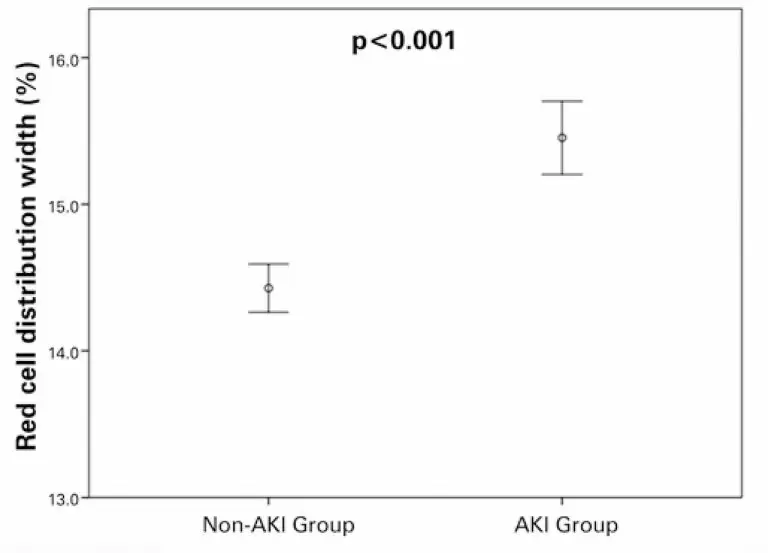
ABSTRACT Objective The objective of the present study is to evaluate the association of red blood cell distribution width with acute kidney injury in sepsis. Methods This is a retrospective study of 849 critically ill patients with sepsis in intensive care unit. Demographic data, renal function, inflammation, complete blood count, and acid-base parameters were compared between acute kidney injury and non-acute kidney injury groups. Therefore, a multivariate analysis was performed to observe independent predictive factors. Results Comparatively, higher levels of […]
Keywords: Acute kidney injury; Erythrocyte indices; Renal replacement therapy; Sepsis
02/May/2022
Quality of clinical studies present in the package inserts of coagulation factors used in the treatment of hemophilia
einstein (São Paulo). 02/May/2022;20:eAO6859.
View Article02/May/2022
Quality of clinical studies present in the package inserts of coagulation factors used in the treatment of hemophilia
DOI: 10.31744/einstein_journal/2022AO6859
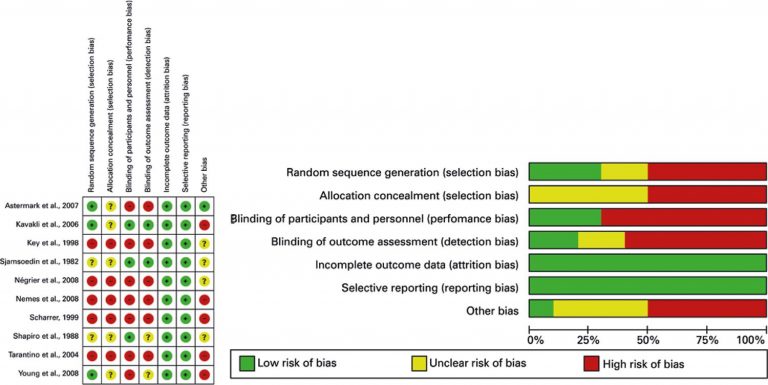
ABSTRACT Objective To identify and analyze the quality of scientific evidence from clinical efficacy studies present in the package inserts of coagulation factors, used in the treatment of hemophilia A and B. Methods Documentary study developed in two stages. The first stage consisted of identifying the medicine packages inserts electronically registered in the Brazilian Health Regulatory Agency, and analyzing the availability of the bibliographic references cited therein. This analysis was conducted in the PubMed, SciELO, Google Scholar, and Web of […]
Keywords: Bias; Evidence-based practice; Hemophilia A; Hemophilia B; Medicine package inserts