2 results
01/Apr/2015
DOI: 10.1590/S1679-45082015MD3106
ABSTRACT Clostridium difficile is the major etiological agent of pseudomembranous colitis and is found in up to 20% of adult inpatients. The recommended treatment is antibiotic therapy with metronidazole and/or vancomycin. However, the recurrence rate may reach up to 25% and it increases in each episode. The newest alternative to treat diarrhea due to recurrent Clostridium difficile is fecal microbiota transplantation. The procedure was performed in 12 patients, with a 6-month follow-up on 10 of them. Of the ten cases, […]
Keywords: Clostridium difficile; Diarrhea/drug therapy; Endoscopy/methods; Enterocolitis, pseudomembranous/etiology; Metronidazole/therapeutic use; Transplantation homologous; Vancomycin/therapeutic use
01/Jul/2011
DOI: 10.1590/S1679-45082011AO2020
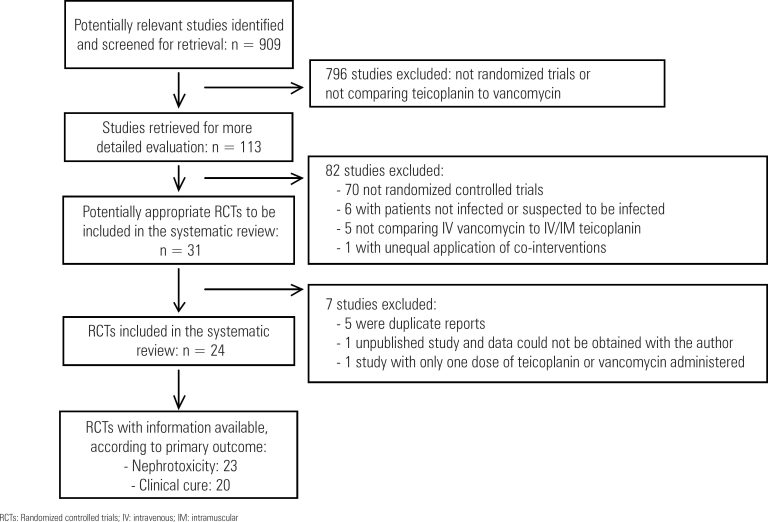
ABSTRACT Objective: To compare efficacy and safety of vancomycin versus teicoplanin in patients with proven or suspected infection. Methods: Data Sources: Cochrane Renal Group’s Specialized Register, CENTRAL, MEDLINE, EMBASE, nephrology textbooks and review articles. Inclusion criteria: Randomized controlled trials in any language comparing teicoplanin to vancomycin for patients with proven or suspected infection. Data extraction: Two authors independently evaluated methodological quality and extracted data. Study investigators were contacted for unpublished information. A random effect model was used to estimate the […]
Keywords: Anti-bacterial agents/adverse effects; Anti-bacterial agents/therapeutic use; Drug eruptions/etiology; Kidney/drug effects; Teicoplanin/adverse effects; Teicoplanin/therapeutic use; Vancomycin/adverse effects; Vancomycin/therapeutic use