7 results
28/Jan/2020
DOI: 10.31744/einstein_journal/2020RW4686
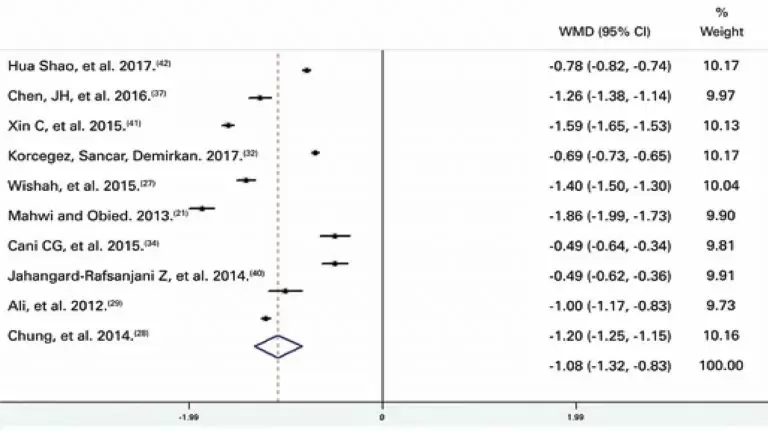
ABSTRACT Objective To investigate the impact of pharmaceutical care-based interventions on type 2 diabetes mellitus . Methods PubMed®, Cochrane and Web of Science data bases were searched for randomized controlled clinical trials. Studies evaluating pharmaceutical care-based interventions in type 2 diabetes mellitus published between 2012 and 2017 were included. Glycated hemoglobin was defined as the primary endpoint; blood pressure, triglycerides and cholesterol as secondary endpoints. The random effects model was used in meta-analysis. Results Fifteen trials involving 2,325 participants were […]
Keywords: Diabetes mellitus, type 2; Pharmaceutical services; Pharmacists; Pharmacy service, hospital
19/Aug/2019
19/Aug/2019
DOI: 10.31744/einstein_journal/2019AO4725
ABSTRACT Objective: To estimate the prevalence of drug interactions and associated factors among older adults followed up in a Comprehensive Medication Management Service at Primary Care. Methods: Firstly, the Beers criteria 2015 was used to define drug interactions; later, drug interactions proposed by Dumbreck for patients with diabetes, depression, and heart failure were evaluated. The associated factors were assessed by univariate (Pearson’s χ2) and multivariate analyses (logistic regression). The significance level of 5% was set for all analyses. Results: The […]
Keywords: Aged; Drug interactions; Medication therapy management; Pharmacists; Potentially inappropriate medication list
15/Jun/2018
15/Jun/2018
DOI: 10.1590/S1679-45082018AO4112
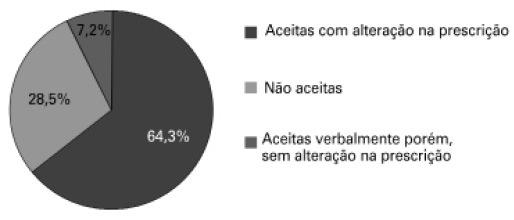
ABSTRACT Objective: To describe and evaluate the pharmacotherapeutic follow-up by a clinical pharmacist in an intensive care unit. Methods: A descriptive and cross-sectional study carried out from August to October 2016. The data were collected through a form, and pharmacotherapeutic follow-up conducted by a clinical pharmacist at the respiratory intensive care unit of a tertiary hospital. The problems recorded in the prescriptions were quantified, classified and evaluated according to severity; the recommendations made by the pharmacist were analyzed considering the […]
Keywords: Critical care; Drug prescriptions; hospital; Pharmaceutical services; Pharmacists; Pharmacy service
01/Jul/2017
DOI: 10.1590/S1679-45082017AO3894
ABSTRACT Objective To discuss the role of the clinical pharmacist in hospital care of critical elderly patients. Methods Critical patients aged 60 years and over admitted by the clinical staff to an Intermediate Care Unit were followed-up for 4 months regarding their drug therapies. Medical prescriptions were reviewed daily on the basis of patients’ clinical conditions, with the view to identify opportunities for optimization of drug therapies, contributing to safer prescribing, reduced discomfort and correct and rational use of drugs. […]
Keywords: Critical care; Drug therapy; Health of the elderly; hospital; Pharmacists; Pharmacy service
01/Jul/2016
01/Jul/2016
DOI: 10.1590/S1679-45082016AO3481
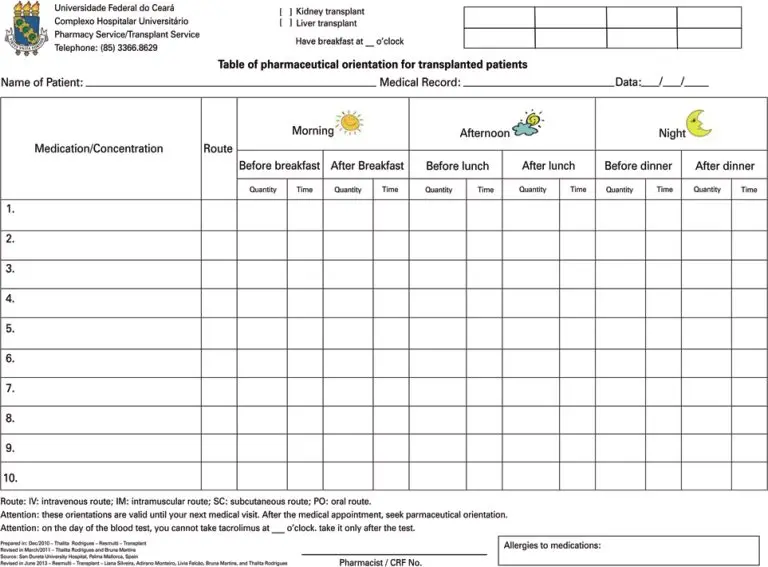
ABSTRACT Objective: To describe and analyze the pharmaceutical orientation given at hospital discharge of transplant patients. Methods: This was a cross-sectional, descriptive and retrospective study that used records of orientation given by the clinical pharmacist in the inpatients unit of the Kidney and Liver Transplant Department, at Hospital Universitário Walter Cantídio, in the city of Fortaleza (CE), Brazil, from January to July, 2014. The following variables recorded at the Clinical Pharmacy Database were analyzed according to their significance and clinical […]
Keywords: Kidney transplantation; Liver transplantation; Orientation; Patient discharge; Pharmacists
01/Jan/2016
DOI: 10.1590/S1679-45082016AO3440
ABSTRACT Objective Standardization and systematization of data to provide quick access to compatibility of leading injectable drugs used in hospitals for parenteral nutrition. Methods We selected 55 injectable drugs analyzed individually with two types of parenteral nutrition: 2-in-1 and 3-in-1. The following variables were considered: active ingredient, compatibility of drugs with the parenteral nutrition with or without lipids, and maximum drug concentration after dilution for the drugs compatible with parenteral nutrition. Drugs were classified as compatible, incompatible and untested. Results […]
Keywords: Drug incompatibility; Drug stability; Parenteral nutrition; Parenteral nutrition, total; Pharmacists
19/Sep/2012
DOI: 10.1590/S1679-45082012000100015
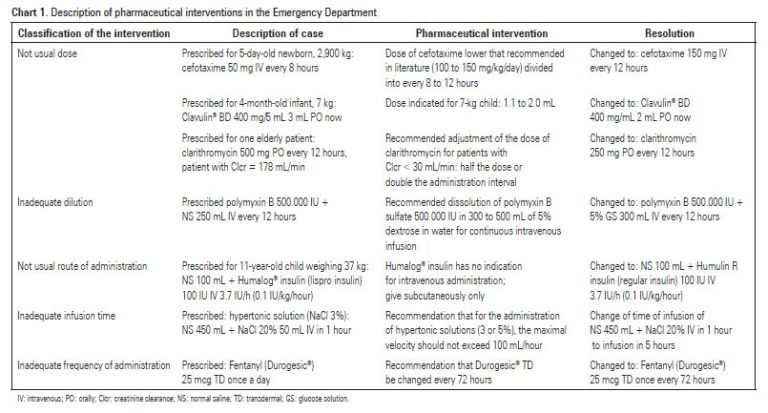
OBJECTIVE: To demonstrate the role and importance of the clinical pharmacist in the Emergency Department by means of identification, classification, and assessment of the number of interventions performed by this professional. METHODS: This was a retrospective study conducted during the period of January 1st, 2010 to December 31st, 2010, at the Morumbi Emergency Department of Hospital Israelita Albert Einstein. The interventions were performed by the clinical pharmacists by means of his/her role along with the interdisciplinary team and active search […]
Keywords: Emergency medical services; Pharmacists