01/Apr/2026
COVID-19 pandemic-driven evolution of Klebsiella pneumoniae : rising resistance, genetic diversity, and virulence in a Brazilian tertiary hospital
einstein (São Paulo). 01/Apr/2026;24:eAO1627.
View Article01/Apr/2026
COVID-19 pandemic-driven evolution of Klebsiella pneumoniae : rising resistance, genetic diversity, and virulence in a Brazilian tertiary hospital
DOI: 10.31744/einstein_journal/2026AO1627
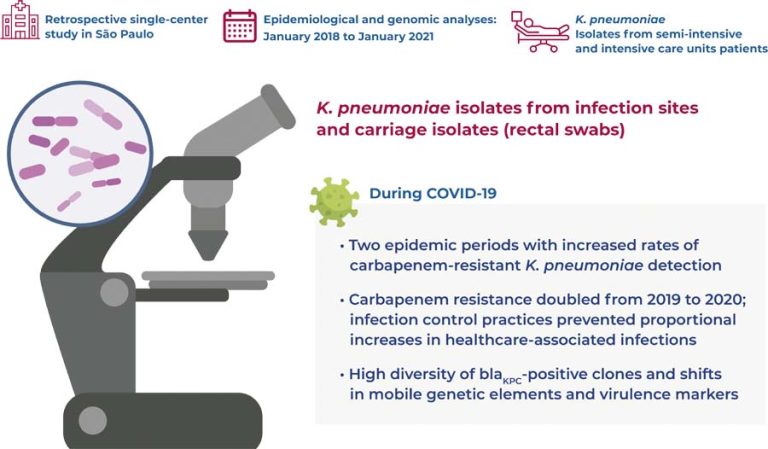
Highlights ■ Carbapenem resistance rose sharply during the COVID-2019 pandemic, doubling from 2019 to 2020, while infection control practices prevented proportional increases in healthcare-associated infections. ■ Genomic analyses revealed high diversity among blaKPC-positive isolates, with an expansion of sequence types and a predominance of sporadic non-outbreak clones throughout the pandemic period. ■ Shifts in mobile genetic elements and virulence markers occurred during the pandemic, including the emergence of the integrative and conjugative element of Klebsiella pneumoniae ICEKp4, changes in O-antigen […]
Keywords: cgMLST; Colonization; COVID-19; Infections; Klebsiella pneumoniae; Plasmids; Virulence
08/May/2020
High prevalence of syphilis in a female prison unit in Northeastern Brazil
DOI: 10.31744/einstein_journal/2020AO4978
ABSTRACT Objective To determine the prevalence of syphilis and the associated risk factors in a female prison unit. Methods This was a cross-sectional study including 113 women whom data were collected in two stages: first, blood test to check for syphilis seropositivity; and then collection of information through a form to assess risk situations for sexually transmitted infections. Results Overall, syphilis prevalence was found to be 22.1% among the female prison population (n=25) and 28.6% among pregnant women. A statistically […]
Keywords: Brazil; Infections; Prisoners; Prisons; Sexually transmitted diseases; Syphilis/epidemiology; Women; Women’s health
01/Apr/2015
Heart transplantation: review
DOI: 10.1590/S1679-45082015RW3154
ABSTRACT Heart transplantation is currently the definitive gold standard surgical approach in the treatment of refractory heart failure. However, the shortage of donors limits the achievement of a greater number of heart transplants, in which the use of mechanical circulatory support devices is increasing. With well-established indications and contraindications, as well as diagnosis and treatment of rejection through defined protocols of immunosuppression, the outcomes of heart transplantation are very favorable. Among early complications that can impact survival are primary graft […]
Keywords: Graft rejection; Heart transplantation; Heart transplantation/adverse effects; Infections