einstein (São Paulo). 19/Mar/2026;24:eGS1911.
Regional and demographic disparities in low-risk hospital deliveries in Brazil’s Public Health System

DOI: 10.31744/einstein_journal/2026GS1911
Highlights
■ Analysis of childbirth methods using national databases isessential for informing maternal–fetal health policies and research.
■ This retrospective cross-sectional study examined national and regional delivery mode trends in the Brazilian Public Health System, comparing pre- and post-COVID-19 periods to address gaps in the literature.
■ Marked regional differences were identified in delivery mode trends and associated outcomes.
ABSTRACT
Objective
To compare the volume, public funding, and in-hospital outcomes of vaginal deliveries and cesarean sections within the Brazilian Public Health System (SUS – Sistema Único de Saúde) across regions and maternal age groups.
Methods
This retrospective, cross-sectional study presents a population-based analysis of low-risk vaginal and cesarean hospital deliveries within the SUS from 2009 to 2023 using publicly available data from the SUS Hospital Information System. Trends in delivery mode distribution were assessed using the chi-square test, whereas in-hospital mortality rates, length-of-stay, and average public financing were compared between the groups using the Mann-Whitney test.
Results
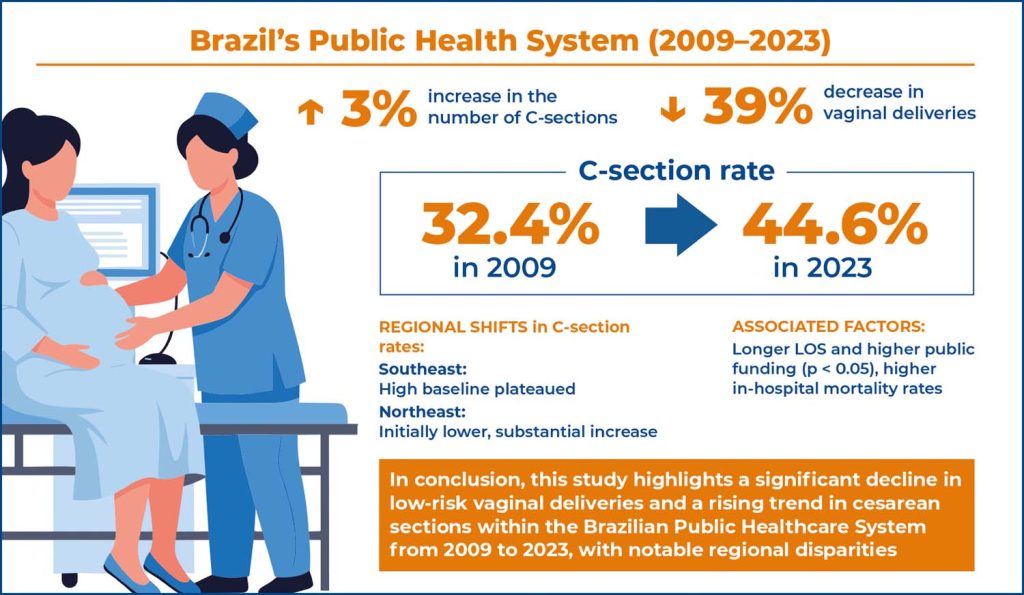
Over the study period, vaginal deliveries decreased by 39%, whereas cesarean sections increased by 3%, leading to a rising proportion of cesarean births within the SUS despite an overall decline in total deliveries in Brazil. The cesarean section rate increased from 32.4% in 2009 to 44.6% in 2023, and regional disparities were observed. Despite the SUS promoting vaginal delivery for low-risk pregnancies, cesarean section rates increased across all states except Roraima. In-hospital mortality rates were numerically higher for cesarean sections, particularly among women aged ≥40 years, although statistical significance was not observed. Cesarean sections were also associated with a longer length-of-stay and higher public funding.
Conclusion
Despite policies favoring vaginal births, rising cesarean section rates in the SUS reveal persistent structural, cultural, and logistical challenges. Higher public funding and longer hospital stays add to the healthcare burden. Strengthening primary care, expanding Normal Birth Centers, and optimizing cesarean section use are crucial for balanced and accessible maternity care across Brazil.
[…]
3