5 results
17/Dec/2025
DOI: 10.31744/einstein_journal/2026AE1796
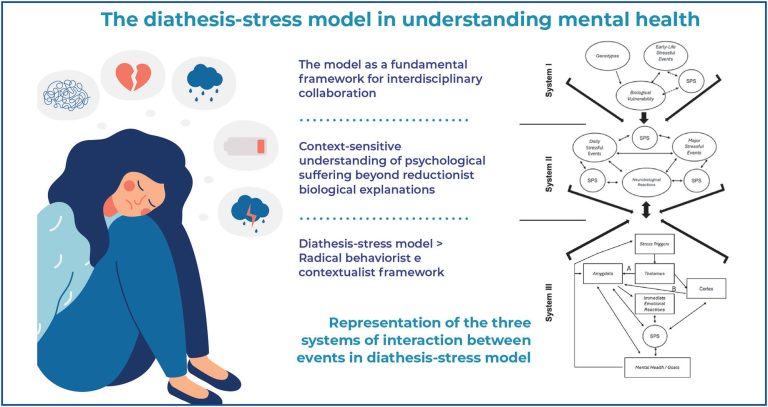
Highlights ■ This paper proposes a contextual and non-reductionist ontology of mental health disorders. ■ It reframes the diathesis-stress model through radical behaviorism and functional contextualism. ■ It emphasizes dynamic interactions between vulnerabilities and environmental stressors. ■ It guides clinical practice toward integrative, personalized, and system-sensitive interventions. ABSTRACT This conceptual article examines the ontological and epistemological foundations of mental health disorders through the lens of the diathesis-stress model. It seeks to articulate how this model contributes to a more comprehensive […]
Keywords: Behaviorism; Contextualism; Diathesis-stress model; Mental disorders; Mental Health; Stress vulnerability
02/Jul/2024
DOI: 10.31744/einstein_journal/2024RW0182
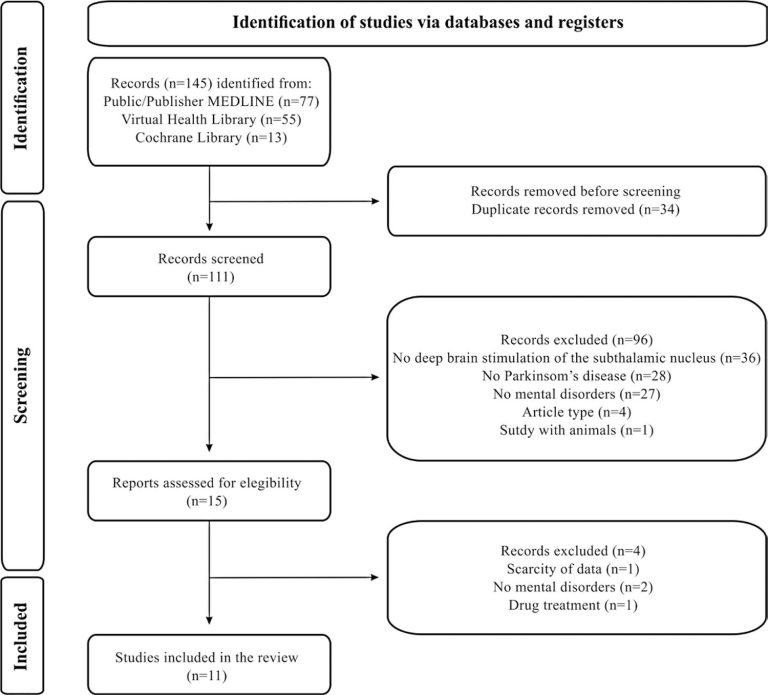
ABSTRACT Objective To evaluate the psychiatric alterations resulting from deep brain stimulation of the subthalamic nucleus in the management of Parkinson’s disease. Methods Articles were searched using three databases: Public/Publisher MEDLINE, Virtual Health Library, and Cochrane Library. Results Eleven studies were included in the analysis. Manic syndrome alone was reported in two of the 11 studies analyzed. Psychosis alone was not reported in any of them, but it was found in association with other psychiatric alterations in two studies, not […]
Keywords: Deep brain stimulation; Mental disorders; Parkinson’s disease; Social behavior disorders; Subthalamic nucleus
25/Oct/2021
25/Oct/2021
DOI: 10.31744/einstein_journal/2021AO6281
ABSTRACT Objective To analyze the factors associated with mental distress among health workers who cared for patients with a suspected or confirmed diagnosis of coronavirus disease 2019 (COVID-19). Methods A cross-sectional analytical study of national scope, carried out between in the second quarter of 2020. A total of 437 health professionals, who filled out an electronic form about sociodemographic data, occupational aspects, psychosocial characteristics of work and mental distress. Multiple logistic regression was performed to analyze the covariables associated with […]
Keywords: Coronavirus infections; Epidemiology; Health personnel; Mental disorders; Occupational Health
27/May/2021
DOI: 10.31744/einstein_journal/2021AO5506
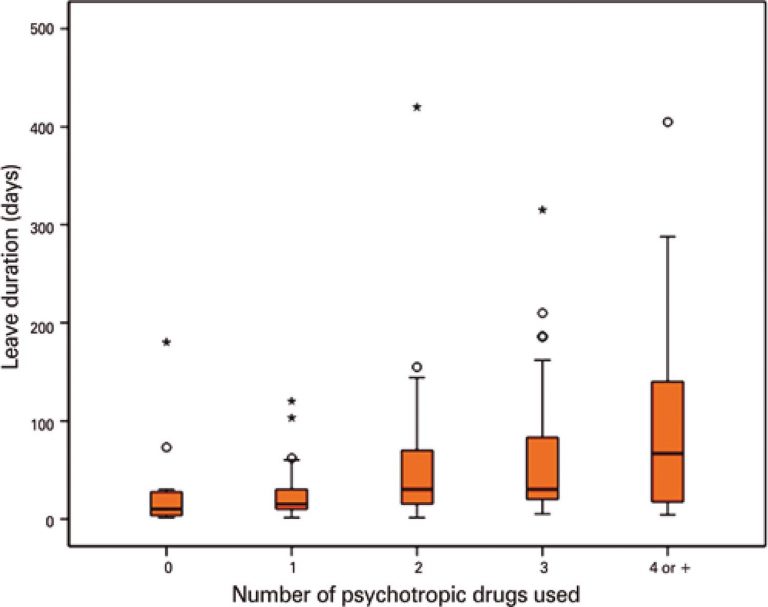
ABSTRACT Objective To describe the use of psychotropic drugs among civil servants with registered absenteeism due to mental disorders, and to investigate associations with duration of leave of absence. Methods A cross-sectional study with civil servants on leave of absence due to mental disorders, between January and December 2017. Demographic, occupational and clinical variables were extracted from secondary data. Non-parametric tests were used to investigate correlations between use of psychotropic drugs and leave duration. Cluster analysis was used to investigate […]
Keywords: Absenteeism; Antidepressive agents; Depression; Government Employees; Mental disorders; Psychotropic drugs
29/Oct/2012
DOI: 10.1590/S1679-45082012000300010
OBJECTIVE: To evaluate the prevalence of psychiatric disorders in patients diagnosed with chronic migraine with and without acute medication overuse. METHODS: Seventy-two volunteers were recruited from a Family Health Program of the Paraisópolis community in São Paulo (SP), Brazil. These patients were submitted to a detailed headache questionnaire. All participants were submitted to physical and neurological examinations. The following variables were analyzed: age, gender, education level, body mass index, type of overused medication, headache characteristics, and caffeine consumption, lifetime anxiety […]
Keywords: Chronic disease; Comorbidity; Mental disorders; Migraine disorders; Prevalence