13/ago/2026
Donor-recipient risk assessment in extended criteria liver transplantation: a comparative analysis of prognostic scores
DOI: 10.31744/einstein_journal/2026AO2500
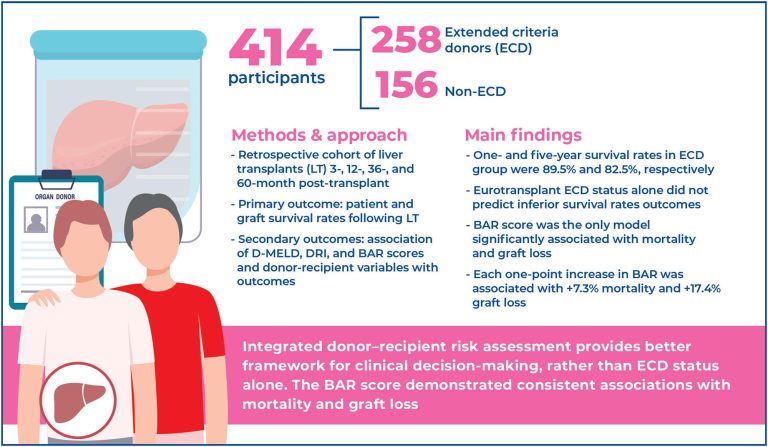
Highlights ■ The 1- and 5-year survival rates in extended criteria donor group were 89.5% and 82.5%, respectively. ■ Eurotransplant extended criteria donor status alone was not correlated with inferior survival outcomes. ■ The BAR score was the only model associated with mortality and graft loss. ■ Each one-point BAR increased mortality by 7.3% and graft loss by 17.4. ABSTRACT Objective: This study aimed to evaluate the association between the use of extended criteria donors and post-transplant outcomes in a […]
Palavras-chave: Transplante de fígado; Prognóstico; Obtenção de tecidos e órgãos; Doadores de tecidos
10/ago/2026
Disseminated histoplasmosis in a late post-liver transplant recipient: a case report and literature review
DOI: 10.31744/einstein_journal/2026RC1988
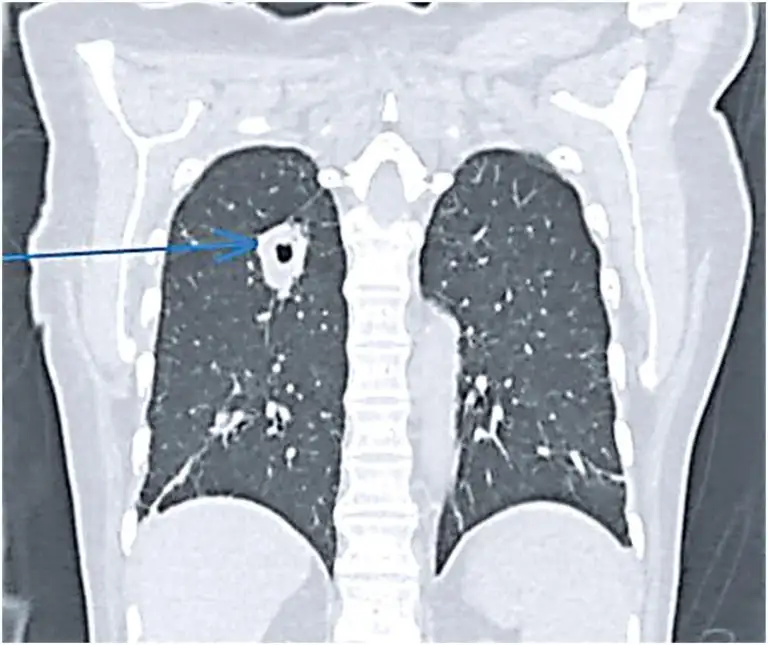
ABSTRACT Histoplasmosis is an endemic mycosis in certain regions of Brazil and represents a rare opportunistic infection in solid organ transplant recipients. This report describes the case of a 68-year-old female liver transplant recipient (due to Caroli disease) who presented with abdominal pain, nausea, vomiting, and a distended, tender abdomen. Abdominal computed tomography revealed parietal thickening of the bowel wall, and colonoscopy identified polymorphic ulcers and ileocecal stenosis. Given the suspicion of tuberculosis, chest computed tomography was performed, which demonstrated […]
Palavras-chave: Histoplasma; Histoplasmose; Immunosuppressive therapy; Transplante de fígado
Comparing radiological response to radiofrequency ablation, percutaneous ethanol injection, and transarterial chemoembolization in patients with hepatocellular carcinoma on the waiting list for liver transplant
10/nov/2025
Comparing radiological response to radiofrequency ablation, percutaneous ethanol injection, and transarterial chemoembolization in patients with hepatocellular carcinoma on the waiting list for liver transplant
einstein (São Paulo). 10/nov/2025;23:eAO1315.
Ver Artigo10/nov/2025
Comparing radiological response to radiofrequency ablation, percutaneous ethanol injection, and transarterial chemoembolization in patients with hepatocellular carcinoma on the waiting list for liver transplant
DOI: 10.31744/einstein_journal/2025AO1315
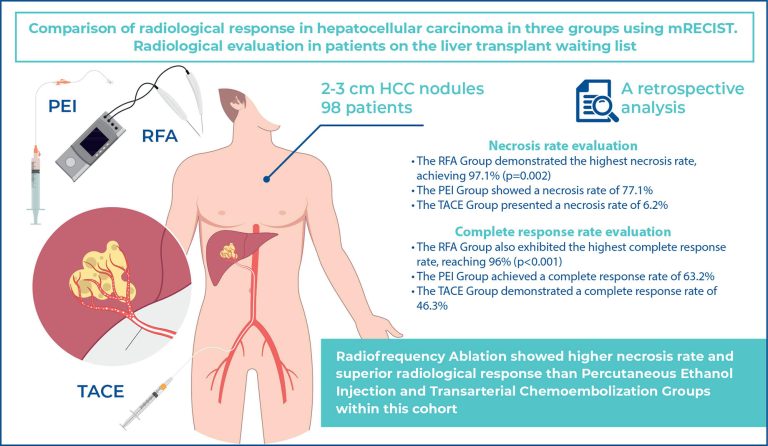
Highlights ■ Minimally invasive neoadjuvants are usually recommended for patients on the transplant waiting list. ■ Radiofrequency ablation showed a higher necrosis rate and superior radiological response than did percutaneous ethanol injection and transarterial chemoembolization in this study cohort. ABSTRACT Objective: We aimed to compare the radiological response in small hepatocellular carcinomas treated with radiofrequency ablation, percutaneous ethanol injection, and transarterial chemoembolization using the modified Response Evaluation Criteria in Solid Tumor radiological evaluation in patients on the waiting list for […]
Palavras-chave: Catheter ablation; Chemoembolization therapy; Etanol; Hepatocellular carcinoma; Neoplasias do fígado; Transplante de fígado; Radiofrequency ablation; Listas de espera
02/jul/2025
Use of propensity score matching to reduce bias in economic evaluations in the context of Brazilian liver transplantation
DOI: 10.31744/einstein_journal/2025AO1329
Highlights ■ Matching methodologies may reduce bias in economic evaluations. ■ Liver transplantation within the Proadi-SUS context has an incremental cost-effectiveness ratio below the Health Technology Incorporation in the Brazilian Health System threshold. ■ The patients who received transplant had a median survival of 10.1 years after list enrollment. ■ The mean cost per transplanted patient was US$ PPP 162,821.96. ABSTRACT Objective: To estimate the incremental cost and survival of patients on the liver transplantation waiting list who were referred […]
Palavras-chave: Brasil; Análise custo-benefício; Custos hospitalares; Transplante de fígado; Propensity score; Taxa de sobrevida; Sistema Único de Saúde; Listas de espera
28/mar/2025
Impact of liver transplantation on the quality of life of a cohort of high-risk recipients
DOI: 10.31744/einstein_journal/2025AO0565
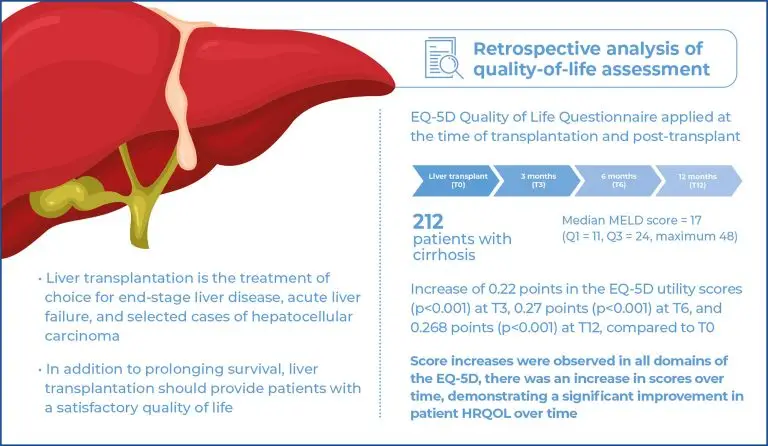
Highlights ■ Liver transplantation improves health-related quality of life in patients with cirrhosis and high MELD scores. ■ Significant health-related quality of life improvements occur within three months of transplantation. ■ Multidisciplinary care programs enhance post-iver transplantation physical and mental recovery. ■ Sustained health-related quality of life gains highlight the long-term benefits of liver transplantation. ABSTRACT Objective: To assess the effects of liver transplantation on the health-related quality of life of patients with cirrhosis on the waiting list for transplantation. […]
Palavras-chave: Alcoolismo; Nível de saúde; Cirrose hepática; Transplante de fígado; Morbidity; Qualidade de vida; Inquéritos e questionários; Waiting list
25/set/2024
Cost-effectiveness of radiofrequency ablation versus percutaneous ethanol injection for early hepatocellular carcinoma in a resource-poor setting: a randomized trial
einstein (São Paulo). 25/set/2024;22:eGS0683.
Ver Artigo25/set/2024
Cost-effectiveness of radiofrequency ablation versus percutaneous ethanol injection for early hepatocellular carcinoma in a resource-poor setting: a randomized trial
DOI: 10.31744/einstein_journal/2024GS0683
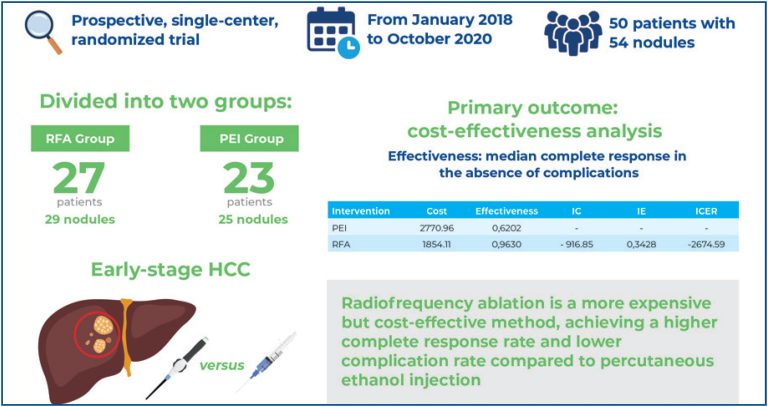
Highlights Radiofrequency ablation and percutaneous ethanol injection are neoadjuvant hepatocellular carcinoma treatment methods. Radiofrequency ablation achieves a higher complete response rate (96.3% versus 60.0%, p=0.001). Total cost analyses showed radiofrequency ablation as a more expensive method (p<0.001). The incremental cost-effectiveness ratio was US$ -2674.59 with an advantage for radiofrequency ablation. Incremental effectiveness (34.2%) was in favor of radiofrequency ablation versus percutaneous ethanol injection. ABSTRACT Objective: This study assessed the cost-effectiveness of radiofrequency ablation compared with percutaneous ethanol injection in patients […]
Palavras-chave: Ablation techniques; Avaliação de custo-efetividade; Neoplasias do fígado; Transplante de fígado; Radiology, Interventional
06/maio/2024
Oral candidiasis in liver transplant patients: species identification and antifungal susceptibility profile
einstein (São Paulo). 06/maio/2024;22:eAO0138.
Ver Artigo06/maio/2024
Oral candidiasis in liver transplant patients: species identification and antifungal susceptibility profile
DOI: 10.31744/einstein_journal/2024AO0138
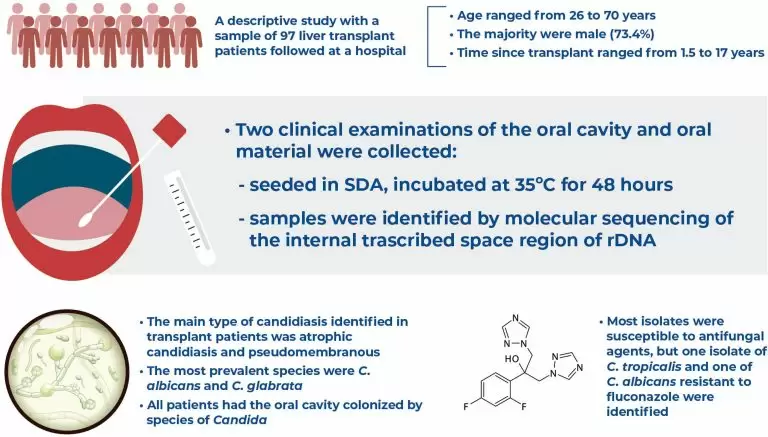
Highlights Fifteen liver transplant patients presented with oral candidiasis. The two prevalent types of candidiasis were atrophic and pseudomembranous. Candida albicans and Candida glabrata were the most prevalent species. Most isolates were susceptible to antifungal agents. ABSTRACT Objective: This study aimed to verify oral candidiasis, identify the causative species, and investigate the antifungal susceptibility of yeasts isolated from liver transplant patients. Methods: A descriptive analysis of 97 patients who underwent liver transplantation was conducted at a hospital. Two clinical examinations […]
Palavras-chave: Antifúngicos; Candida; Candidiasis; Candidíase bucal; Transplante de fígado
23/maio/2023
Combined liver-kidney transplant in polycystic diseases: a case report
DOI: 10.31744/einstein_journal/2023RC0282
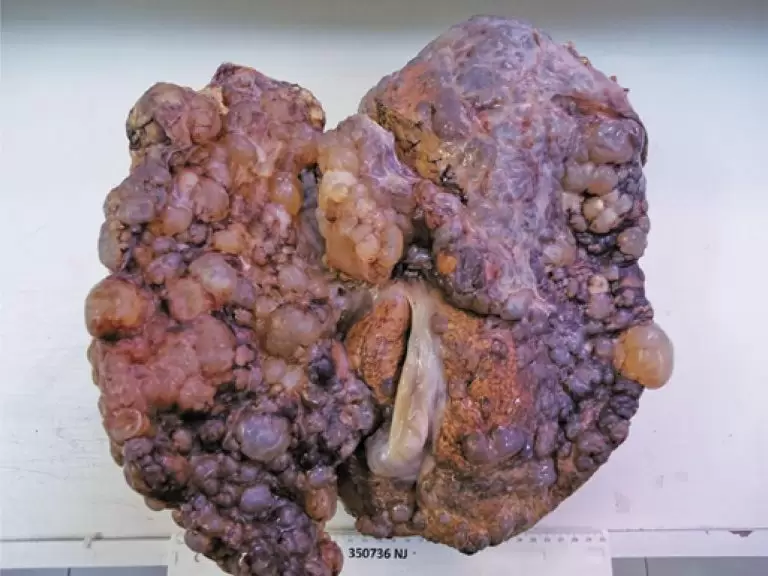
ABSTRACT Polycystic liver disease, a hereditary pathology, usually manifests as autosomal dominant polycystic kidney disease. The many cysts in the liver cause massive hepatomegaly, majorly affecting the patient’s quality of life. In cases of refractory symptoms, liver transplantation is the only treatment choice. A 43-year-old woman was followed up as a hepatology outpatient in August 2020, with a progressive increase in abdominal volume, lower limb edema, and cachexia. The patient was diagnosed with polycystic renal and liver disease with massive […]
Palavras-chave: Hepatomegaly; Transplante de rim; Liver diseases; Liver failure; Transplante de fígado; Polycystic kidney, autosomal dominant
24/maio/2022
Bolus versus continuous insulin infusion in immediate postoperative blood glucose control in liver transplantation: pragmatic clinical trial
einstein (São Paulo). 24/maio/2022;20:eAO6959.
Ver Artigo24/maio/2022
Bolus versus continuous insulin infusion in immediate postoperative blood glucose control in liver transplantation: pragmatic clinical trial
DOI: 10.31744/einstein_journal/2022AO6959
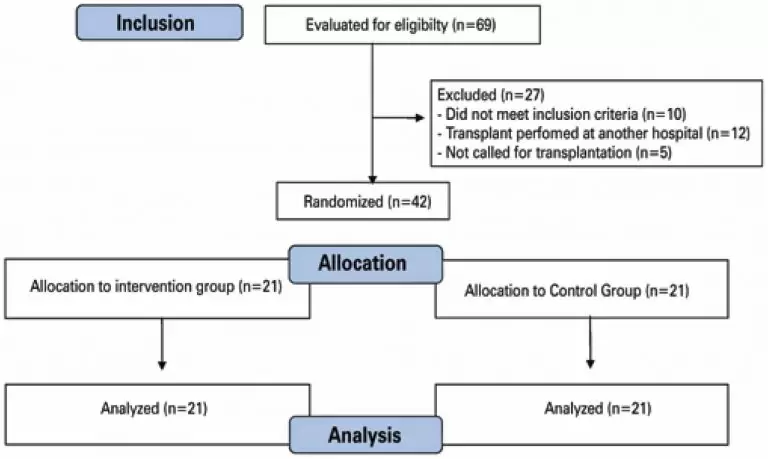
ABSTRACT Objective: To analyze the effectiveness and safety of two insulin therapy techniques (continuous and intermittent infusion) in the blood glucose control of people who have undergone liver transplantation, in the immediate postoperative period. Methods: The study was a prospective, open, pragmatic clinical trial with 42 participants, divided into two groups of 21 patients each, in the immediate postoperative period following liver transplantation. Participants in the Experimental Group and Control Group received continuous infusion and bolus insulin, respectively, starting at […]
Palavras-chave: Glycemic control; Insulin infusion systems; Transplante de fígado; Período pós-operatório
04/mar/2022
What is the role of heat shock protein in abdominal organ transplantation?
DOI: 10.31744/einstein_journal/2022RB6181
ABSTRACT Ischemia-reperfusion injury is a pathophysiological event occuring after abdominal organ transplantation, and has a significant influence on prognosis and survival of the graft. It is involved in delaying the primary function or non-functioning of the graft. The objective of this study was to provide information on heat shock protein mechanisms in ischemia-reperfusion injuries in abdominal organ transplantations, and to indicate the possible factors involved that may influence the graft outcome. Several classes of heat shock proteins are part of […]
Palavras-chave: Heat-shock proteins; Transplante de rim; Transplante de fígado; Transplante de órgãos; Traumatismo por reperfusão