
10/mar/2025
Aortic calcium score predicts early outcomes in aortoiliac revascularization
DOI: 10.31744/einstein_journal/2025AO0527
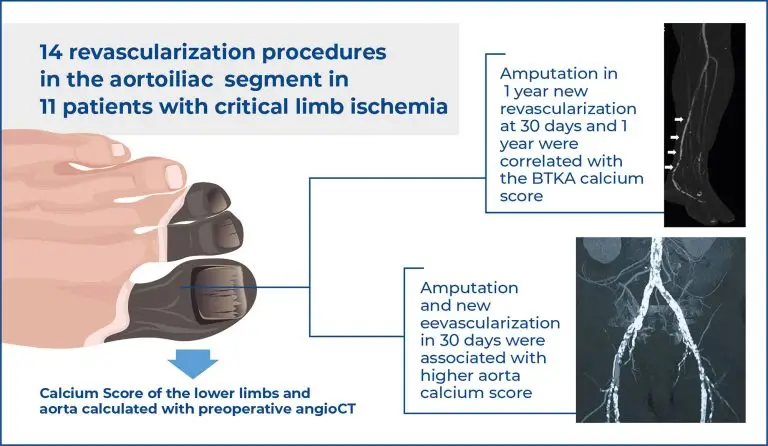
Highlights ■ The calcium score can be calculated using computed tomography angiography. ■ The aortic calcium score was associated with amputation and subsequent revascularization within 30 days. ■ The calcium score in below-the-knee arteries was higher in the patients who underwent subsequent revascularization and amputation at 12 months. ABSTRACT Objective: To evaluate the association between lower limb artery calcium scores in preoperative computed tomography angiography and outcomes of patients with critical limb ischemia who underwent revascularization procedures in the aortoiliac […]
Palavras-chave: Amputation, surgical; Angioplastia; Aterosclerose; Calcium; Chronic limb-threatening ischemia; Computed tomography, angiography; Extremidade inferior/cirurgia; Doença arterial periférica
10/mar/2025
Barriers to cardiac rehabilitation and their association with hospital readmission in patients with heart failure
einstein (São Paulo). 10/mar/2025;23:eAO0713.
Ver Artigo10/mar/2025
Barriers to cardiac rehabilitation and their association with hospital readmission in patients with heart failure
DOI: 10.31744/einstein_journal/2025AO0713
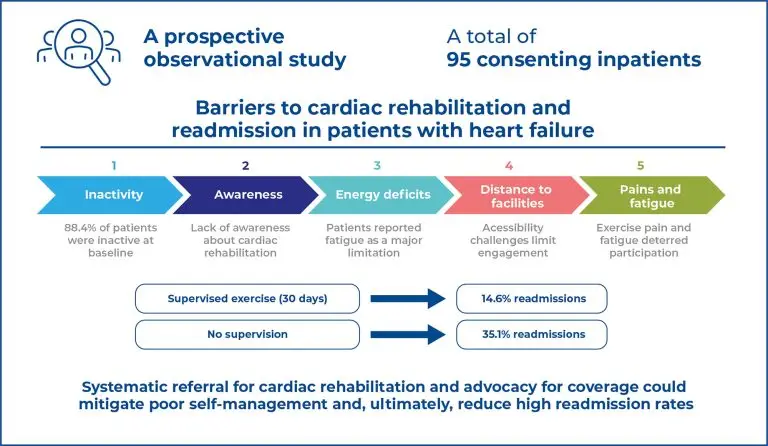
Highlights ■ Barriers to rehabilitation: high inactivity rates (88.4%) and significant barriers, such as fatigue and lack of awareness, hinder recovery. ■ Professional supervision: only 1% of patients were enrolled in formal cardiac rehabilitation; however, those who received professional supervision experienced lower readmission rates (14.6% versus 35.1%). ■ Systematic gaps: addressing systemic gaps, such as coverage and referral to rehabilitation programs, is critical for improving patient outcomes and reducing rehospitalization rates. ABSTRACT Objective: This study assessed the barriers to cardiac […]
Palavras-chave: Reabilitação cardíaca; Cardiac Rehabilitation Barriers Scale; Doença das coronárias; Exercício; Terapia por exercício; Insuficiência cardíaca; Hospitalização; Alta do paciente; Self management; Inquéritos e questionários
10/mar/2025
Validation of an ultra-high performance liquid chromatography/UV method to quantify busulfan in plasma: application to therapeutic drug monitoring
einstein (São Paulo). 10/mar/2025;23:eAO0964.
Ver Artigo10/mar/2025
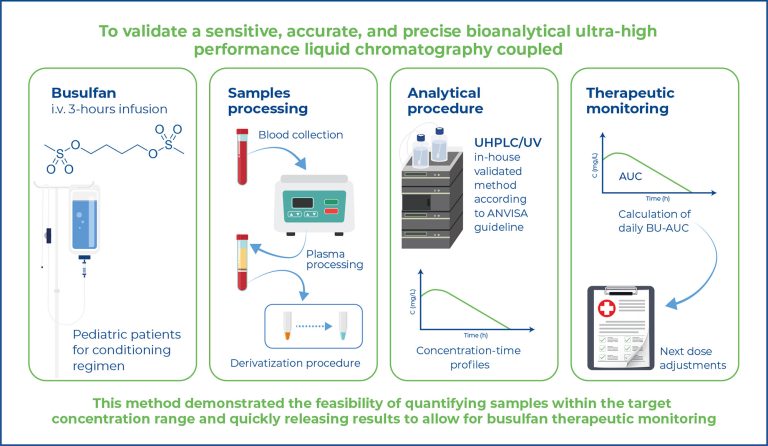
Validation of an ultra-high performance liquid chromatography/UV method to quantify busulfan in plasma: application to therapeutic drug monitoring
DOI: 10.31744/einstein_journal/2025AO0964
Highlights ■ We validated the UHPLC/UV method for accurate busulfan quantification in plasma. ■ Inaccuracy and imprecision were below 15%, ensuring reliable therapeutic drug monitoring results. ■ This enables effective pharmacokinetic studies with rapid turnaround times in patient samples. ABSTRACT Objective: This study aimed to validate a sensitive, accurate, and precise bioanalytical ultrahigh- performance liquid chromatography coupled with ultraviolet (UHPLC/UV) method for the determination of busulfan in human plasma using 1,6-bis-(methanesulfonyloxy) hexane as an internal standard for therapeutic drug monitoring. […]
Palavras-chave: Busulfan; Calibration; Cromatografia líquida de alta pressão; Drug monitoring; Transplante de células-tronco hematopoiéticas; Hospitais privados; Farmacocinética
26/fev/2025
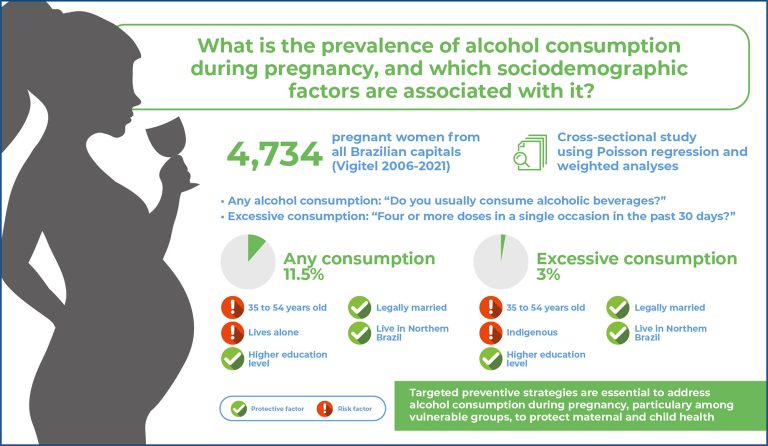
Alcohol consumption among pregnant women in Brazilian capitals: How many, where, and who are they?
DOI: 10.31744/einstein_journal/2025AO0754
Highlights ■ Any alcohol consumption during pregnancy: prevalence of 11.5%. ■ Excessive alcohol consumption during pregnancy: prevalence of 3.0%. ■ Risk factors: older age, low education, and Indigenous ethnicity. ■ Protective factors: being married and living in Northern Brazil. ABSTRACT Objective: To analyze the prevalence and factors associated with alcohol consumption among pregnant women. Methods: This cross-sectional study examined pregnant women living in Brazilian capitals using information collected by the Noncommunicable Chronic Disease Risk Factor Surveillance System (Vigitel) between 2006 […]
Palavras-chave: Alcohol drinking; Bebedeira; Inquéritos Epidemiológicos; Gravidez; Gestantes; Retardo do crescimento fetal; Inquéritos e questionários
Ideal time and self-reported time to ejaculate, frequent use of virtual pornography, and disorders of ejaculation among internet users in the Metropolitan Region of São Paulo, Brazil. Cross-sectional study
26/fev/2025
Ideal time and self-reported time to ejaculate, frequent use of virtual pornography, and disorders of ejaculation among internet users in the Metropolitan Region of São Paulo, Brazil. Cross-sectional study
einstein (São Paulo). 26/fev/2025;23:eAO1282.
Ver Artigo26/fev/2025
Ideal time and self-reported time to ejaculate, frequent use of virtual pornography, and disorders of ejaculation among internet users in the Metropolitan Region of São Paulo, Brazil. Cross-sectional study
DOI: 10.31744/einstein_journal/2025AO1282
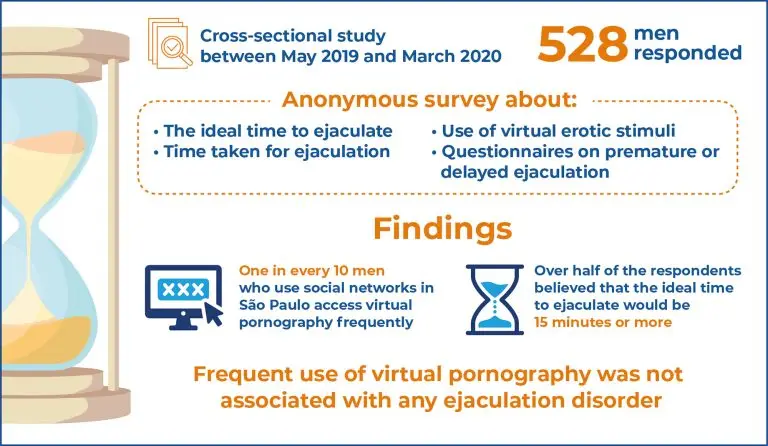
Highlights ■ About one in every 10 social network male users in São Paulo frequently use virtual pornography. ■ Over half of the respondents believed that the ideal time to ejaculate would be of 15 minutes or more. ■ Frequent use of virtual pornography was not associated with ejaculation disorders. ABSTRACT Objective: To investigate the association between frequent use of virtual pornography, perceptions of the ideal time to ejaculate, and changes in ejaculation. Methods: Adult men living in São Paulo […]
Palavras-chave: Autoavaliação Diagnóstica; Ejaculação; Erotica; Premature ejaculation; Comportamento sexual; Sexual health; Inquéritos e questionários
17/fev/2025
Adequacy of nutritional status and dietary intake of adult and elderly patients with American Tegumentary Leishmaniasis
einstein (São Paulo). 17/fev/2025;23:eAO0992.
Ver Artigo17/fev/2025
Adequacy of nutritional status and dietary intake of adult and elderly patients with American Tegumentary Leishmaniasis
DOI: 10.31744/einstein_journal/2025AO0992
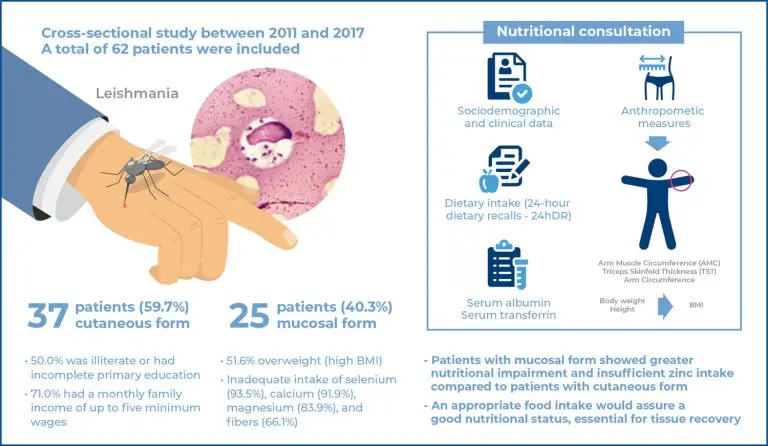
Highlights ■ Most patients had an inadequate intake of selenium, calcium, magnesium, and fiber. ■ Patients with mucosal had lower body weight, arm muscle circumference, and serum albumin and zinc intake. ■ Mucosal is associated with insufficient zinc intake, low body weight, and the depletion of serum albumin and transferrin. ■ Oropharyngeal lesions are associated with calorie malnutrition and serum protein depletion. ABSTRACT Objective: Patients with American Tegumentary Leishmaniasis often experience malnutrition, weight loss, and dehydration; however, their eating profile […]
Palavras-chave: Doenças transmissíveis; Ingestão de alimentos; Leishmaniasis, cutaneous; Desnutrição; Nutritional assessment; Cicatrização
17/fev/2025
Enhancing diabetes self-management through the AADE7 self-care behaviors framework: an observational study
DOI: 10.31744/einstein_journal/2025AO1213
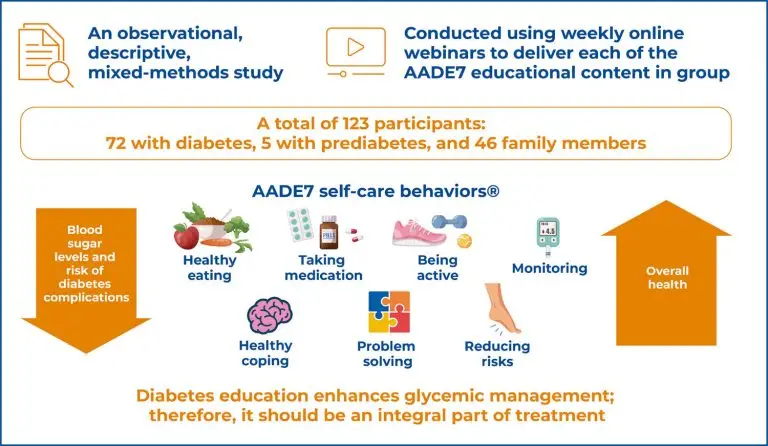
Highlights ■ Diabetes education is the central pillar of treatment, and the AADE7 offers a 360-degree view of care. ■ Only 18.9% of participants had previously engaged in diabetes-related educational programs. ■ Recognizing signs of hypo and hyperglycemia and responding appropriately is crucial to avoiding complications. ■ Diabetes and sugar consumption remain taboo for many, including healthcare professionals. ABSTRACT Objective: We aimed to implement a comprehensive and accessible diabetes education program for patients and their families based on the AADE7 […]
Palavras-chave: Glicemia; Diabetes; Family support; Insulin, regular, human; Educação do paciente; Assistência centrada no paciente; Autocuidado; Self management
24/jan/2025
Hand hygiene adherence in intensive care units: comparison before and during the COVID-19 pandemic in a municipality of São Paulo state
einstein (São Paulo). 24/jan/2025;23:eAO0951.
Ver Artigo24/jan/2025
Hand hygiene adherence in intensive care units: comparison before and during the COVID-19 pandemic in a municipality of São Paulo state
DOI: 10.31744/einstein_journal/2025AO0951
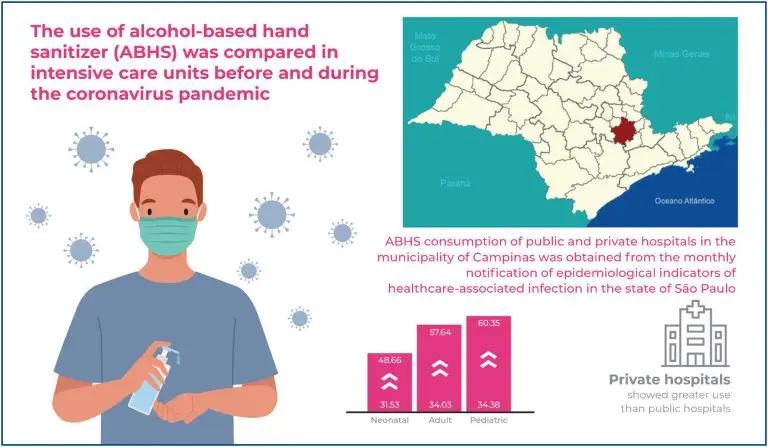
Highlights ■ The COVID-19 pandemic has increased adherence to hand hygiene in intensive care units. ■ Private hospitals recorded higher consumption of alcoholbased hand sanitizer. ■ Interventions are needed to help keep rates up. ABSTRACT Objective: Compare alcohol-based hand sanitizer use in intensive care units in a municipality in São Paulo state, before and during the coronavirus pandemic. Methods: Analytical retrospective study using indirect documentation, with data obtained from a notification spreadsheet for epidemiological indicators of healthcare-associated infection in the […]
Palavras-chave: Infecções por coronavírus; COVID-19; Higiene das mãos; Hand sanitizers; Unidades de terapia intensiva; Pandemics; Risk reduction behavior
24/jan/2025
Remote team-based learning during COVID-19: lower academic performance is associated with the exclusion of test grades from final grades
einstein (São Paulo). 24/jan/2025;23:eAO1007.
Ver Artigo24/jan/2025
Remote team-based learning during COVID-19: lower academic performance is associated with the exclusion of test grades from final grades
DOI: 10.31744/einstein_journal/2025AO1007
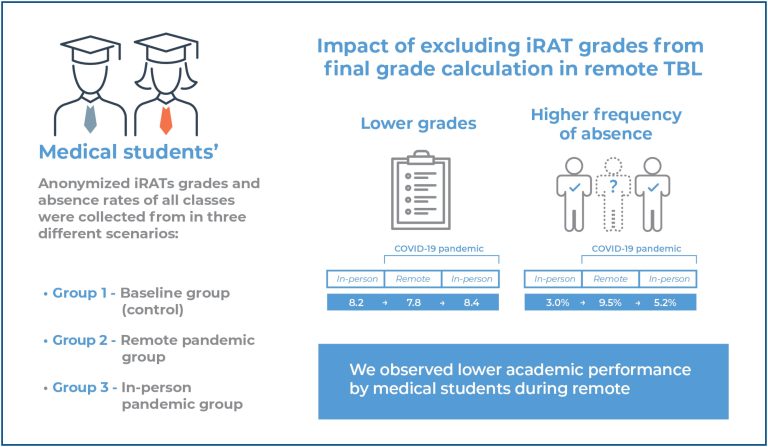
Highlights ■ Remote team-based learning sessions were conducted during the COVID-19 pandemic, and their grades were not included in the final course grade calculation. ■ Remote team-based learning resulted in lower iRAT grades than in-person team-based learning, independent of the semester. ■ Remote team-based learning resulted in more students failing the test than in-person team-based learning. ■ Remote team-based learning resulted in lower student attendance than in-person team-based learning. ABSTRACT Introduction: The COVID-19 pandemic necessitated a shift from in-person to […]
Palavras-chave: Academic performance; Avaliação educacional; Group process; Aprendizagem; Problem-based learning; School, medical; Estudantes de Medicina; Team-based learning
26/nov/2024
Use of convalescent plasma in COVID-19 treatment: is clinical severity more important than the intervention?
einstein (São Paulo). 26/nov/2024;22:eAO0563.
Ver Artigo26/nov/2024
Use of convalescent plasma in COVID-19 treatment: is clinical severity more important than the intervention?
DOI: 10.31744/einstein_journal/2024AO0563
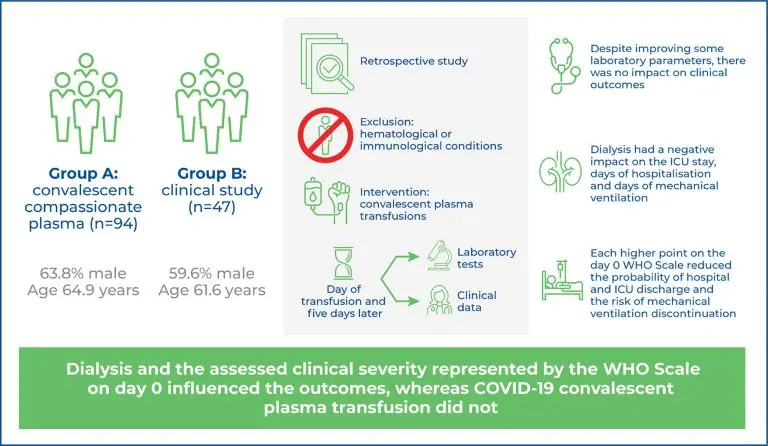
Highlights ■ Convalescent plasma did not affect the outcomes. ■ Convalescent plasma improved some laboratory parameters but had no impact on clinical outcomes. ■ Dialysis and the World Health Organization severity score on day 0 influenced the outcomes. ABSTRACT Objective: This study compared the outcomes of two cohorts of patients with coronavirus disease 2019 (COVID-19) who received COVID-19 convalescent plasma transfusions between 2020 and 2021. Methods: This retrospective study was conducted at a tertiary hospital in São Paulo, Brazil. We […]
Palavras-chave: COVID-19 serotherapy; Dialysis; Hospitalização; Imunização passiva; Inflamação; Plasma