einstein (São Paulo). 27/abr/2026;24:eRW1855.
Outcomes and other characteristics of the nutritional screening and assessment tools validation processes in hospitalized adults: a systematic review

DOI: 10.31744/einstein_journal/2026RW1855
ABSTRACT
Background:
Hospital malnutrition has been studied for decades; however, its prevalence remains high, and research in this area is still relevant. Nutritional screening and assessment tools are routinely used in hospital settings.
Objective:
We aimed to describe and discuss the general characteristics of studies that used nutritional screening and assessment instruments in hospitalized adult populations, with a focus on clinical outcomes.
Methods:
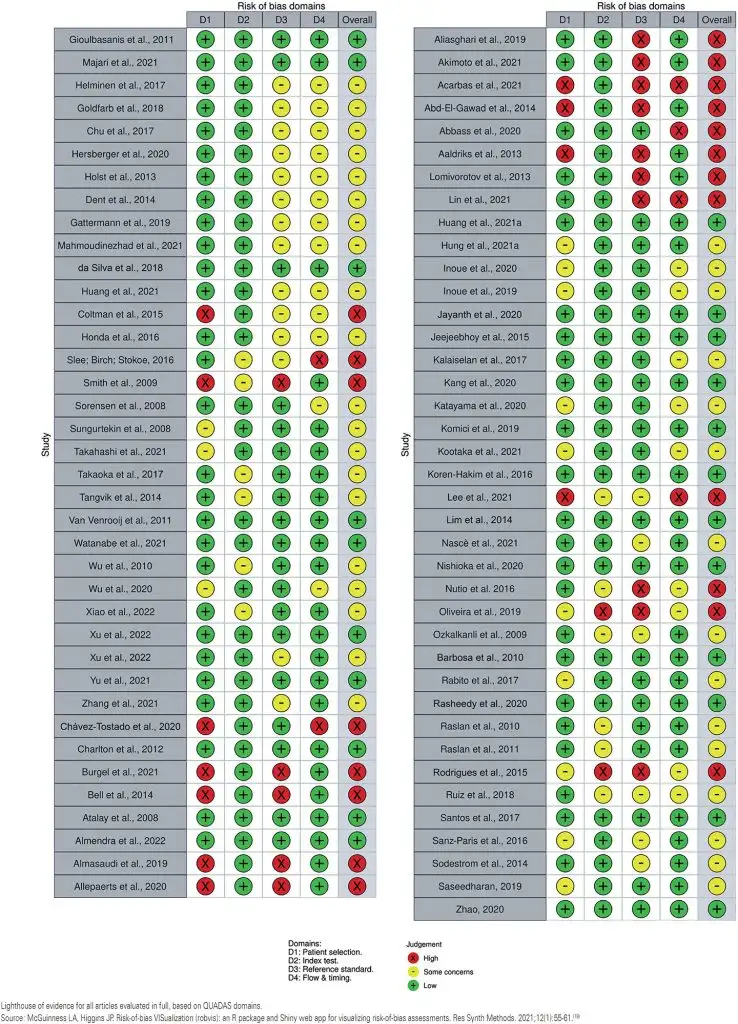
We conducted a systematic review without meta-analysis. Eligible studies were original prospective or retrospective studies published in Portuguese or English, with no inception date, conducted in hospitalized adult populations, and reporting clinical outcomes. Information sources included PubMed, LILACS, Web of Science, Embase, and Scopus. The search covered articles published up to July 2022. Risk of bias was assessed for all included studies using the Quality Assessment of Diagnostic Accuracy Studies-2 (QUADAS-2) tool. Results presented in the tables were transcribed from the main findings of each evaluated study, and no new statistical analyses were performed.
Results:
Seventy-seven studies were included, encompassing 20 tools evaluated in hospital settings. The Mini Nutritional Assessment was the most extensively tested in relation to clinical outcomes. Among studies conducted in Brazilian populations, the nutritional assessment tool Subjective Global Assessment and the screening tool Nutritional Risk Screening 2002 were the most frequently studied. Among full-text articles assessed for tool evaluation in hospitals, 77% were excluded because clinical outcomes were not reported.
Discussion:
The evidence has some limitations. First, the exclusive focus on hospitalized populations may limit generalizability. Second, validation studies that did not evaluate clinical outcomes were not described in detail. Third, the use of “clinical outcomes” as a search term may have led to an underestimation of validation studies focusing solely on diagnostic or screening performance. Overall, nutritional screening and assessment tools commonly used in daily practice have been validated many years ago, largely based on subjective clinical assessments, with relatively few studies reporting clinical outcomes. In addition, most studies were single-center and conducted predominantly in non–Latin American populations. Future research should prioritize multicenter designs, improve population representativeness, and incorporate clinically relevant outcomes.
Prospero database registration:
ID CRD42022347507.
Palavras-chave: Nutrition assessment; Malnutrition; Risk factors; Screening