einstein (São Paulo). 14/ago/2026;24(spe3):eAO2472.
Congenital syphilis and oral involvement: Treponema pallidum detection and oral development in exposed children

DOI: 10.31744/einstein_journal/2026AO2472
Highlights
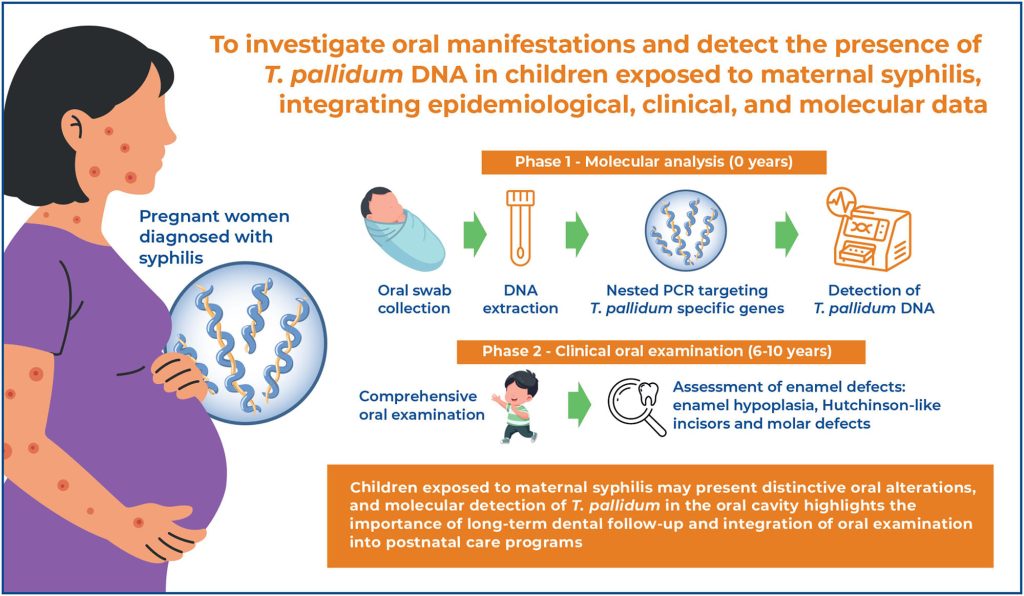
■ Oral swabs were collected at birth and analyzed by nested polymerase chain reaction for T. pallidum DNA.
■ A high prevalence of enamel hypoplasia, Hutchinson-like incisors, and molar defects was observed at 6-10 years of age.
■ Molecular detection in oral samples suggests possible persistence of treponemal DNA or residual genetic material.
■ Integrating oral examinations into postnatal care programs may support long-term monitoring of children exposed to maternal syphilis.
ABSTRACT
Objective:
To investigate oral manifestations and the presence of T. pallidum DNA in children exposed to maternal syphilis by integrating epidemiological, clinical, and molecular data.
Methods:
This two-phase observational study analyzed health, perinatal, and dental records of children born to mothers diagnosed with syphilis during pregnancy. In Phase 1, demographic characteristics, maternal treatment adequacy, birth conditions, and oral clinical findings were assessed. In Phase 2, a subset of children underwent comprehensive oral examinations, including evaluation for enamel defects associated with congenital syphilis. Oral samples were collected and processed by DNA extraction followed by nested PCR targeting T. pallidum-specific genes.
Results:
Although no statistically significant differences were observed between maternal treatment groups for some outcomes, children exposed to maternal syphilis showed enamel hypoplasia, Hutchinson-like incisors, and molar defects. PCR amplification identified T. pallidum DNA in oral samples from a subset of participants, suggesting possible persistence of treponemal DNA or residual genetic material after maternal treatment.
Conclusion:
Children exposed to maternal syphilis may present with distinctive oral alterations, and molecular detection of T. pallidum DNA in the oral cavity supports the need for long-term dental follow-up and integration of oral examinations into postnatal care programs.
[…]
Palavras-chave: Syphilis; congenital; Treponema pallidum; Oral manifestations; Polymerase chain reaction; Infant; newborn