einstein (São Paulo). 25/jun/2026;24:eAO1756.
Serum hepcidin measurement is related to clinical parameters and interferon-gamma in anemia of inflammation

DOI: 10.31744/einstein_journal/2026AO1756
Highlights
■ One-third of patients older than 65 years exhibit a hyperinflammatory state typical of inflammatory anemia.
■ The pathophysiology of anemia of inflammation is multifactorial.
■ Higher inflammation is associated with high prevalence of anemia and age-associated disorders.
■ The inflammatory state stimulates hepatocytes to produce hepcidin.
■ Understanding the immunomodulatory parameters in anemia of inflammation may be effective for differential diagnosis and therapeutic approaches.
ABSTRACT
Objective:
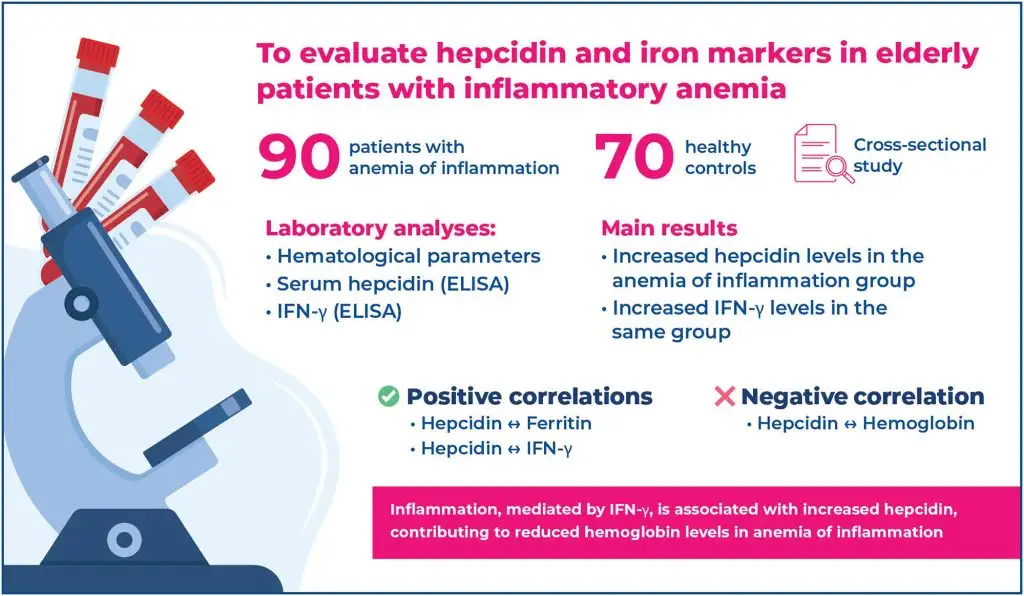
This study aimed to assess the relationship between hepcidin, IFN-γ, iron biomarkers, and clinical variables in patients with anemia of inflammation.
Methods:
A cross-sectional study was conducted. Ninety patients with inflammatory anemia and 70 healthy controls were evaluated. Laboratory parameters, serum hepcidin, and IFN-γ were determined using ELISA.
Results:
The mean age of patients with anemia of inflammation was 74.1±7.8 years, and most were female. Most patients reported ≥3 comorbidities (70%). Patients with ≥3 comorbidities had significantly higher levels of hepcidin (p<0.001). Hemoglobin, transferrin saturation index, and serum iron levels were significantly lower in patients with anemia of inflammation than in the control group (p<0.001). The erythrocyte sedimentation rate and ferritin and hepcidin levels increased in the anemia group (p<0.05). A significant positive correlation was observed between hepcidin and ferritin (r=0.372; p=0.001) and IFN-γ (r=0.228; p=0.004). Conversely, a significant negative correlation was found between hepcidin and hemoglobin (r=-0.355; p<0.001).
Conclusion:
Understanding how inflammatory parameters and upregulated hepcidin levels act as biomarkers to assess iron homeostasis in anemia of inflammation may be effective for differential diagnosis and therapeutic approaches, such as iron supplementation.
[…]
Palavras-chave: Anemia; Inflammation; Cytokines; Interferongamma; Hepcidins