einstein (São Paulo). 17/dez/2025;24((spe1)):eAE1796.
The ontology of mental health disorders: embracing the diathesis-stress model

DOI: 10.31744/einstein_journal/2026AE1796
Highlights
■ This paper proposes a contextual and non-reductionist ontology of mental health disorders.
■ It reframes the diathesis-stress model through radical behaviorism and functional contextualism.
■ It emphasizes dynamic interactions between vulnerabilities and environmental stressors.
■ It guides clinical practice toward integrative, personalized, and system-sensitive interventions.
ABSTRACT
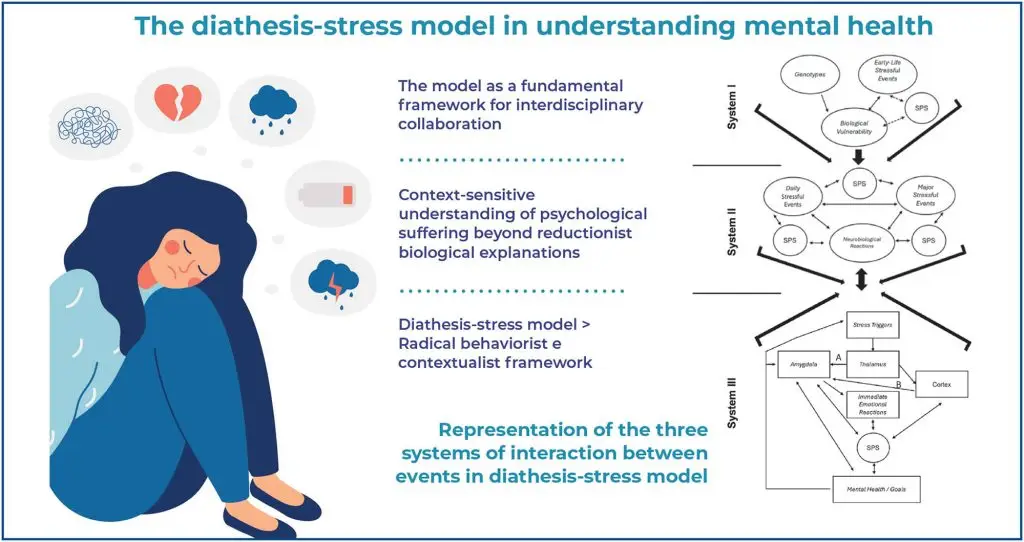
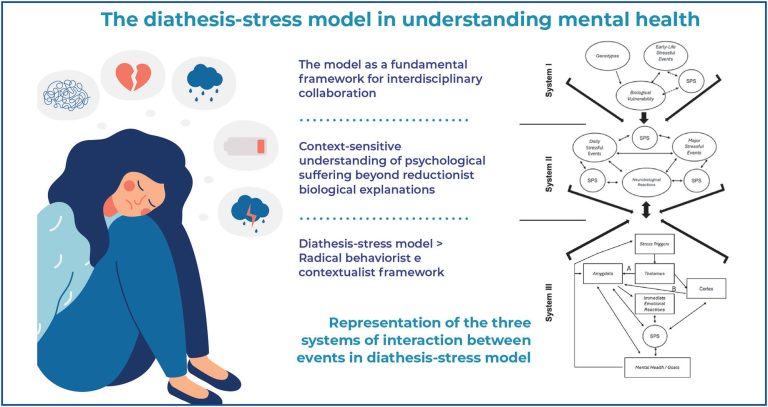
This conceptual article examines the ontological and epistemological foundations of mental health disorders through the lens of the diathesis-stress model. It seeks to articulate how this model contributes to a more comprehensive and context-sensitive understanding of psychological suffering, moving beyond reductionist, biological explanations. Grounded in a radical behaviorist and contextualist framework, this article integrates historical, clinical, and philosophical perspectives to demonstrate the relevance of the diathesis-stress paradigm for assessment, diagnosis, intervention, and prevention in mental healthcare. The goal is to establish the model as a foundational tool for interdisciplinary collaboration and propose future directions for its use in research and applied settings. In summary, this article advocates the adoption of the diathesis-stress model as a fundamental framework for understanding the complexity of mental health disorders and its practical implications for mental health.
[…]
Palavras-chave: Diathesis-stress model; Mental disorders; Behaviorism; Contextualism; Mental health; Stress vulnerability
211