einstein (São Paulo). 25/jun/2026;24:eRC1831.
Open fetal surgery for correction of myelomeningocele and umbilical cord presentation at hysterotomy: report of a rare complication

DOI: 10.31744/einstein_journal/2026RC1831
ABSTRACT
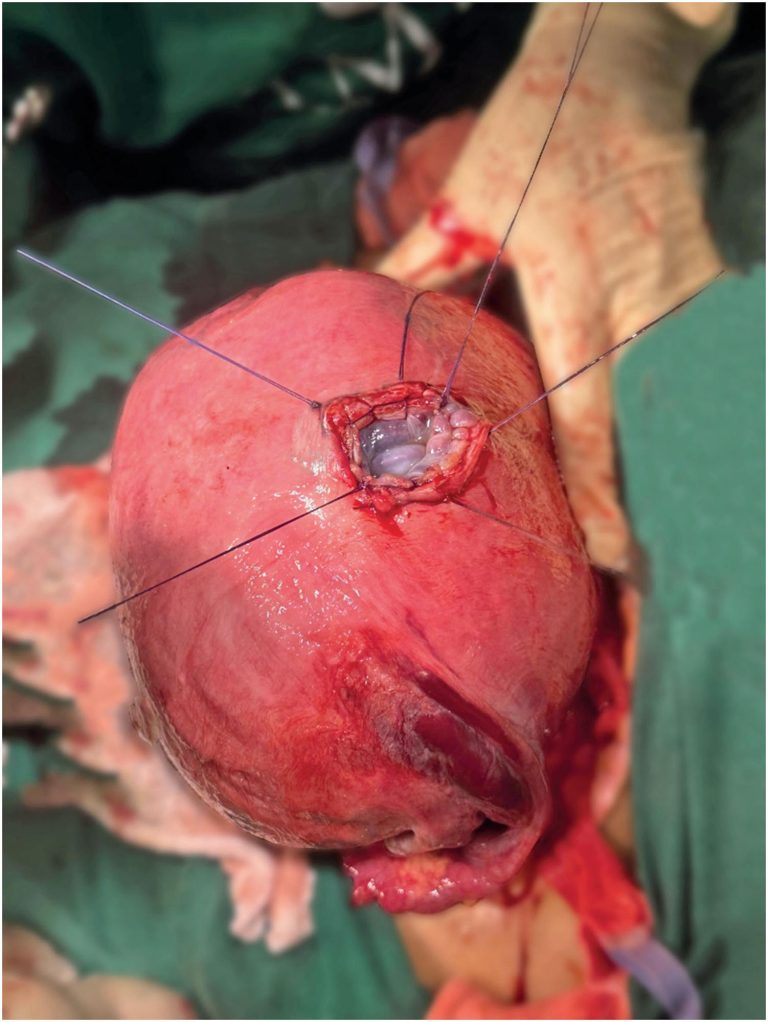
Myelomeningocele is a severe neural tube defect that significantly affects neurological development. Studies have demonstrated that intrauterine repair leads to better neurological outcomes than postnatal correction, likely due to reduced exposure of the neural tissue to amniotic fluid. Despite its benefits, prenatal surgery is performed in only a limited number of centers worldwide and is associated with both maternal and fetal risks. This case report aims to describe a complication rarely reported in the literature: umbilical cord presentation at hysterotomy during open intrauterine fetal surgery for myelomeningocele repair. A 35-year-old multigravida at 24 weeks of gestation was referred to a tertiary maternal-fetal medicine center for evaluation of a suspected myelomeningocele. Ultrasound examination confirmed open spina bifida at the L5 level (2.6 × 2.4cm) associated with lemon and banana signs and a posterior ventricular diameter of 12mm. After counseling, the patient opted for intrauterine repair. During surgery, the umbilical cord was not identified on ultrasound before hysterotomy; however, it was found crossing the hysterotomy site intraoperatively, requiring careful manipulation to achieve adequate fetal exposure. The surgery proceeded without further complications. At 30 weeks of gestation, preterm delivery was indicated due to chorioamnionitis. The newborn had an Apgar score of 8 and 7 and requiring admission to the neonatal intensive care unit. At 1 year and 7 months of age, the child demonstrates good motor development without the need for postnatal surgical interventions. The umbilical cord malpositioning observed during fetal surgery is a rarely described complication in the literature that may compromise fetal circulation; therefore, careful intraoperative handling is essential to prevent adverse outcomes. This case report highlights a rare intraoperative complication of fetal myelomeningocele repair. Appropriate surgical management ensured a favorable outcome, underscoring the importance of awareness and preparedness in managing such events.
Palavras-chave: Prenatal care; Prenatal diagnosis; Meningomyelocele; Ultrasonography; Umbilical cord; Hysteretomy