einstein (São Paulo). 01/jul/2026;24:eAO1668.
Evaluation of anticoagulation quality in patients with primary antiphospholipid syndrome at a tertiary hospital

DOI: 10.31744/einstein_journal/2026AO1668
Highlights
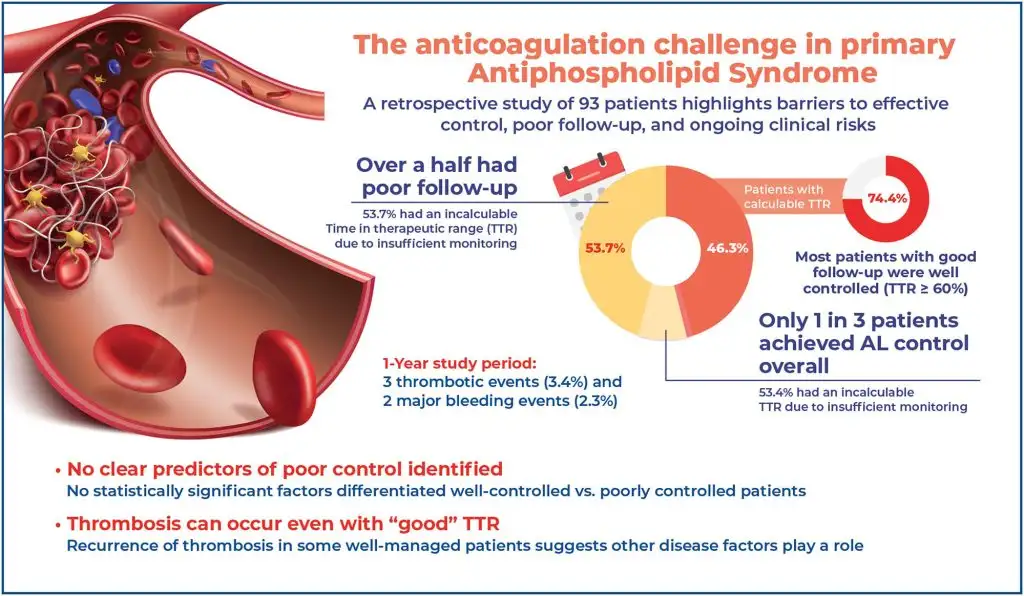
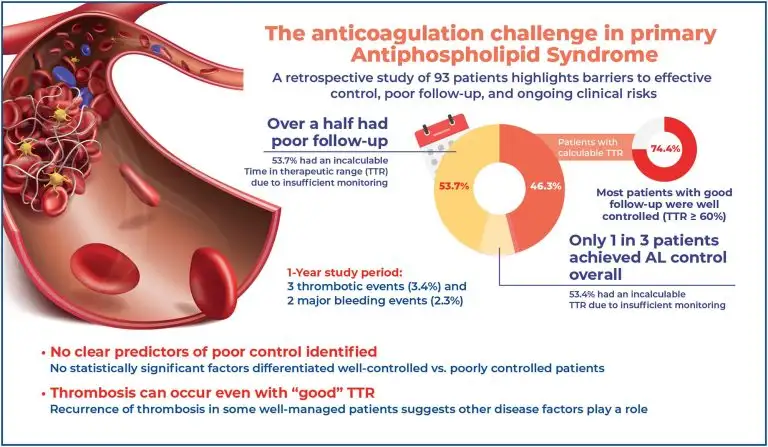
■ Only 34.4% of patients with primary Antiphospholipid Syndrome achieved adequate anticoagulation (time in therapeutic range ≥60%).
■ More than half had insufficient INR monitoring, precluding time in therapeutic range calculation.
■ No clinical or demographic factors were associated with poor anticoagulation control.
■ Gaps in follow-up and adherence issues appear to be key contributors to suboptimal anticoagulation.
ABSTRACT
Objective:
This study aimed to evaluate the quality of anticoagulation control in patients with primary antiphospholipid syndrome, using time in therapeutic range. Secondary objectives included identifying factors associated with poor anticoagulation control.
Methods:
Anticoagulation quality was assessed in a retrospective study including patients with primary Antiphospholipid Syndrome. Time in therapeutic range was calculated using the Rosendaal method for patients with at least four international normalized ratio measurements in 2019. Statistical comparisons were performed between patients with time in therapeutic range ≥60% and those with lower or incalculable time in therapeutic range.
Results:
A total of 93 patients were included, of whom 43 (46.2%) had a calculable time in therapeutic range. Among these, 32 patients (74.4 achieved time in therapeutic range ≥60%, with a median time in therapeutic range of 89.3%. However, 61 patients (65.6%) had insufficient follow-up, resulting in an incalculable time in therapeutic range. No significant differences were observed between patients with good and poor anticoagulation control regarding demographic or clinical variables. During the follow-up period, three thrombotic events (3.4%) and two major bleeding events (2.3%) were recorded.
Conclusion:
Our findings indicates that only 34.4% of patients with primary antiphospholipid syndrome achieved adequate anticoagulation control and inadequate follow-up remains a major barrier. Further studies are needed to identify factors contributing to suboptimal time in therapeutic range and to improve anticoagulation management in this high-risk population.
[…]
Palavras-chave: Antiphospholipid syndrome; Acarboxiprotrombin; Warfarin